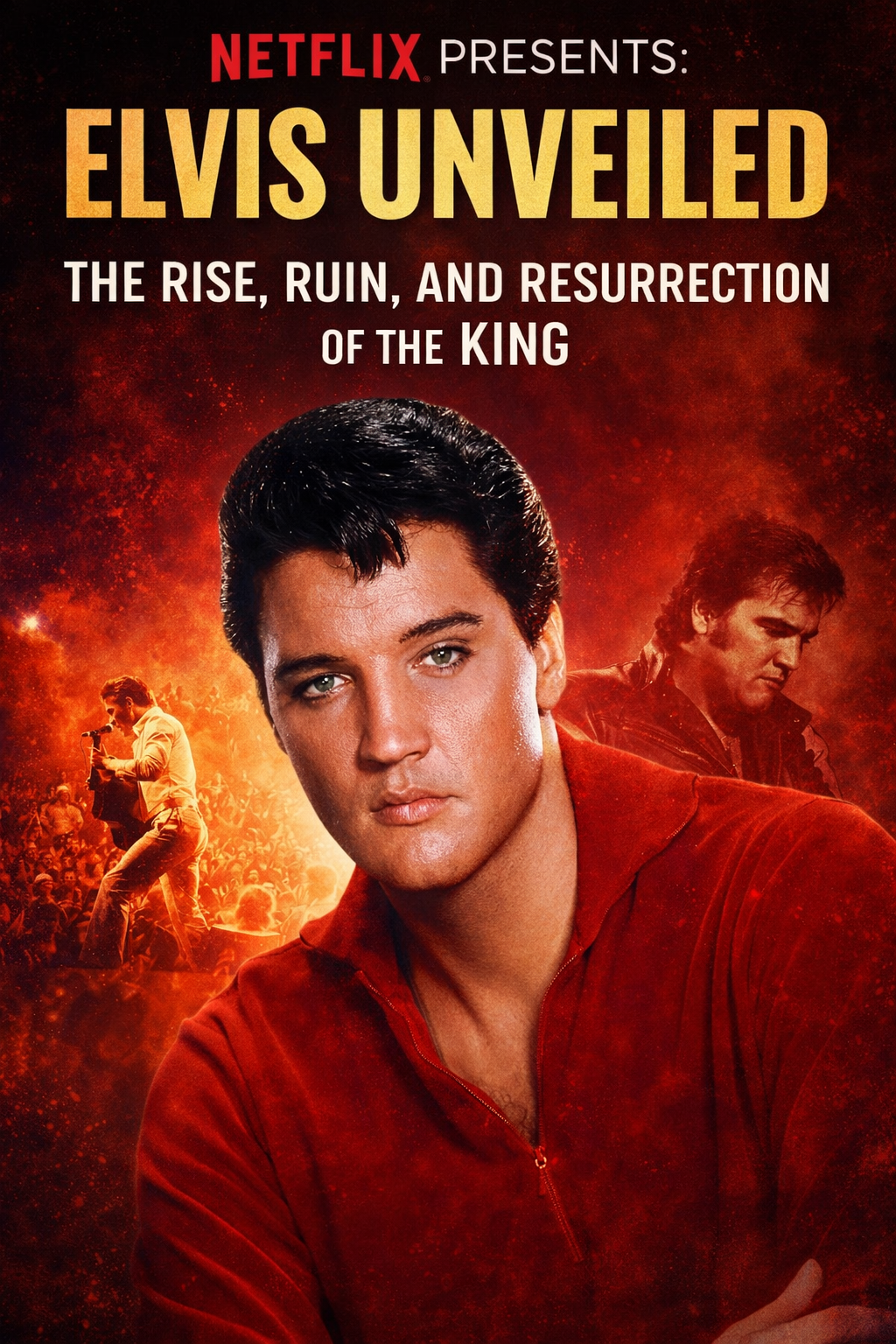
Few artists have shaped modern music and popular culture as profoundly as Elvis Presley. Decades after his passing, his voice, image, and influence continue to ripple across generations. With Elvis Unveiled, Netflix offers an intimate and unflinching look at the man behind the myth, tracing his extraordinary ascent, his painful unraveling, and the legacy that refuses to fade.The story begins with a young man from Tupelo, Mississippi, whose sound challenged the boundaries of race, music, and morality in 1950s America. Blending gospel, blues, and country, Elvis didn’t just entertain—he disrupted. Archival footage and thoughtful commentary reveal how his early performances ignited both adoration and outrage, turning him into a symbol of youth rebellion and cultural transformation. His rise was swift and overwhelming, redefining what it meant to be a star in a world unprepared for someone quite like him.As fame intensified, the documentary carefully shifts its focus to the cost of that success. Surrounded by a tightly controlled system of managers, studios, and expectations, Elvis slowly lost control over his own creative direction. The film explores how relentless touring schedules, formulaic movie roles, and constant public scrutiny chipped away at his sense of self. What the audience sees is not just an icon growing larger, but a man becoming increasingly isolated within the very image that made him famous.The darker chapters of Elvis Unveiled confront his personal struggles with honesty and restraint. Rather than sensationalizing his decline, the documentary frames it within the larger context of fame before the era of mental health awareness. Prescription drug dependence, physical deterioration, and emotional exhaustion are presented as symptoms of a system that demanded endless output without offering protection. His retreat into Graceland emerges as both refuge and confinement—a symbol of comfort, loneliness, and quiet unraveling.Yet the film does not end with loss. It turns instead toward resurrection, highlighting moments when Elvis reclaimed his voice and presence, particularly during his late-career performances and enduring cultural influence. His music continues to inspire artists across genres, his style still echoes in fashion and performance, and his image remains embedded in global pop culture. The documentary suggests that while the man was deeply human and flawed, the legacy he left behind is alive, evolving, and deeply influential.Elvis Unveiled resonates strongly in today’s celebrity-obsessed world. It asks uncomfortable but necessary questions about what fame demands and what it destroys, about how easily a person can be consumed by the image built around them. By stripping away caricature and nostalgia, Netflix presents a portrait that feels intimate, sobering, and strikingly relevant.In the end, Elvis Unveiled – The Rise, Ruin, and Resurrection of the King is not just a documentary about music or stardom. It is a story about ambition, vulnerability, and survival in the spotlight. Whether you are a lifelong fan or encountering his story for the first time, the film offers a powerful reminder of why Elvis still matters—and why his story continues to resonate long after the final note fades.
About the Author