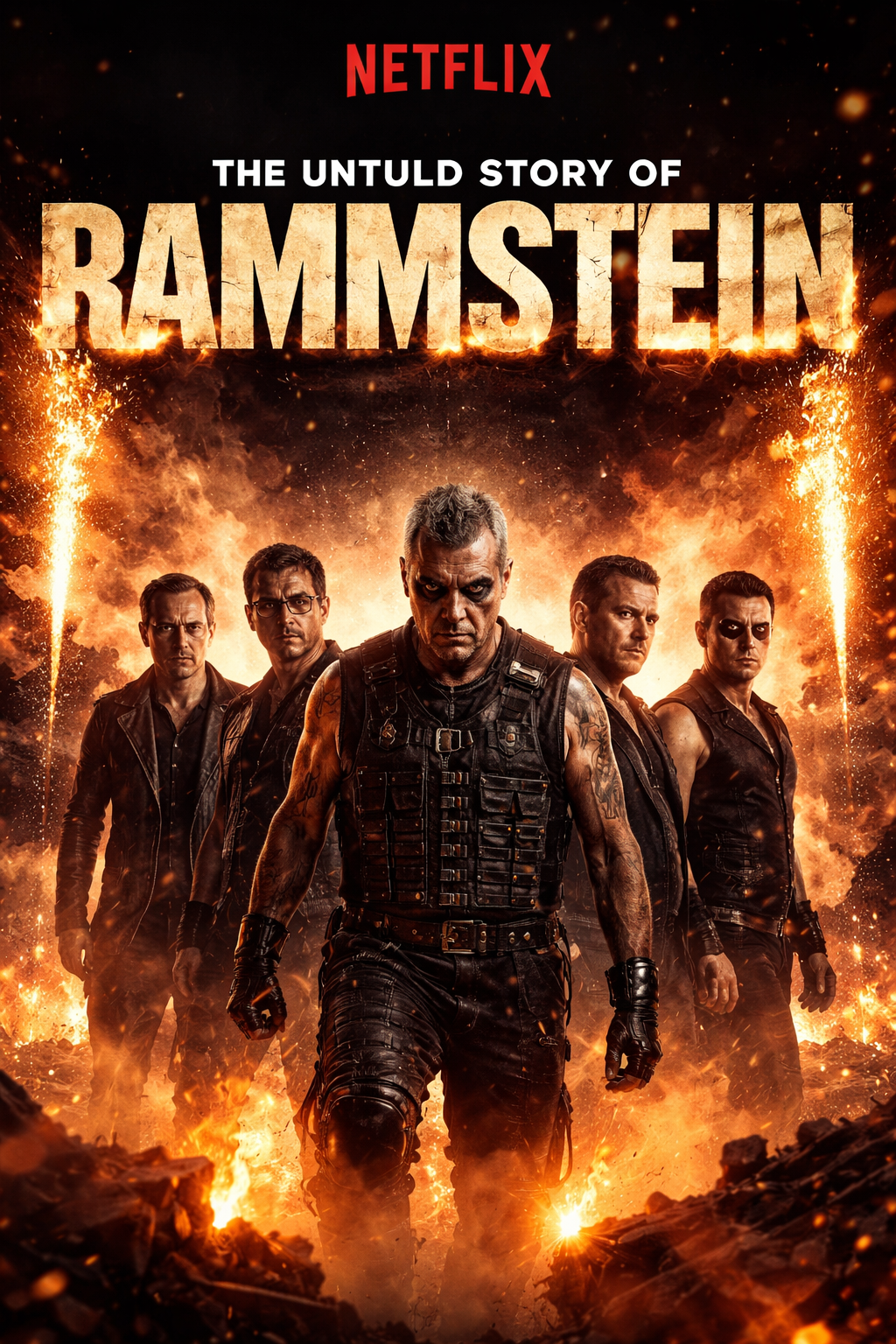
Rammstein’s arrival on Netflix as a documentary series feels like an overdue reckoning with one of the most provocative bands ever to emerge from Europe. The series pulls viewers into the band’s universe with a slow-burn intensity, tracing how six musicians from post-reunification Germany transformed industrial metal into a global spectacle. From the first moments, the tone is unapologetic, mirroring Rammstein’s own refusal to soften their art for mass appeal, and setting the stage for a story driven as much by controversy as by creativity.
What stands out immediately is the way the documentary contextualizes Rammstein’s sound within the cultural rubble of the 1990s. Interviews and archival footage reveal how the band’s crushing riffs and martial rhythms were shaped by a country redefining itself, and how their stark German lyrics became both a barrier and a weapon in conquering international audiences. Rather than chasing trends, the series shows Rammstein building a language of fire, steel, and theater that felt alien yet irresistible to fans worldwide.
The documentary also dives deep into the band’s infamous live performances, treating them not as shock tactics but as a carefully engineered art form. Behind-the-scenes footage exposes the meticulous planning required to make flames erupt on cue and stage props loom with operatic menace. Crew members and bandmates alike speak to the risks involved, reinforcing the idea that Rammstein’s concerts are less gigs and more controlled explosions designed to overwhelm the senses.
Equally compelling is the exploration of the band’s internal dynamics. The series does not shy away from tension, creative clashes, or the long silences that can form between collaborators who have spent decades together. Viewers are shown how discipline and routine coexist with ego and experimentation, and how Rammstein’s longevity is rooted in a shared commitment to the collective vision rather than individual stardom.
Another powerful thread is the band’s complicated relationship with controversy. The documentary carefully examines moments when Rammstein were misunderstood, criticized, or outright condemned, and how those moments fed back into their music. Rather than offering easy defenses, the series allows space for discomfort, highlighting how provocation has always been central to the band’s dialogue with society and the media.
By the time the narrative reaches December 15, 2025, the series reflects on how Rammstein have survived changing musical landscapes and cultural sensibilities without losing their identity. This moment in the documentary feels like a pause for breath, acknowledging time’s passage while emphasizing that the band’s core ethos remains unbroken despite decades of scrutiny and evolution.
Visually, the Netflix production is as relentless as the band it portrays. Stark lighting, deliberate pacing, and a soundtrack that oscillates between thunderous anthems and eerie silence give the series a cinematic weight. The editing resists nostalgia for its own sake, instead presenting the past as a living force that continues to shape Rammstein’s present and future.
In the end, the Rammstein documentary series is less a celebration and more a confrontation. It challenges viewers to grapple with art that refuses comfort, musicians who embrace contradiction, and a legacy forged in fire and friction. Whether you are a lifelong fan or a curious newcomer, the series leaves a lasting impression that echoes long after the final episode fades to black.
About the Author