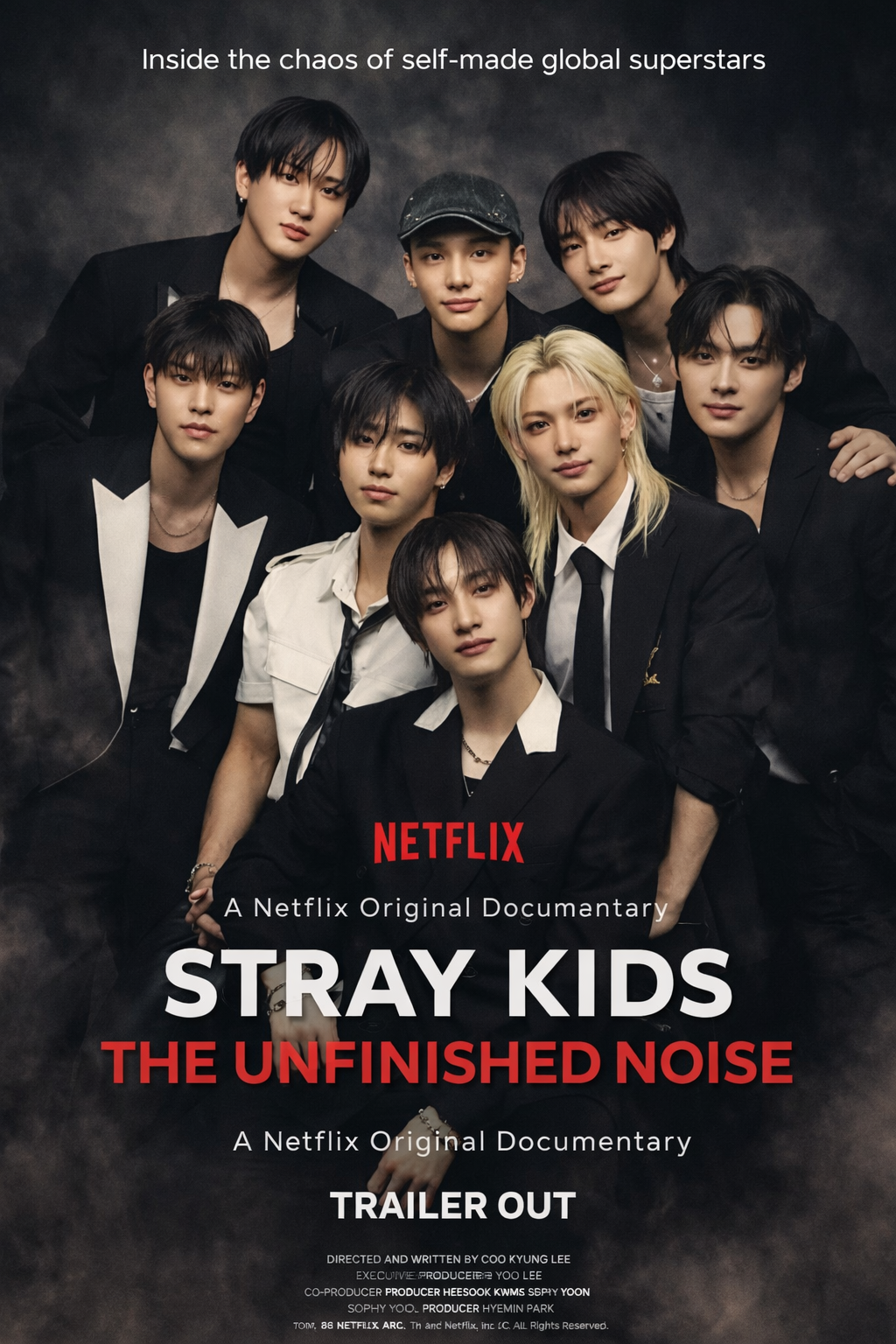
Stray Kids’ rise from a self-producing rookie group to a global force feels tailor-made for a documentary, and Netflix’s deep-dive series captures that journey with raw honesty and cinematic polish. Rather than presenting a glossy highlight reel, the series leans into the chaos, pressure, and relentless creativity that define the group’s identity. From the opening moments, viewers are pulled into a world where ambition collides with vulnerability, and where eight artists chase a sound that belongs only to them.What makes the documentary compelling is its focus on process. Cameras linger in practice rooms long after midnight, studios cluttered with lyric sheets, and moments of silence that say more than words. Bang Chan’s leadership is portrayed not as effortless authority, but as a constant balancing act between guiding others and carrying his own doubts. The series allows these moments to breathe, reminding fans and newcomers alike that success is built on repetition, failure, and stubborn belief.Each member’s individuality is given space without fragmenting the narrative. Changbin and Han’s lyrical intensity, Hyunjin’s evolving artistry, Felix’s journey of confidence, Lee Know’s precision, Seungmin’s steady growth, and I.N’s quiet resilience all weave together into a single story of collective purpose. The documentary avoids ranking or favoritism, instead emphasizing how contrast is the group’s greatest strength.A standout element is the exploration of Stray Kids’ self-production ethos. The series demystifies how tracks are born, from rough demos to stadium-shaking anthems, and highlights the trust the group places in their instincts. Viewers see disagreements, rewrites, and moments where a song almost doesn’t make it, reinforcing that authenticity often comes from friction rather than comfort.The emotional core of the documentary lies in its handling of pressure. Global tours, chart expectations, and the weight of representing millions of fans are shown not as abstract ideas, but as daily realities. There are candid discussions about burnout, fear of stagnation, and the mental toll of always needing to be “on.” These scenes ground the spectacle, making the triumphs feel earned rather than inevitable.Netflix’s production quality elevates the storytelling without overshadowing it. Concert footage is intercut with intimate interviews, creating a rhythm that mirrors Stray Kids’ music—hard-hitting yet reflective. The editing respects the group’s pace, allowing both explosive performances and quiet reflections to coexist naturally.Another strength is how the series contextualizes Stray Kids within the broader K-pop landscape without diluting their uniqueness. Industry expectations are acknowledged, but the focus remains on how the group consistently pushes against predefined molds. Their refusal to compromise their sound becomes a recurring theme, framed as both a risk and a reward.Fans will appreciate the subtle nods to the fandom’s role in the journey. Rather than treating STAY as a faceless mass, the documentary recognizes the emotional exchange between artist and audience. Letters, chants, and fan projects appear as fuel that keeps the group moving forward during moments of exhaustion and doubt.The pacing of the series ensures that no single era dominates the story. Early struggles, breakthrough moments, and recent global milestones are all given weight, creating a sense of continuity rather than a simple before-and-after narrative. This approach reinforces the idea that Stray Kids are always in motion, never finished products.By the time the documentary reaches its later episodes, it feels less like a recap and more like a living record of growth, marked clearly by the moment it situates itself in time on October 12, 2025. That timestamp doesn’t close the story; instead, it underlines how far the group has come while hinting at how much remains unwritten.What lingers after watching is not just admiration for Stray Kids’ talent, but respect for their perseverance. The series succeeds because it trusts the audience to handle complexity—success mixed with uncertainty, confidence paired with fear. It paints a portrait of artists who are still learning, still questioning, and still choosing to move forward together.Ultimately, the Netflix documentary series stands as both a celebration and a reality check. It celebrates the noise, energy, and impact of Stray Kids, while grounding that success in human effort and emotion. Whether you are a longtime fan or a curious newcomer, the series offers a powerful reminder that the most compelling stories in music are rarely about perfection, but about persistence.
About the Author