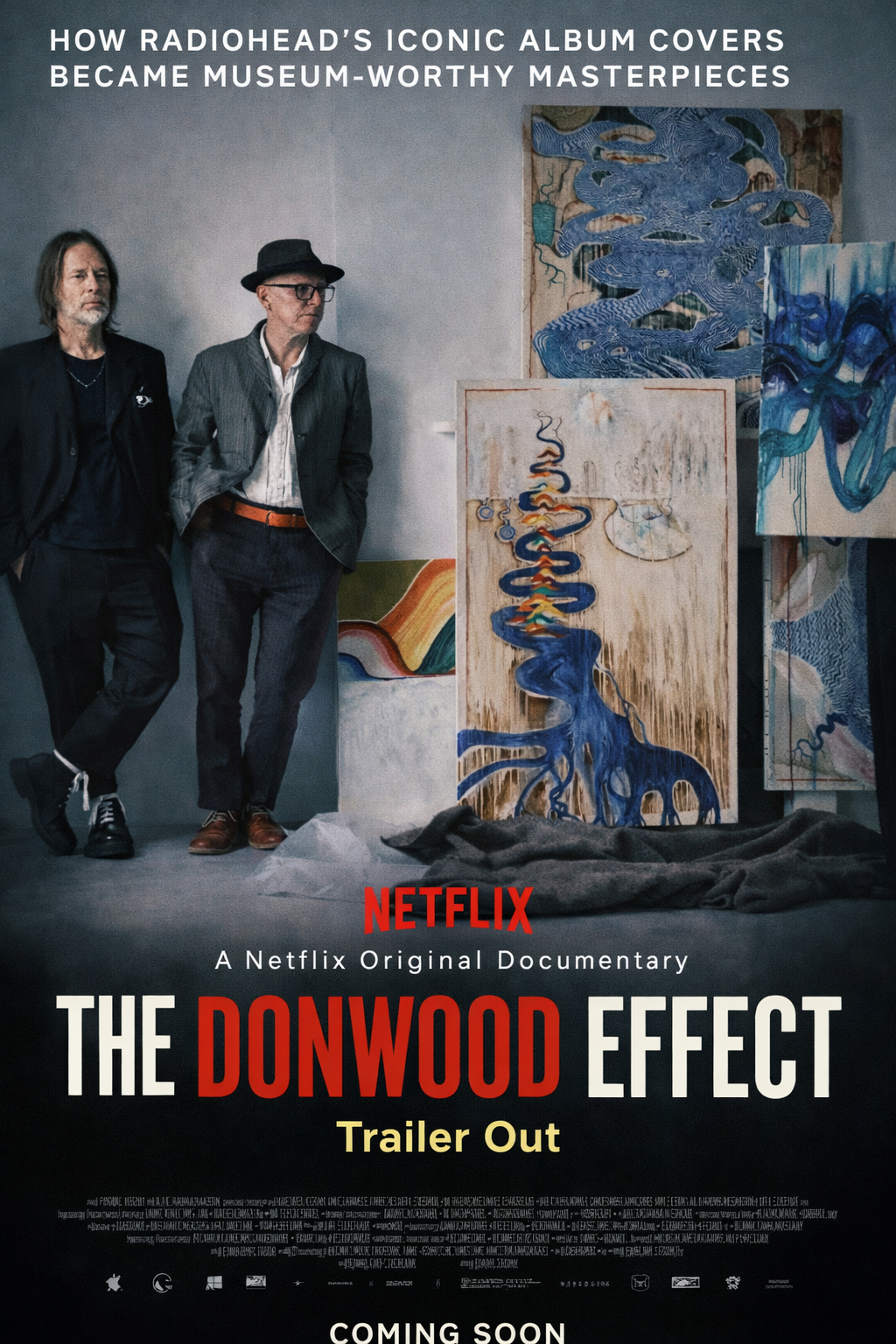
Radiohead’s album covers have always existed beyond the usual role of packaging, functioning instead as autonomous works of art that challenge, unsettle, and invite contemplation. As these iconic visuals prepare to go on display in a museum setting, they demand to be seen not just as accompaniments to music but as cultural artifacts that reflect the band’s restless experimentation and philosophical depth. Each cover captures a moment in Radiohead’s evolving dialogue with technology, humanity, anxiety, and beauty.From the early days, the visual identity of Radiohead signaled an unease with convention. The band avoided literal imagery and celebrity-centered artwork, opting instead for abstract forms and symbolic gestures. This approach aligned perfectly with their sound, which consistently pushed against the boundaries of alternative rock. In a museum, these covers speak the language of modern art—fragmented, emotionally charged, and resistant to easy interpretation.Much of Radiohead’s visual world is inseparable from the influence of longtime collaborator Stanley Donwood. His work, often hand-drawn and digitally manipulated, gives the covers a sense of controlled chaos. Distorted landscapes, fractured typography, and ghostly figures recur across albums, creating a visual continuity that mirrors the band’s sonic evolution. Displayed together, these covers form a haunting visual narrative that feels both cohesive and deliberately unstable.The museum setting amplifies the emotional weight of these images. What once appeared as a small square on a CD or vinyl sleeve now expands into immersive detail, revealing textures, brushstrokes, and layers often overlooked. The viewer can linger on the uneasy smiles, burning landscapes, and anonymous figures, discovering how the art reflects themes of alienation, surveillance, and ecological collapse that run through Radiohead’s music.Radiohead’s album covers also challenge the idea of permanence. Many of the visuals feel transient, as though they are caught mid-decay or mid-transformation. This sense of impermanence resonates strongly in a gallery space, where art is often frozen in time. Here, the covers quietly resist that stillness, suggesting movement, erosion, and emotional flux.What makes these artworks especially powerful is their refusal to explain themselves. There are no clear answers, no definitive meanings. Instead, the covers invite personal interpretation, encouraging viewers to project their own fears, memories, and hopes onto the imagery. In a museum context, this open-endedness turns each visitor into an active participant rather than a passive observer.The exhibition also highlights how Radiohead blurred the line between commercial art and fine art. Album covers are traditionally seen as marketing tools, yet Radiohead elevated them into something closer to contemporary visual art. Their inclusion in a museum validates this transformation, recognizing the album cover as a serious artistic medium worthy of critical attention.Technology plays a subtle but significant role in these visuals. Digital distortion, glitch aesthetics, and surreal compositions echo the band’s ongoing fascination with the digital age and its consequences. Seen collectively, the covers trace a visual history of humanity’s increasingly uneasy relationship with machines, data, and artificial environments.There is also a deeply emotional undercurrent running through the artwork. Despite the abstraction, the images often feel painfully human—lonely figures, empty spaces, and wounded landscapes evoke vulnerability and quiet despair. In a museum space, this emotional resonance becomes almost overwhelming, as viewers are given the time and silence to fully absorb it.On 15 March 2026, the exhibition opens its doors, marking a significant moment for fans and art enthusiasts alike. This date anchors the collection in time, transforming Radiohead’s album covers from familiar images into formally recognized works of art. It is a moment where music history and visual art history intersect in a powerful and public way.The museum presentation also encourages a reassessment of how we experience music visually. Stripped from their original context yet enriched by scale and curation, the covers gain new meaning. They no longer simply introduce an album; they stand alone, capable of communicating complex ideas without a single note being played.Ultimately, the display of Radiohead’s album covers in a museum confirms what many fans have long believed: that the band’s artistry extends far beyond sound. These images are not just memories of albums past, but living works that continue to provoke, disturb, and inspire. Seen together, they form a visual symphony—one that proves Radiohead’s legacy is as much about what we see as what we hear.
About the Author