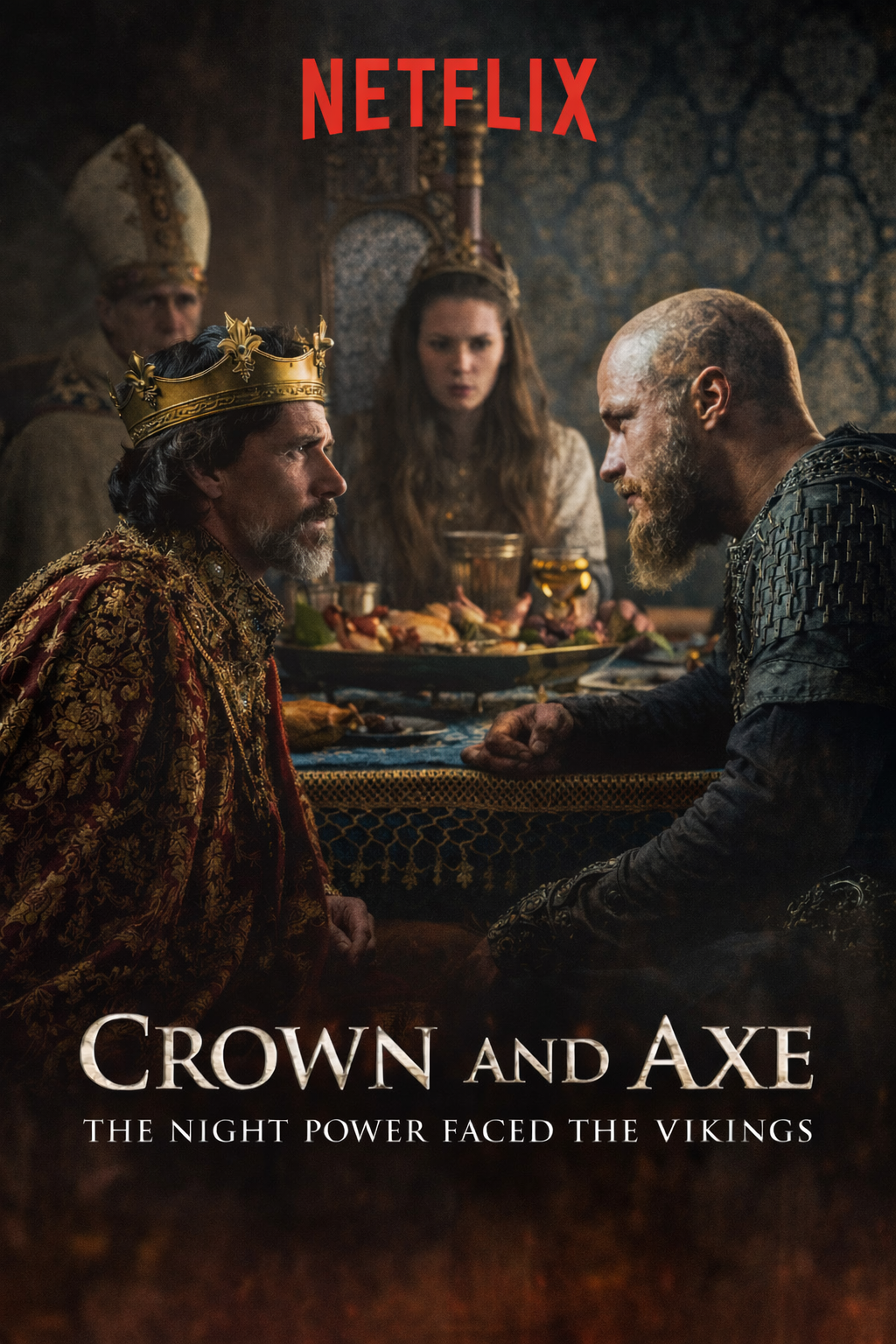
Set against the tense political world of Vikings, Crown and Axe: The Night Power Faced the Vikings captures one of the most compelling clashes in the series—not a clash of steel, but of minds. Emperor Charles stands as a ruler surrounded by danger, watching the Northmen not from the battlefield, but from the throne room, where every word can decide the fate of empires.
Emperor Charles is unlike the kings Vikings fans are used to seeing. He is not loud, fearless, or physically imposing. Instead, he rules through caution, calculation, and an understanding that power is often best wielded quietly. In a world where axes speak first, Charles chooses silence and patience.
Portrayed as a deeply human ruler, Charles struggles with illness, fear, and uncertainty. These weaknesses do not make him insignificant; they make him realistic. Fans are drawn to his vulnerability because it contrasts sharply with the brutal confidence of the Viking leaders who surround him.
The arrival of Ragnar Lothbrok at the Frankish court marks a turning point. Ragnar is not merely a raider seeking gold—he is a thinker, a dreamer, and a man curious about the world beyond the North. When Ragnar Lothbrok meets Emperor Charles, the series delivers one of its most fascinating power dynamics.
Their encounters feel like a game of chess played under candlelight. Every glance carries suspicion. Every word hides intent. Charles knows he cannot defeat the Vikings outright, but he also knows they cannot simply take Paris without consequence. The tension between them is palpable, controlled, and dangerously fragile.
Paris itself becomes a symbol of everything at stake. To the Vikings, it represents wealth and glory. To Charles, it represents civilization, order, and survival. The defense of the city is not just military—it is psychological, political, and deeply personal.
Charles understands that brute force alone will fail him. Instead, he turns to diplomacy, deception, and alliances forged in desperation. His willingness to negotiate with enemies shocks his own people, but fans recognize this as one of his greatest strengths.
The emperor’s relationship with his court further reveals the cost of leadership. Surrounded by bishops, nobles, and advisors, Charles is constantly questioned, doubted, and pressured. His crown offers authority, but it also isolates him, forcing decisions that no one else must bear.
Religion plays a powerful role in his reign. Faith is not merely belief—it is a tool of control, legitimacy, and fear. Charles uses it carefully, knowing that belief can unify a people or tear them apart just as surely as a sword.
One of the most compelling aspects of Emperor Charles is his moral ambiguity. He is neither hero nor villain. He makes choices that save lives and choices that sacrifice them. Fans appreciate this complexity because it reflects the harsh realities of ruling in a violent world.
When negotiations with the Vikings turn deadly, Charles reveals his darker side. Betrayal, manipulation, and calculated cruelty emerge from beneath the crown. These moments remind viewers that survival often demands moral compromise.
The presence of the Vikings at his table is symbolic. It is a rare moment where enemies sit face to face, sharing food while silently preparing for bloodshed. The image of a crown facing an axe perfectly captures the fragile balance between power and destruction.
Unlike many rulers in the series, Charles survives not through dominance but endurance. He bends when others break. He adapts when tradition fails. This ability to evolve makes him one of the most underestimated figures in Vikings.
For fans, Emperor Charles represents a different kind of strength. He proves that intelligence can rival brutality, that fear can coexist with authority, and that leadership is often about choosing the least devastating path forward.
In the end, Emperor Charles leaves a lasting impression because he shows that not all battles are fought on open fields. Some are fought in silence, across tables, behind closed doors—where a single decision can change the course of history. His story reminds Vikings fans that power does not always roar; sometimes, it whispers.
About the Author