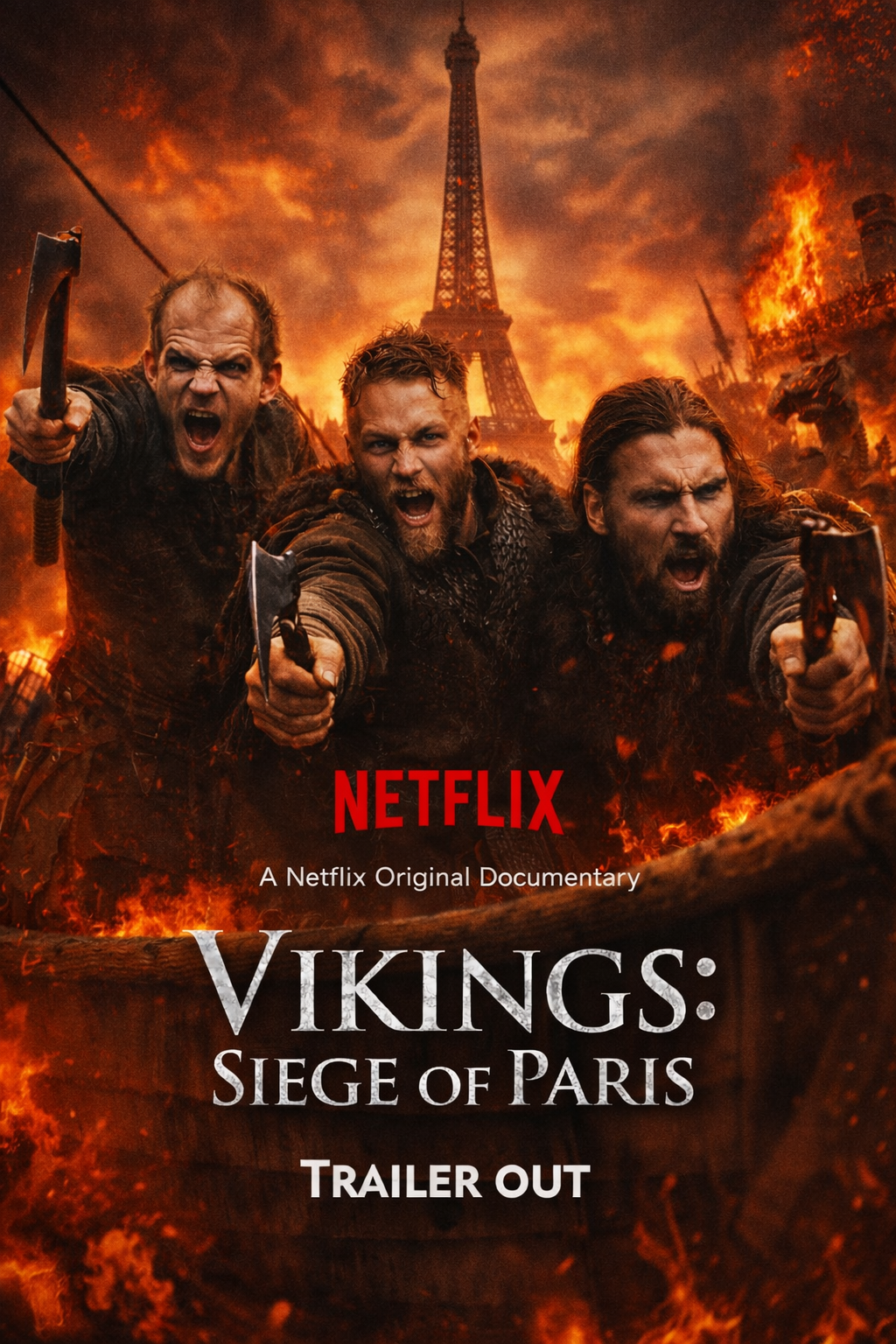
The Siege of Paris in Vikings stands as one of the series’ most ambitious and dramatic story arcs, marking a turning point in the power and ambition of the Norse raiders. No longer content with small coastal villages, Ragnar Lothbrok sets his sights on the heart of Frankish power, driven by curiosity, greed, and a desire to test the limits of his world against a legendary city.Paris is portrayed as an almost mythical fortress, surrounded by towering walls and protected by the River Seine. To the Vikings, the city represents not only wealth but proof that their gods favor them even against the most advanced Christian kingdoms. This contrast between Viking ferocity and Frankish sophistication creates constant tension throughout the siege.Ragnar’s strategy shows a shift from brute force to calculated deception. Rather than relying solely on overwhelming violence, he exploits Frankish expectations, feigning weakness and death to manipulate his enemies. This cunning approach highlights Ragnar’s evolution from warrior to tactician and sets him apart from those who still believe strength alone wins battles.The Franks, led by Emperor Charles and defended by Count Odo, are not depicted as helpless victims. Their use of fortified bridges, archers, and disciplined troops reveals a society better prepared for large-scale warfare than anything the Vikings have faced before. The clash becomes less about savagery versus civilization and more about competing forms of intelligence and adaptability.Religious conflict plays a central role during the siege. Christianity and Norse paganism collide not just on the battlefield but in ideology, symbolism, and fear. Ragnar’s fascination with Christianity deepens, blurring the line between belief and strategy, while the Franks struggle to interpret Viking brutality through their own religious worldview.The human cost of the siege is emphasized through suffering on both sides. Viking warriors die far from home, while Parisians endure terror, disease, and starvation. This shared misery strips the conflict of romanticism and underscores the brutal reality of medieval warfare, regardless of culture or creed.Perhaps the most memorable moment comes when Ragnar appears to accept Christianity on his deathbed, only to use the ritual as a final act of deception. His supposed corpse is carried into Paris, turning surrender into victory and cementing his reputation as both a legend and an enigma.In Vikings, the Siege of Paris is inspired by the historical Viking raid on the city in 845 CE, an event that symbolized the height of Viking expansion and the beginning of a new, more complex relationship between the Norse world and Christian Europe.
About the Author