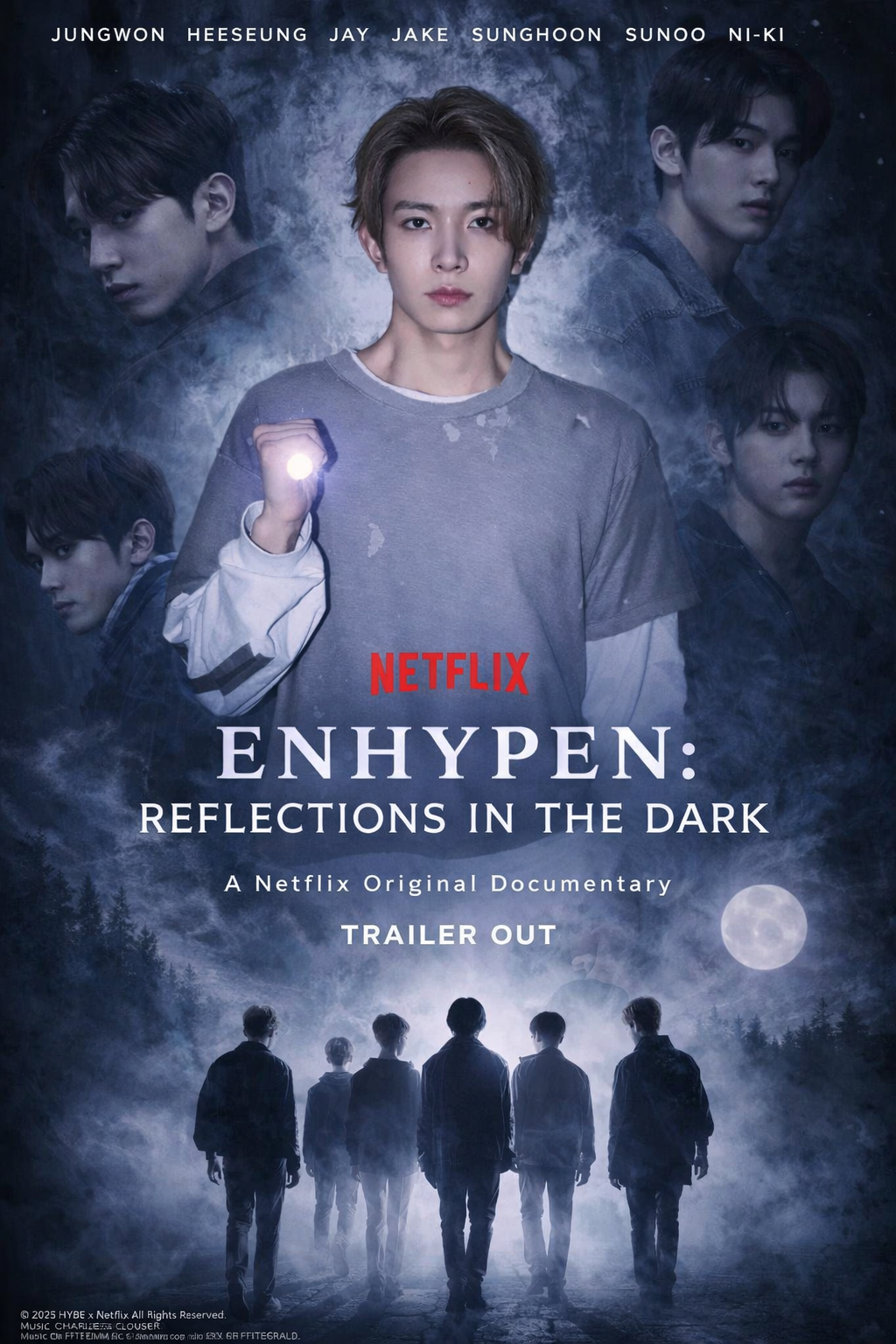
Reflections in the Dark is Netflix’s bold cinematic leap into the mythos of ENHYPHEN, blending supernatural fantasy with emotional realism in a way that feels both haunting and intimate. The film opens in a world where shadows are not merely the absence of light but living witnesses to the secrets people try to bury. From the very first scene, the tone is set: moody, immersive, and unapologetically introspective.At its core, the movie follows seven youths bound by an invisible thread of fate, each carrying a fractured past that manifests through eerie reflections. Mirrors, water, and darkness become recurring motifs, symbolizing identity, fear, and the struggle between who they were and who they are becoming. ENHYPHEN’s presence feels organic, not performative, as the members embody characters that seem carved from the same emotional stone as their real-life artistic personas.The narrative slowly unravels, choosing atmosphere over haste. Rather than overwhelming viewers with exposition, the film trusts silence, lingering glances, and subtle gestures. This deliberate pacing allows the audience to sink into the psychological weight carried by each character, making every revelation feel earned and deeply personal.Visually, Reflections in the Dark is striking. Netflix spares no expense in crafting a cinematic palette dominated by deep blues, muted reds, and soft silvers. The interplay between light and shadow is meticulously choreographed, turning ordinary scenes into symbolic tableaux. Every frame feels intentional, as if the camera itself is searching for truth within the darkness.The emotional heart of the film lies in its exploration of duality. Each character confronts a mirrored version of themselves, forcing painful questions about guilt, desire, and sacrifice. These confrontations are not just supernatural elements but metaphors for the internal battles faced during youth, making the story resonate beyond its fantasy setting.Music plays a crucial role in amplifying the film’s impact. The soundtrack, infused with atmospheric instrumentals and emotionally charged vocal themes, feels inseparable from the story. Rather than serving as background noise, the music acts as an emotional guide, pulling viewers deeper into moments of despair, hope, and quiet rebellion.What makes the film particularly compelling is its refusal to paint its characters as purely heroic. They are flawed, afraid, and sometimes selfish, yet undeniably human. ENHYPHEN’s performances shine brightest in these vulnerable moments, where strength is shown not through power, but through endurance and honesty.The script also weaves subtle commentary on fame, expectation, and self-image. Reflections are not just supernatural phenomena but symbols of how the world looks at these young men and how they look at themselves. This layered storytelling gives the film depth, inviting repeat viewings to catch nuances that might be missed the first time.As the plot moves toward its climax, tension builds through emotional stakes rather than spectacle. The darkness becomes heavier, the reflections more distorted, and the choices more irreversible. By this point, the audience is no longer just watching a story unfold but emotionally invested in its outcome.Released on October 18, 2025, the film quickly sparked conversation among fans and critics alike, with many praising its ambition and emotional maturity. The date now feels significant, marking a moment where ENHYPHEN transcended the boundaries of music and stepped confidently into cinematic storytelling.The final act does not offer easy answers or neat resolutions. Instead, it embraces ambiguity, suggesting that growth often comes without closure. The ending lingers, much like a reflection that refuses to fade, leaving viewers to sit with their own interpretations and emotions.Reflections in the Dark ultimately stands as more than a Netflix movie tied to a global group. It is a poetic meditation on identity, fear, and transformation, proving that ENHYPHEN’s story can exist powerfully beyond the stage. In the silence after the credits roll, the film leaves behind a quiet question: when you look into the dark, what part of yourself looks back?
About the Author