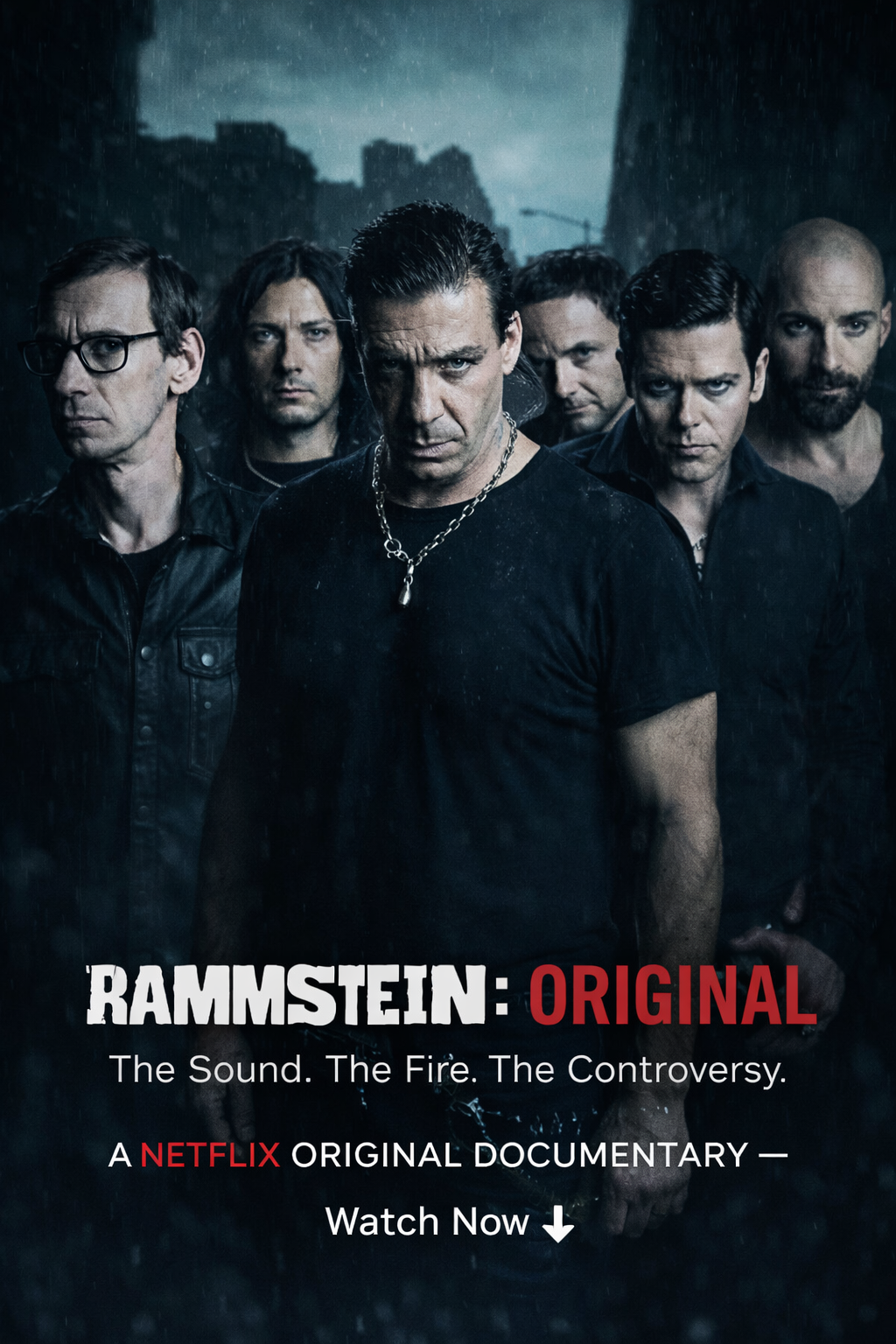
Rammstein Original documentary now on Netflix pulls back the curtain on one of the most provocative and uncompromising bands in modern music history. From the first moments, the film establishes a dark, immersive tone that mirrors the band’s sound and image, inviting viewers into a world built on fire, discipline, and controversy. It is not a polished celebration but a raw examination of how Rammstein became a global force.
The documentary traces the band’s roots in post-reunification Germany, where frustration, identity, and experimentation collided. Through archival footage and candid reflections, it reveals how the members shaped their sound by rejecting trends and embracing confrontation. The environment they came from is shown as harsh and influential, forging a mindset that still defines their music today.
What makes the documentary compelling is its honesty. The band members speak without filters, addressing their creative conflicts, internal tensions, and the cost of staying together for decades. Their chemistry is shown as something built through struggle rather than harmony, and that tension becomes a central engine behind their longevity.
The film also explores Rammstein’s approach to performance, dissecting how their live shows became theatrical spectacles known for fire, shock, and precision. Behind the flames and controversy lies an obsessive attention to detail, rehearsals that resemble military drills, and a refusal to compromise on vision. The documentary captures this balance between chaos and control with striking clarity.
Music creation takes center stage as well, showing how songs evolve from fragmented ideas into explosive anthems. Studio sessions reveal a band that argues fiercely over structure, lyrics, and tone, yet remains united by a shared understanding of what Rammstein should sound like. The process is intense, methodical, and deeply personal.
Controversy is addressed directly rather than avoided. The documentary examines public backlash, censorship, and accusations that have followed the band throughout their career. Instead of offering excuses, the film allows the members to explain their intent and philosophy, leaving viewers to form their own conclusions about art, provocation, and responsibility.
Visually, the documentary adopts a cold, industrial aesthetic that reflects the band’s identity. Dimly lit interviews, stark rehearsal spaces, and powerful concert footage create an atmosphere that feels heavy and immersive. The pacing allows moments of silence and reflection, giving weight to what is left unsaid.
The emotional core of the film lies in its exploration of time. Aging, relevance, and legacy quietly run beneath the surface as the band reflects on decades spent pushing boundaries. There is an underlying awareness that nothing lasts forever, adding a subtle vulnerability to their otherwise imposing presence.
Fans will find familiar moments, but the documentary is accessible even to newcomers. It does not assume admiration and instead invites curiosity, offering context that helps explain why Rammstein inspires both devotion and discomfort. The film treats the audience as intelligent observers rather than passive consumers.
By the end, Rammstein Original feels less like a tribute and more like a confrontation with the realities of creating extreme art in a global spotlight. It is intense, unapologetic, and deeply human, capturing the price of refusing to be ordinary. Now streaming on Netflix, it stands as a powerful record of a band that never learned how to exist quietly.
About the Author