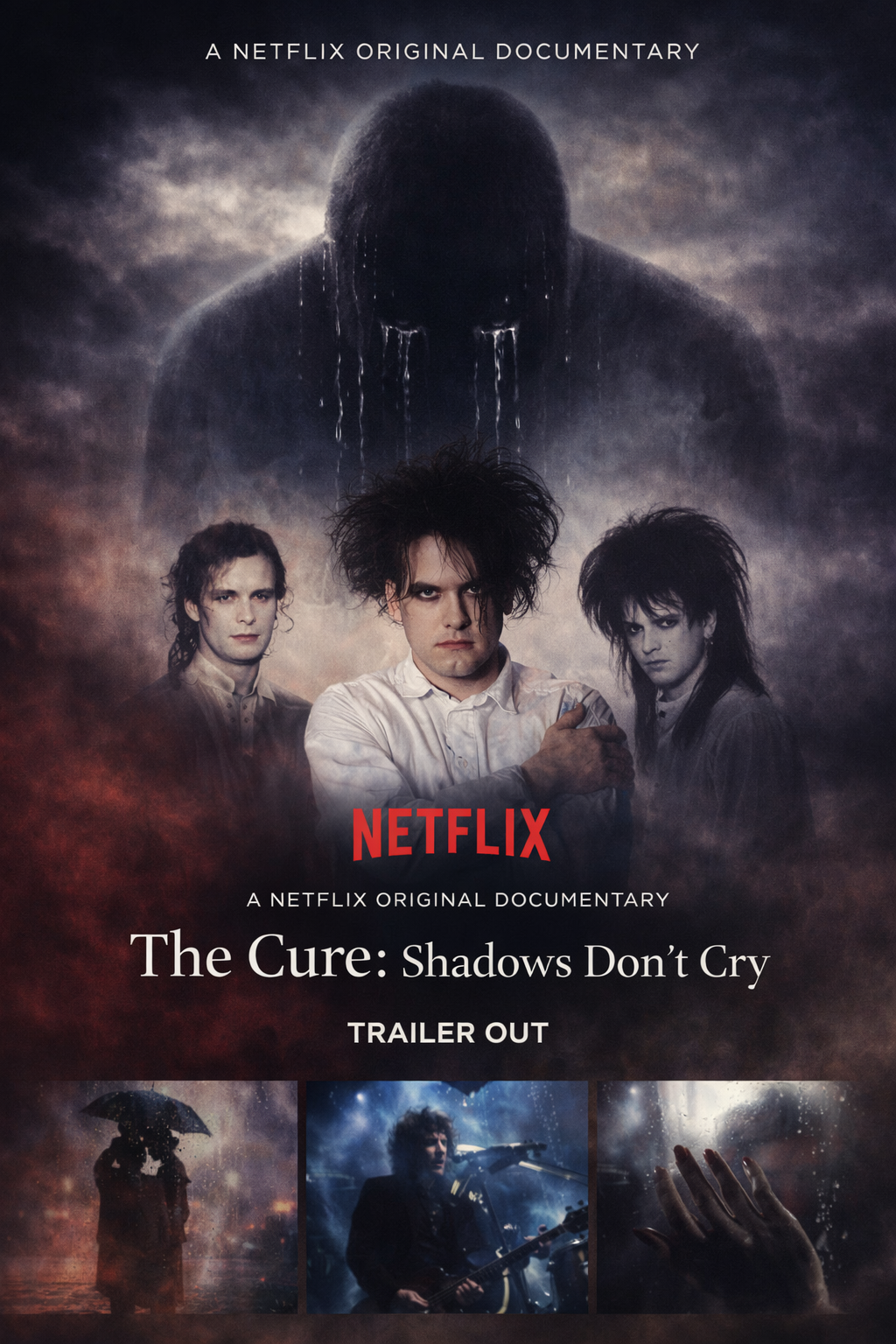
Netflix’s The Cure: Shadows Don’t Cry drifts onto the screen with the quiet confidence of a band that never needed permission to be different. From its opening moments, the documentary feels less like a celebration and more like a confession, inviting viewers into the dim emotional spaces where The Cure’s music was born. It sets a tone of restraint and intimacy, allowing silence and shadow to speak just as loudly as sound.
The film resists the temptation to frame The Cure as a conventional success story. Instead, it presents them as emotional outsiders who reshaped popular music by embracing melancholy rather than escaping it. Their songs are treated not as hits, but as emotional documents—records of feeling that captured the loneliness, obsession, and fragile hope of entire generations.
Robert Smith is portrayed with striking honesty, not as a rock god but as a man deeply aware of his own contradictions. The documentary lets his voice guide the narrative, revealing how vulnerability became his greatest creative weapon. His reflections feel unguarded, as though he is still discovering the meaning of the songs long after they were written.
Archival footage pulls the audience into smoky clubs, echoing rehearsal rooms, and vast stages washed in blue and red light. These moments are not polished or nostalgic; they feel lived-in and imperfect. The grain and blur of the images mirror the emotional haze that defined the band’s early years.
Shadows Don’t Cry excels in showing how sadness in The Cure’s music was never about despair alone. The film argues, subtly but convincingly, that darkness can be comforting, even protective. Their songs offered listeners a place to hide, to feel understood without being fixed or judged.
The relationships within the band are treated with care and restraint. Creative tension, exhaustion, and loyalty coexist in a delicate balance, suggesting that survival was as much an achievement as success. The documentary avoids dramatization, allowing quiet glances and pauses to communicate what words do not.
Visually, the film leans heavily into atmosphere. Slow motion, rain-soaked imagery, and long shadows dominate the frame, creating a cinematic language that feels deeply aligned with the band’s sound. It’s a reminder that The Cure’s aesthetic was never accidental—it was emotional truth made visible.
Rather than chasing cultural relevance, the documentary focuses on emotional endurance. Fans from different eras speak not of trends, but of moments when the music became a lifeline. These testimonies reinforce the idea that The Cure’s legacy is not measured in awards, but in survival.
As the film moves forward, time becomes fluid. Past and present blur together, suggesting that the feelings captured decades ago remain unresolved, still echoing in modern lives. The music refuses to age because the emotions it carries never do.
The present moment briefly anchors itself with a quiet acknowledgment of February 9, 2026, grounding the documentary in reality while emphasizing how enduring the band’s emotional impact remains even now.
In its final stretch, Shadows Don’t Cry avoids neat conclusions. There is no final statement, no attempt to define what The Cure ultimately means. Instead, it allows the music to linger, unfinished and unresolved, like a feeling you can’t quite name.
Netflix’s The Cure: Shadows Don’t Cry stands as a rare documentary that understands sadness not as something to overcome, but as something to honor. It leaves viewers in the dark not with emptiness, but with recognition—proof that even in shadow, there is connection, and even in silence, there is song.
About the Author