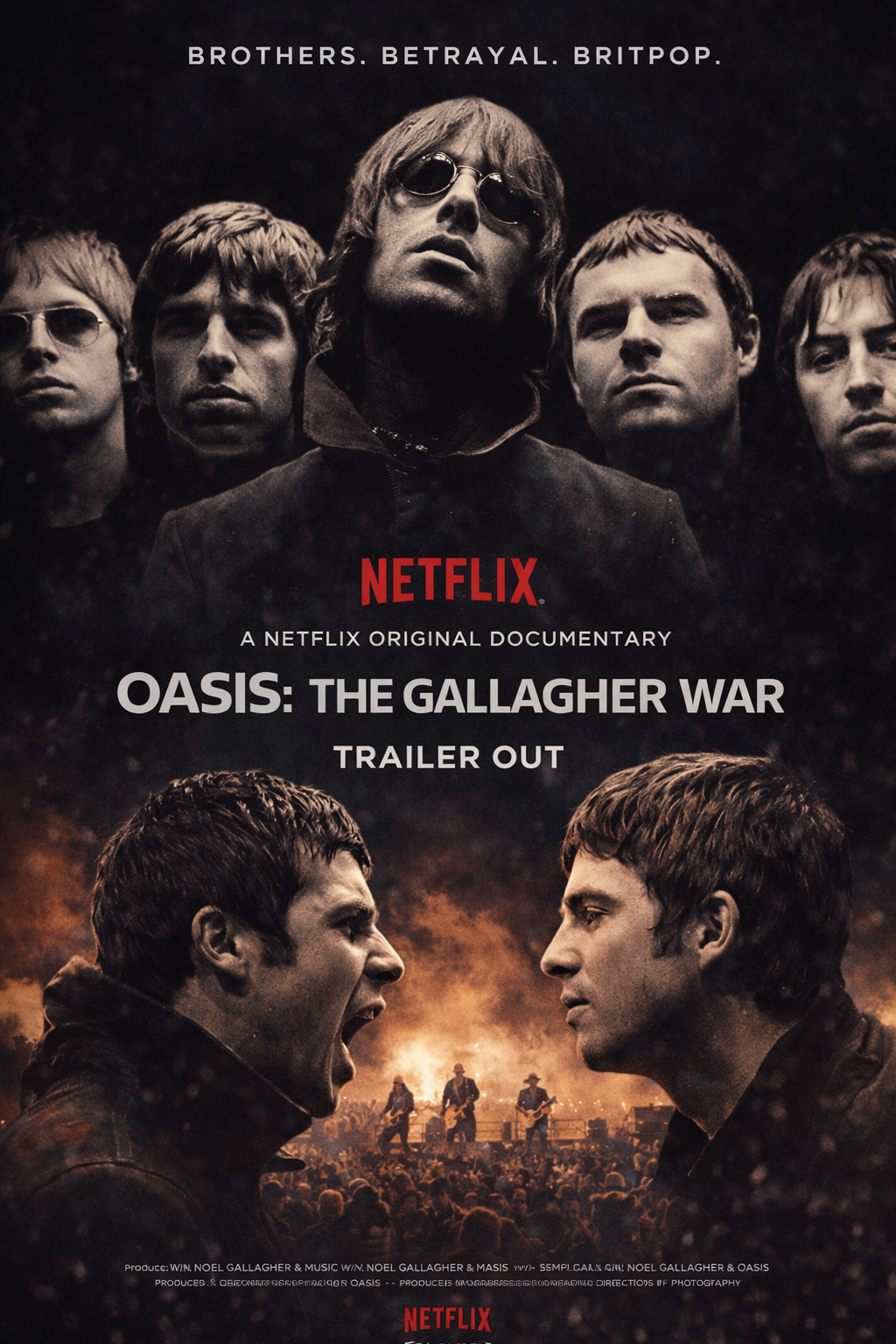
The story of Oasis has always felt like a legend told too loudly, too honestly, and with too much swagger to ever be tamed, and Netflix’s Oasis: The Gallagher War leans straight into that chaos. This documentary doesn’t try to smooth the edges or rewrite history; instead, it embraces the volatile energy that made Oasis one of the most important bands of their generation. From the first moments, the film frames the band not just as musicians, but as a battlefield where ambition, ego, and brotherhood collided in spectacular fashion.
At the heart of the film is the relationship between Liam and Noel Gallagher, a bond so intense it powered the band’s greatest triumphs while simultaneously sowing the seeds of its destruction. The documentary paints their connection as both fuel and fire, showing how moments of creative brilliance often emerged directly from conflict. Interviews and archival footage reveal how arguments in cramped rooms and shouted insults backstage somehow transformed into anthems that defined an era.
The film carefully traces Oasis’s rise from Manchester obscurity to global dominance, showing how the brothers’ rivalry sharpened their hunger to win. Every success seemed to raise the stakes, turning personal disagreements into public spectacles. The cameras linger on moments where fame amplified old resentments, making even small slights feel like declarations of war. What emerges is a portrait of success that never brought peace, only louder noise.
Music plays a central role in the documentary, but it’s treated less as a product and more as a weapon. Songs are framed as statements, challenges, and sometimes even apologies that were never spoken aloud. The film highlights how Noel’s songwriting and Liam’s delivery clashed and complemented each other, creating a tension that audiences could feel even when they didn’t understand its source. The music became the only language the brothers truly shared.
What makes The Gallagher War compelling is its refusal to pick sides. The documentary allows both brothers to tell their versions of events, often contradicting each other in ways that feel painfully human. Rather than resolving these contradictions, the film lets them exist, underscoring how memory itself becomes another battleground. The truth, it suggests, lies somewhere in the noise between them.
The supporting cast of bandmates, managers, and industry figures add depth to the story, often acting as witnesses caught in the crossfire. Their reflections reveal how the band functioned like a fragile alliance, always one argument away from collapse. These voices provide context, reminding viewers that the Gallagher conflict didn’t exist in isolation, but shaped the lives and careers of everyone around them.
As the documentary moves deeper into Oasis’s later years, the tone darkens. The thrill of success gives way to exhaustion, resentment, and creative fatigue. The brothers appear increasingly trapped by their own legend, expected to be louder, angrier, and more defiant with each passing year. The war that once fueled them now threatens to consume everything they built.
One of the film’s most striking elements is its use of silence. Between explosive arguments and roaring crowds, there are quiet moments where the weight of unresolved conflict hangs heavy. These pauses speak volumes, suggesting that beneath the bravado and insults lay emotions neither brother was willing to confront directly. It’s in these moments that the documentary feels most intimate.
The eventual breakdown of Oasis is presented not as a shocking ending, but as an inevitable conclusion. The film resists dramatizing the split beyond what the footage already shows, allowing the years of tension to speak for themselves. By the time the band fractures, it feels less like a betrayal and more like a release from a war that had gone on too long.
Released on March 14, 2026, the documentary arrives at a time when nostalgia for the Britpop era is strong, but it refuses to be a simple celebration. Instead, it asks viewers to reconsider the cost of greatness and the price paid when personal conflict becomes part of the brand. The date marks not just another release, but a moment of reflection for fans who grew up with Oasis as the soundtrack to their lives.
In its final act, The Gallagher War looks back without attempting closure. There are no easy reconciliations or sentimental resolutions, only the lingering echo of what Oasis was and what it could never become. The documentary suggests that the band’s magic was inseparable from its dysfunction, and that removing one would have destroyed the other.
Ultimately, Oasis: The Gallagher War stands as a raw, unfiltered portrait of brotherhood pushed to its limits. It’s a story about ambition, pride, and the thin line between love and rivalry. By the end, viewers are left with a powerful understanding that Oasis wasn’t just a band—it was a conflict that changed music history forever.
About the Author