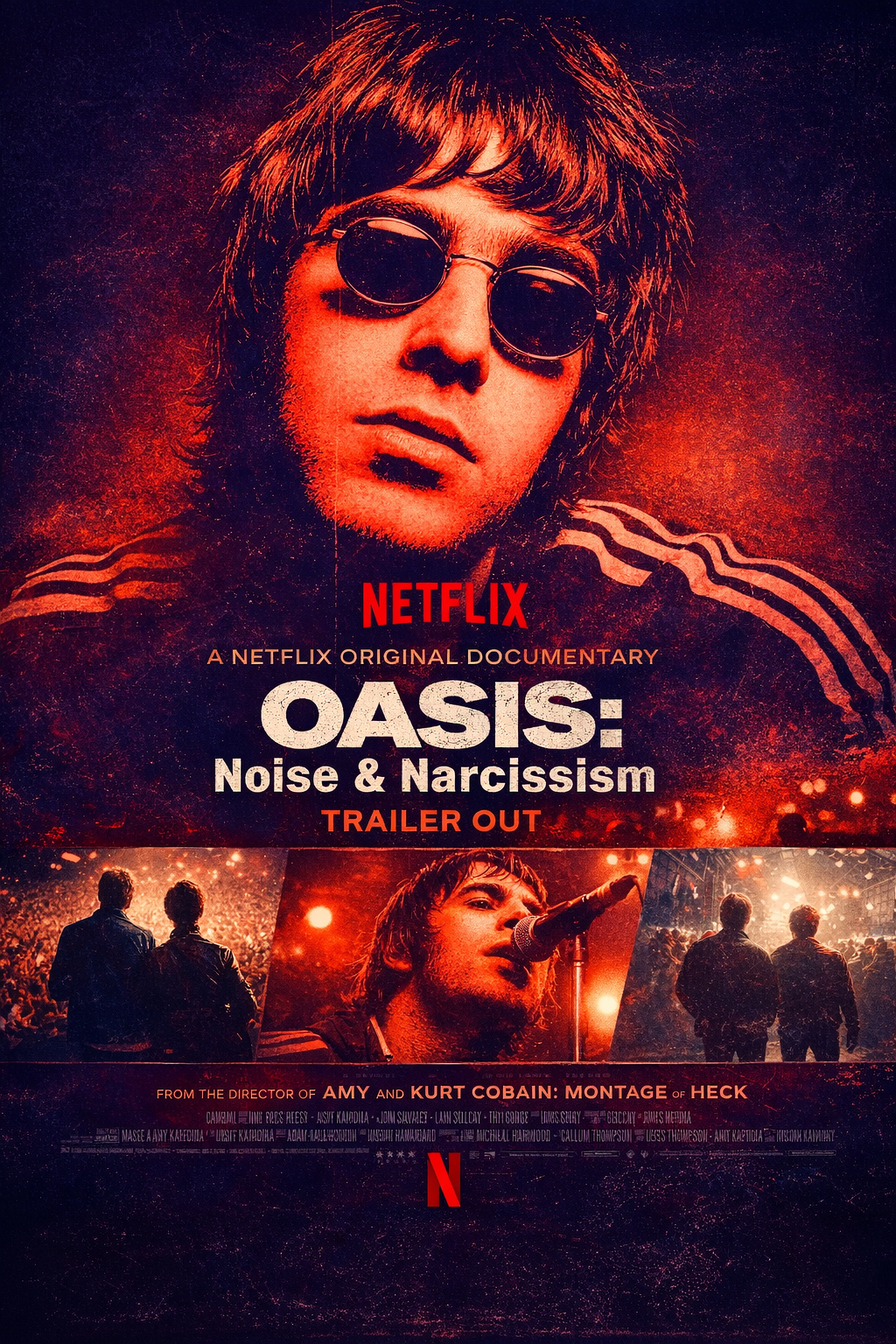
Netflix’s Oasis: Noise & Narcissism arrives as one of the most confrontational portraits of the band to date, stripping away nostalgia to focus on excess, ego, and the deafening volume of fame. This documentary doesn’t romanticize the chaos—it examines it, asking whether the noise surrounding Oasis was inseparable from the narcissism that fueled their rise. From the opening sequence, the tone is sharp, unapologetic, and deliberately uncomfortable.
The film frames Oasis as a band that thrived on attention as much as sound. Interviews and archival clips highlight how confidence blurred into arrogance, and how bravado became performance art. The documentary suggests that Oasis didn’t just dominate headlines—they needed them, feeding off controversy as a form of validation that matched the scale of their ambition.
At its core, Noise & Narcissism is about identity under a microscope. The band’s public personas are dissected alongside their private insecurities, revealing how fame magnified every flaw. The louder Oasis became, the harder it was to separate belief from self-delusion, and the film leans heavily into that tension.
The Gallagher brothers are central figures, portrayed as mirrors reflecting the best and worst of each other. Their confidence is infectious, their contempt relentless, and their refusal to compromise almost ideological. The documentary argues that narcissism wasn’t a side effect of success—it was part of the engine that drove it forward.
Music is treated as both triumph and shield. The film explores how anthems drowned out criticism, allowing the band to outrun self-reflection. Live performances explode with energy, but behind the scenes, cracks form where praise no longer satisfies and silence feels threatening. The noise becomes constant, almost oppressive.
Visually, the documentary is restless and abrasive. Rapid cuts, overlapping audio, and distorted visuals mirror the sensory overload of fame at full throttle. The audience is pulled into the chaos, forced to experience the same intensity that defined Oasis’s world during their peak.
The film also examines how media obsession reinforced narcissism on both sides. Journalists, fans, and critics are shown feeding the cycle, rewarding outrageous behavior with attention. Noise & Narcissism suggests that Oasis didn’t exist in isolation—they were part of a cultural machine that thrived on spectacle.
As the documentary progresses, exhaustion creeps in. Confidence turns brittle, arguments repeat themselves, and triumph starts to feel hollow. The band appears trapped by the very image that made them untouchable, unable to step back without losing momentum.
Rather than offering judgment, the film poses a difficult question: could Oasis have existed without this level of ego? It implies that removing narcissism might have silenced the noise—but also erased the spark that made the band iconic in the first place.
Released on May 22, 2026, Oasis: Noise & Narcissism lands in an era more willing to question the mythology of rock stardom. The date underscores a shift in how audiences engage with legends, favoring honesty over hero worship.
In its final act, the documentary slows down, allowing moments of reflection to surface. The bravado fades just enough to reveal vulnerability, regret, and unresolved tension. These quieter moments hit hardest, precisely because the film has been so loud up to this point.
Oasis: Noise & Narcissism ultimately stands as one of Netflix’s most daring music documentaries. It refuses comfort, challenges loyalty, and dares viewers to confront the cost of unchecked ego. By the end, it’s clear that Oasis wasn’t just amplified by noise and narcissism—they were defined by it.
About the Author