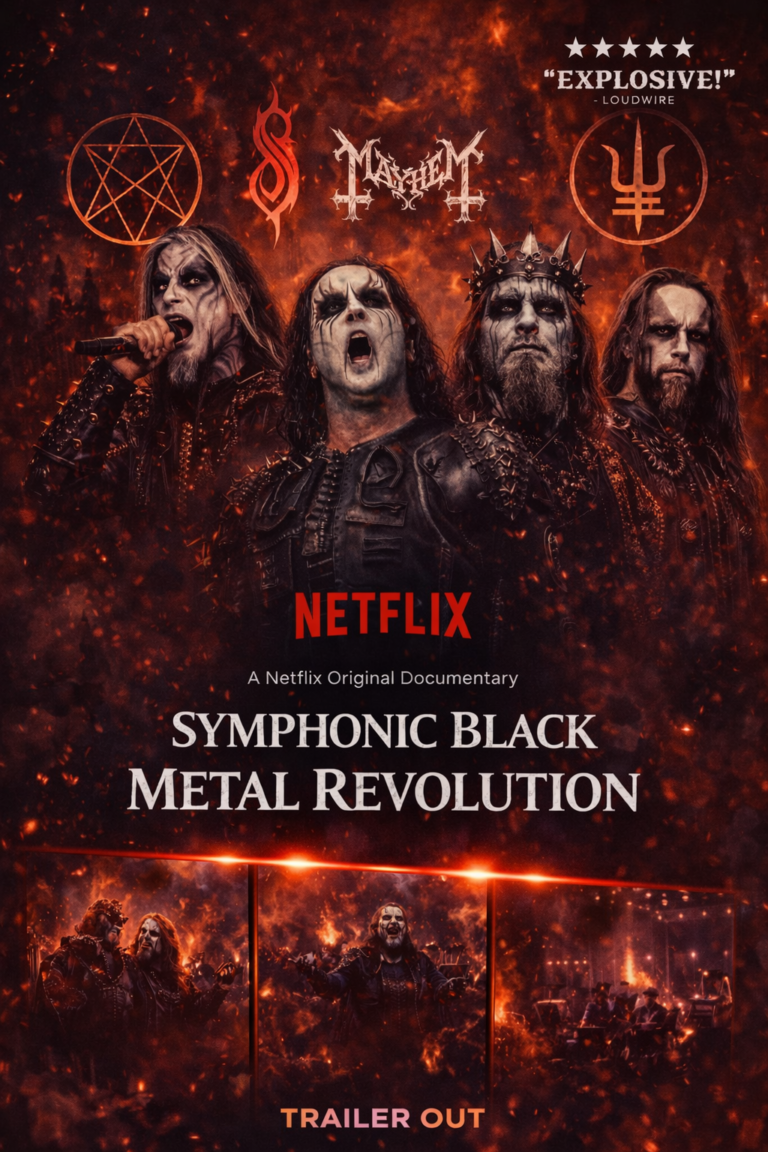
has confirmed the premiere of a new documentary titled Ragnarok and the Gods of War, and the trailer makes one thing clear immediately: this is not a romanticized retelling of Viking lore. It’s a confrontation with violence, belief, and the brutal worldview that shaped one of history’s most feared cultures.
The trailer wastes no time establishing tone. Cold landscapes, iron weapons, and ritual imagery dominate the screen. This is a world governed by fate, where death is not avoided but prepared for. The Vikings are presented not as mythic heroes, but as people who built their identity around the certainty of conflict and the promise of an apocalyptic end.
At the center of the documentary is the concept of Ragnarök—not as fantasy, but as belief. The film explores how the idea of an inevitable final war shaped Viking behavior, warfare, and honor. Fighting wasn’t just survival; it was rehearsal. Every battle was seen as a step toward a cosmic reckoning where gods and men would fall together.
The trailer hints at a sharp balance between archaeology and mythology. Excavated weapons, burial sites, and runic inscriptions are placed alongside dramatic reconstructions of Norse rituals and warfare. Rather than separating fact from belief, the documentary shows how tightly they were fused. For the Vikings, mythology wasn’t symbolic—it was operational.
What stands out is the documentary’s refusal to soften brutality. Raids are shown as calculated and merciless. Loyalty is framed as conditional. Glory is inseparable from bloodshed. The trailer suggests a focus on psychological reality: how a society functions when violence is normalized and the afterlife rewards those who die with a weapon in hand.
There’s also a strong emphasis on gods as war entities rather than distant deities. Odin, Thor, and others are portrayed not as moral guides, but as reflections of Viking priorities—power, sacrifice, and dominance. Worship is transactional. Survival and favor are earned through action, not prayer alone.
Netflix appears to be positioning Ragnarok and the Gods of War as a corrective to pop-culture Vikings. No horned helmets. No heroic gloss. Just a civilization shaped by climate, scarcity, and belief in an ending so violent it gave meaning to the present.
Early reaction to the trailer points to intrigue and unease. Viewers are noting its intensity, its seriousness, and its refusal to turn history into spectacle. This isn’t built for comfort viewing. It’s designed to unsettle.
The trailer is out now, and it doesn’t invite admiration. It invites understanding—of how a people who expected the world to burn learned to live, fight, and die without fear.
About the Author