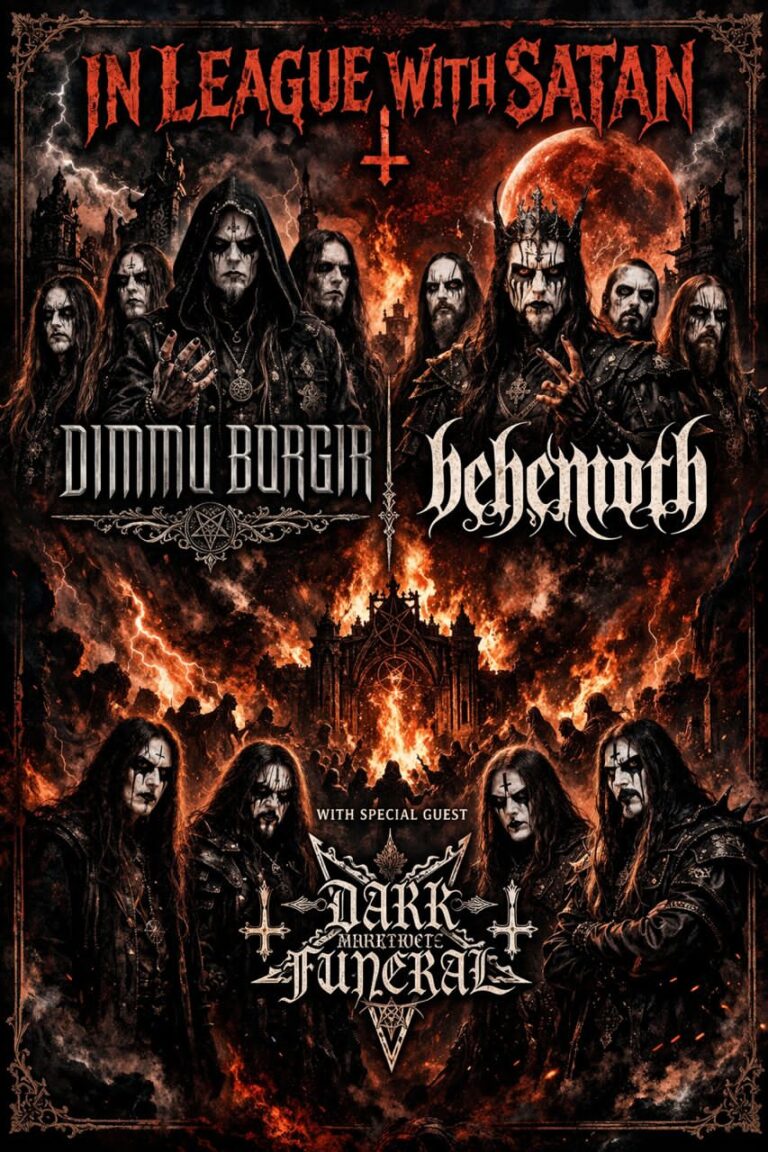
Dimmu Borgir: Empire of Black Metal emerges as a powerful Netflix documentary that explores the rise, evolution, and lasting influence of one of extreme metal’s most iconic bands, Dimmu Borgir. Known for merging orchestral grandeur with the cold intensity of black metal, the band transformed a once underground genre into a global artistic movement. The film invites viewers into a world where darkness meets sophistication, revealing how ambition and innovation reshaped heavy music forever.
The documentary opens by transporting audiences to the icy landscapes of Norway during the early 1990s, a time when black metal existed as a rebellious counterculture fueled by raw sound and uncompromising ideology. Through atmospheric cinematography and archival-inspired storytelling, the film captures the birth of a scene that rejected mainstream norms while embracing mystery, extremity, and artistic freedom.
As the narrative unfolds, viewers witness how Dimmu Borgir separated themselves from their contemporaries by introducing symphonic elements into black metal. Choir arrangements, classical instrumentation, and cinematic compositions elevated their music beyond traditional boundaries. The documentary portrays this creative decision as both risky and revolutionary, sparking debate within the metal community while simultaneously attracting a massive international audience.
Central to the film is the exploration of identity and artistic vision. Band members reflect on balancing authenticity with evolution, confronting criticism from purists while refusing to abandon experimentation. Their journey demonstrates the challenges artists face when redefining genre expectations, highlighting the courage required to pursue innovation in an often rigid musical landscape.
The visual presentation of Empire of Black Metal mirrors the theatrical nature of Dimmu Borgir’s performances. Dark cathedral imagery, dramatic lighting, and haunting stage recreations create an immersive cinematic experience. Concert sequences blend symphonic grandeur with aggressive energy, allowing viewers to feel the overwhelming atmosphere that has made the band legendary on stages around the world.
Beyond the music, the documentary examines the psychological and philosophical themes embedded within black metal culture. Discussions surrounding mythology, spirituality, rebellion, and artistic symbolism provide context for audiences unfamiliar with the genre. Rather than sensationalizing controversy, the film focuses on creative expression as a form of storytelling and emotional release.
The documentary also explores how Dimmu Borgir expanded black metal’s global reach. Interviews with critics, musicians, and fans illustrate how the band opened doors for extreme music to enter mainstream festivals and international charts. Their success demonstrated that darkness and beauty could coexist, reshaping perceptions of heavy music across cultures and generations.
Netflix has announced the global premiere of Dimmu Borgir: Empire of Black Metal for December 5, 2026, positioning the documentary as a landmark release for music cinema and metal culture alike. Early anticipation suggests the film will attract not only devoted fans but also curious newcomers eager to understand the artistic depth behind one of metal’s most misunderstood genres.
As the film progresses toward its conclusion, it shifts focus to legacy and endurance. The documentary highlights how Dimmu Borgir continues to influence modern musicians, filmmakers, and visual artists. Their commitment to theatrical storytelling and sonic experimentation proves that innovation remains essential for artistic survival in an ever-changing industry.
Ultimately, Dimmu Borgir: Empire of Black Metal stands as both a celebration and a reflection—a cinematic tribute to creativity born from darkness. By combining historical insight, emotional storytelling, and breathtaking performance imagery, Netflix delivers a documentary that transcends genre boundaries. The film reminds audiences that true artistic empires are not built on conformity but on the fearless pursuit of vision, imagination, and uncompromising individuality.
About the Author