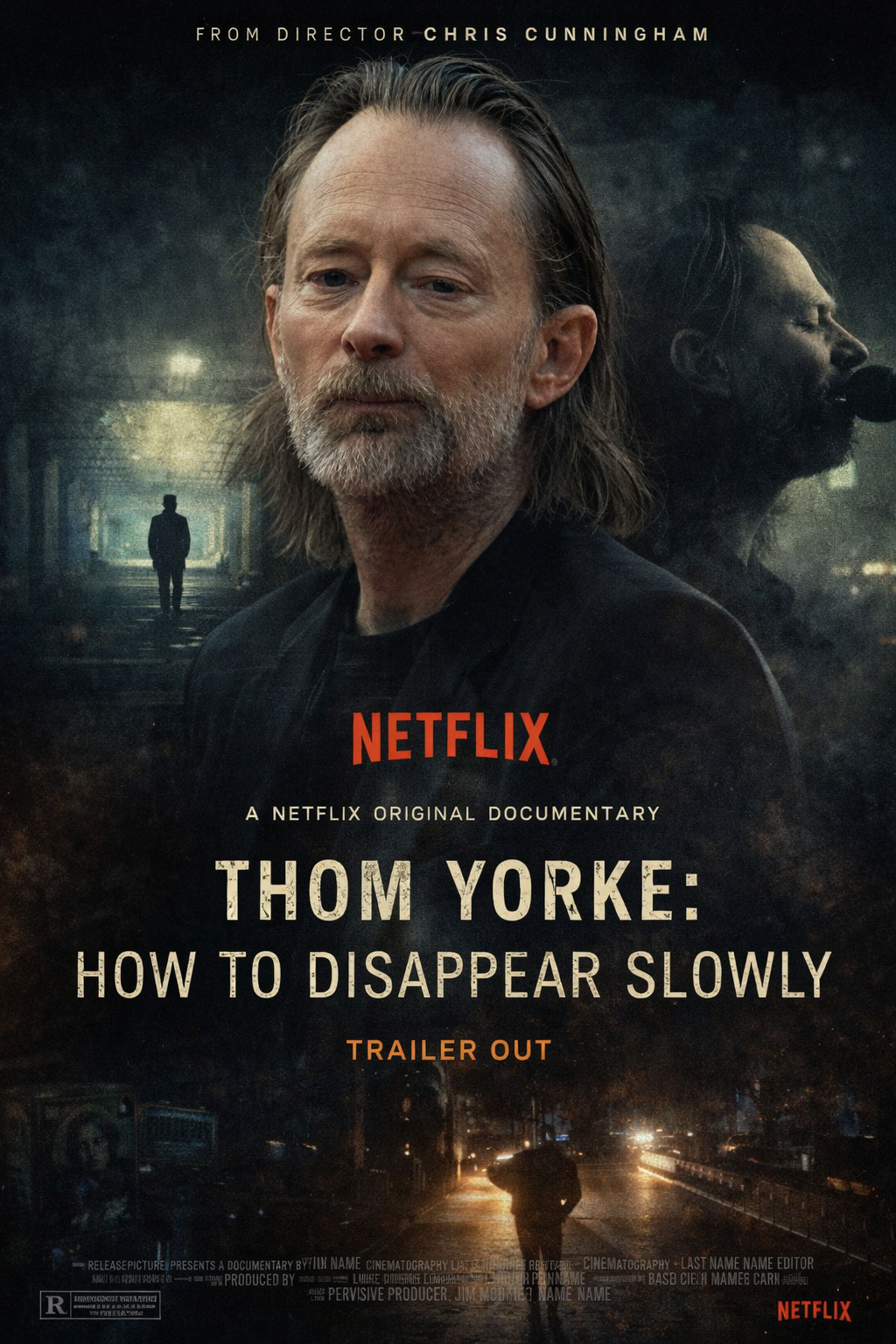
THOM YORKE: HOW TO DISAPPEAR SLOWLY is a haunting Netflix film that drifts between documentary and art-house cinema, capturing the elusive spirit of one of modern music’s most enigmatic figures. Rather than following a traditional biographical structure, the movie immerses viewers in mood, sound, and silence, mirroring the way Thom Yorke himself has always resisted definition. From the opening moments, the film establishes an atmosphere that feels intimate yet distant, inviting the audience to observe rather than fully grasp the man at its center.
The movie explores Yorke’s creative process through fragmented visuals, abstract imagery, and layered soundscapes that echo his musical evolution. Studio sessions blur into dreamlike sequences, live performances dissolve into shadow, and voiceovers feel more like thoughts than explanations. Instead of spelling out his journey, the film trusts viewers to connect the emotional dots, reinforcing the idea that art does not always need to be understood to be felt.
At its core, the film reflects on themes of isolation, anxiety, technological overload, and the quiet search for meaning in a hyper-connected world. These themes are not presented as lectures but as lived experiences, woven into the pacing and tone of the film. Moments of stillness are just as powerful as moments of sound, allowing the audience to sit with discomfort, beauty, and uncertainty in equal measure.
Netflix’s production approach elevates the film into something closer to a visual album than a standard music documentary. The cinematography leans heavily into shadows, muted colors, and slow movement, creating a sense of constant motion
About the Author