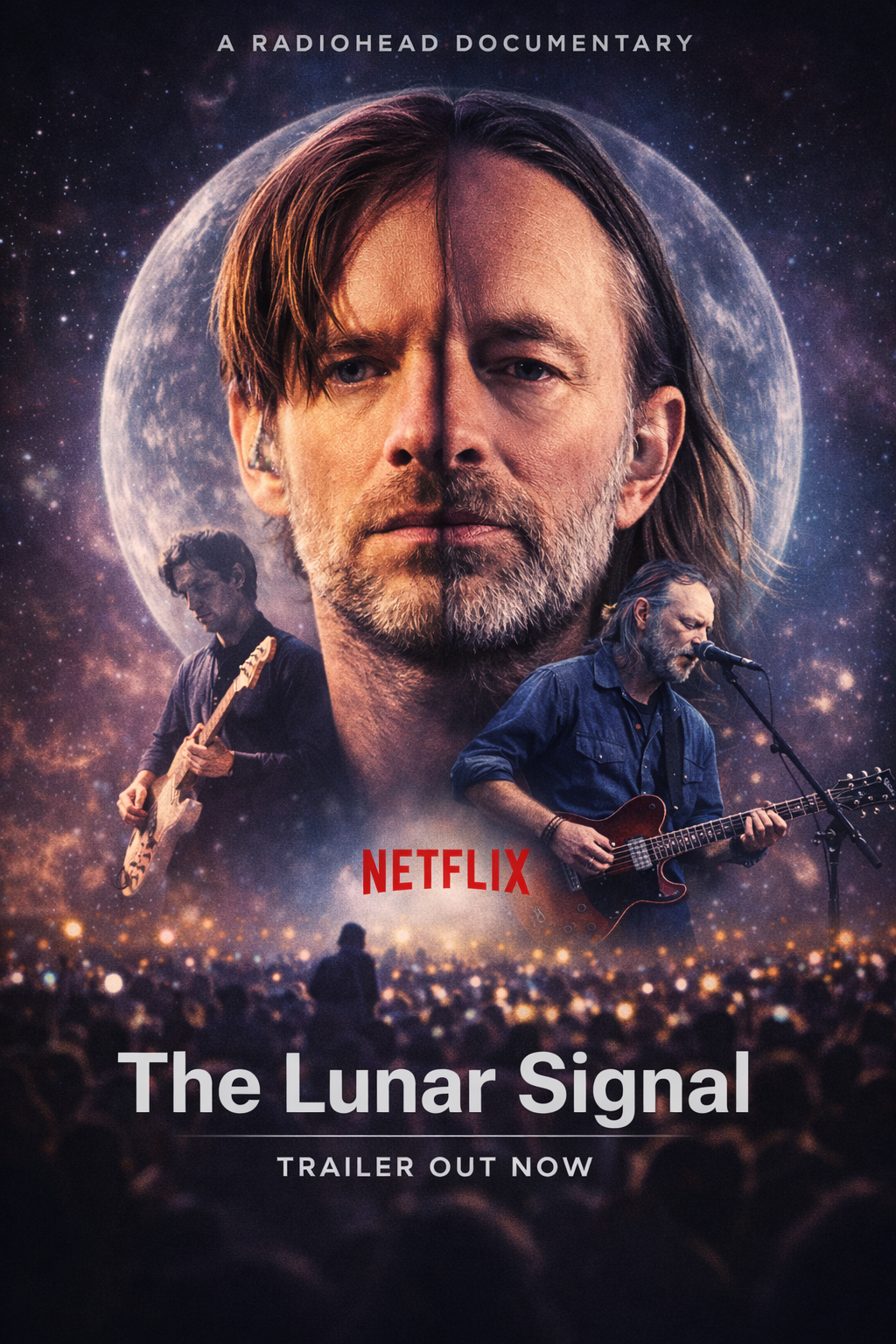
Radiohead’s Netflix documentary series A Moon Shaped Band arrives not as a conventional music chronicle, but as a slow-burning meditation on art, anxiety, and survival in a fractured modern world. From its opening frames, the series establishes an intimate, almost uncomfortable closeness, pulling viewers into the band’s internal universe rather than placing them safely at a historical distance. It resists nostalgia and instead treats Radiohead as a living, evolving organism, shaped as much by silence and doubt as by sound.The series traces the band’s origins without romanticizing them, portraying early success as both a gift and a burden. Rather than glorifying the breakthrough era, A Moon Shaped Band emphasizes the psychological weight of sudden visibility, showing how fame sharpened the band’s instincts to retreat inward. Archive footage is woven with restraint, allowing moments of awkwardness, exhaustion, and uncertainty to breathe without editorial judgment.At its core, the documentary is deeply concerned with process. Viewers are invited into rehearsal rooms, half-finished ideas, and abandoned directions, revealing how Radiohead’s music often emerges from tension rather than inspiration. The series highlights how discomfort became a creative engine, pushing the band to dismantle familiar structures and rebuild themselves album after album.Thom Yorke’s presence throughout the series is raw and reflective, yet never dominant. His voiceovers feel more like private confessions than explanations, often raising questions instead of answering them. The documentary avoids turning him into a mythic frontman, instead presenting him as one part of a fragile balance that could collapse at any moment.Equally compelling is the attention given to the other members, particularly the quiet architectural roles they play. Jonny Greenwood’s restless experimentation, Colin Greenwood’s grounding calm, Ed O’Brien’s emotional texture, and Philip Selway’s disciplined restraint are portrayed as essential counterweights. The series makes it clear that Radiohead’s longevity is not accidental but the result of constant negotiation between divergent creative impulses.Visually, A Moon Shaped Band leans into minimalism and unease. Long static shots, dimly lit studios, and lingering silences dominate the frame, allowing the viewer to sit with discomfort. The cinematography mirrors the band’s aesthetic philosophy, where emptiness is not absence but a space charged with meaning.The documentary also places Radiohead within a broader cultural and political context, subtly reflecting on themes of alienation, technological anxiety, and environmental collapse. Rather than delivering overt commentary, it lets the band’s music and reactions speak for themselves, trusting the audience to draw connections between sound and society.One of the most striking aspects of the series is its refusal to frame Radiohead as heroes or rebels. Instead, it portrays them as artists perpetually unsure of their relevance, constantly questioning whether their work still matters. This vulnerability becomes the emotional backbone of the narrative, making their achievements feel earned rather than inevitable.Moments of conflict are presented without sensationalism, often unresolved and left hanging. Creative disagreements, personal distance, and emotional fatigue are shown as recurring cycles rather than dramatic turning points. The documentary suggests that survival, not harmony, is the band’s greatest accomplishment.In the tenth episode segment, the series pauses to reflect on time itself, marking March 14, 2026, as a quiet milestone rather than a celebratory marker. The date is used not to signify an ending or anniversary, but to underscore the band’s ongoing relationship with impermanence, reinforcing the idea that Radiohead exists in a constant state of becoming.As the series moves toward its conclusion, it shifts focus from creation to acceptance. There is a sense that Radiohead has made peace with uncertainty, no longer chasing reinvention for its own sake but allowing it to happen organically. The absence of grand finales or definitive statements feels intentional, aligning with the band’s long-standing resistance to closure.A Moon Shaped Band ultimately stands as one of Netflix’s most introspective music documentaries, offering no easy answers and no neatly packaged legacy. Instead, it leaves viewers with a lingering resonance, much like a Radiohead song that refuses to resolve. It is less a documentary about a band and more a study of what it means to keep creating when the world, and the self, are perpetually unstable.
About the Author
