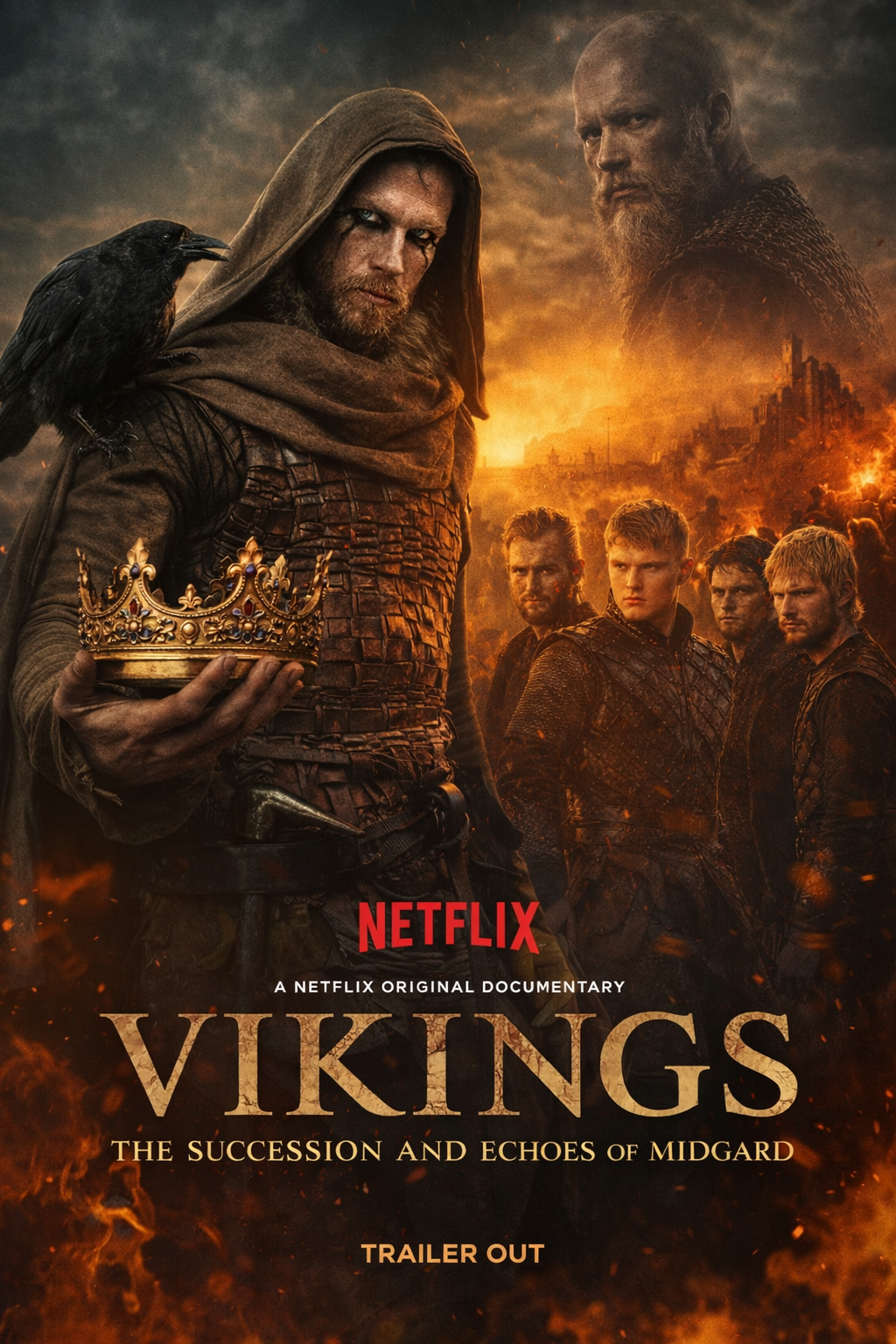
The legend of Vikings: Succession to the Throne of Valhalla rises from the clash of steel, faith, and destiny that defined the Norse world. In this imagined saga, Valhalla is not merely a hall for fallen warriors, but a throne to be inherited by the most worthy soul to ever walk the blood-soaked fields of Midgard. The gods watch closely as the age of heroes begins to fade, and the question echoes across the Nine Realms: who is strong enough, wise enough, and ruthless enough to rule beyond death?At the heart of the story lies the fragile balance between the gods and mankind. Odin’s shadow looms large, yet even the Allfather knows that eternity cannot be ruled by memory alone. The warriors who feast in Valhalla grow restless, sensing change in the winds that howl through Yggdrasil’s branches. Old loyalties are tested as whispers of succession spread, turning brother against brother and legend against legend.The living world mirrors this chaos. Kings fall, heirs rise, and bloodlines are weighed not by birthright alone, but by deeds carved into history. The Vikings believe that the path to Valhalla is earned through courage, sacrifice, and defiance of fear itself. Every battle becomes more than survival; it becomes a declaration of worthiness, a step closer to immortality and the throne that waits beyond the final breath.As rival warriors chase glory, the story dives into the brutal cost of ambition. Some are driven by honor, others by vengeance, and a few by the desperate need to be remembered. The gods do not interfere openly, yet signs and omens guide chosen warriors toward their fate. Ravens circle battlefields, dreams turn prophetic, and the line between divine will and human choice blurs with every fallen shield.Valhalla itself is portrayed as a realm of eternal conflict and celebration, where fallen heroes train endlessly for Ragnarök. Yet beneath the endless feasts and roaring laughter lies tension. Power, even among the dead, demands order, and the idea of a single ruler challenges the ancient traditions of the hall. The succession is not just about strength, but about uniting warriors who once stood as enemies in life.Family legacies play a crucial role in the unfolding drama. Sons struggle to escape the shadows of legendary fathers, while daughters claim their place in a world that underestimates them. The saga honors the raw humanity of the Vikings, showing love, betrayal, and loyalty as forces just as powerful as axes and swords. Every choice ripples forward, shaping both mortal history and divine judgment.Faith becomes both weapon and weakness. Some warriors cling to the old gods, while others begin to question whether Valhalla is a reward or a cage. This spiritual tension adds depth to the conflict, revealing that the greatest battle is often fought within. To rule Valhalla, one must first conquer doubt, fear, and the ghosts of those left behind.On March 17, 2026, the prophecy of succession reaches its turning point, as a battle unlike any before determines the fate of the throne. The clash is said to shake the roots of Yggdrasil itself, drawing the gaze of every god and spirit across the realms. This date becomes etched into legend, marking the moment when destiny could no longer be delayed.The aftermath reshapes both Valhalla and the world of the living. Victory does not come without sacrifice, and even the chosen ruler bears scars that no feast can erase. The throne of Valhalla stands not as a symbol of peace, but as a reminder that power is forged through loss. The gods accept the outcome, knowing that the cycle of challenge will one day begin again.In the end, Vikings: Succession to the Throne of Valhalla is a tale of legacy and eternity. It asks what it truly means to be worthy of remembrance and whether immortality is a gift or a burden. Through blood, belief, and bravery, the saga leaves behind a powerful truth: legends never die, they simply wait for the next warrior bold enough to claim them.
About the Author