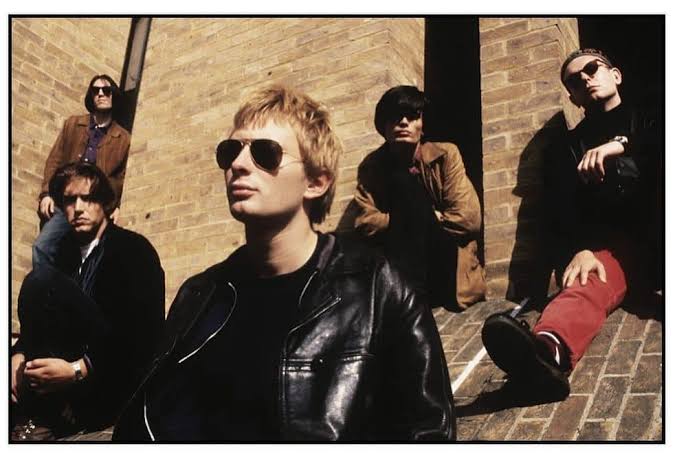
Netflix Presents: Between the Machines: Radiohead × Aphex TwinNetflix’s Between the Machines: Radiohead × Aphex Twin is not merely a documentary; it is a cinematic meditation on anxiety, innovation, and the uneasy romance between humans and technology. Bringing together two of the most influential forces in modern music, the film explores how Radiohead and Aphex Twin independently, and sometimes unknowingly, soundtracked the digital age before the rest of the world realized it had arrived.This is a story about wires and feelings, algorithms and alienation, and the artists who translated technological dread into beauty.At first glance, Radiohead and Aphex Twin seem to occupy different musical universes. One is a band that redefined alternative rock; the other, a solitary electronic architect who reshaped the contours of IDM and experimental techno. Yet Between the Machines reveals a shared obsession with the psychological cost of progress.Radiohead’s evolution from OK Computer to Kid A marked a deliberate break from guitar-driven tradition, mirroring society’s own uneasy leap into a digitized world. Aphex Twin, meanwhile, was already there, deconstructing rhythm, distorting melody, and treating machines not as tools, but as collaborators.The film positions them not as collaborators in the traditional sense, but as parallel thinkers, artists responding to the same cultural tremors from different ends of the spectrum.Central to the documentary is the idea that both artists anticipated the emotional fallout of technological acceleration. Long before social media fatigue, algorithmic surveillance, or AI-generated identity crises became everyday realities, their music captured the feeling of being watched, processed, and abstracted.Radiohead articulated mass unease, paranoia rendered in anthems and disconnection sung in falsetto. Aphex Twin internalized it, encoding private dread in glitch, tempo, and unsettling beauty.Netflix weaves archival footage, rare studio recordings, and intimate interviews into a narrative that feels less like music journalism and more like cultural archaeology.Visually, the film is stark and hypnotic. CRT static bleeds into biometric scans. Analog synthesizers dissolve into data streams. The aesthetic language borrows from both artists’ iconography, with Radiohead’s distorted faces and apocalyptic imagery colliding with Aphex Twin’s uncanny digital surrealism.The result is a work that feels composed rather than edited. Silence is given as much weight as sound. Glitches are not errors; they are punctuation.One of the documentary’s most compelling achievements is how it avoids forcing a narrative of direct influence. Instead, it highlights resonance. Radiohead did not become Aphex Twin, and Aphex Twin did not soften into Radiohead, but both bent popular music toward experimentation and legitimized discomfort as an artistic goal.Today’s genre-fluid musical landscape owes much to those risks. The film traces a clear line from their work to contemporary artists navigating modular synthesis, artificial intelligence, and post-human aesthetics.Released at a moment when artificial intelligence is no longer speculative but operational, Between the Machines feels urgent. It asks what happens to creativity when machines learn to mimic us, whether emotion can survive automation, and whether we were warned in advance.Radiohead and Aphex Twin did not just predict the future. They felt it first.Between the Machines is a quiet, unsettling triumph. It does not offer answers, nor does it romanticize technology. Instead, it listens closely to the static between signal and noise, humanity and hardware.For anyone who has ever felt overwhelmed by the modern world, this Netflix original is essential viewing.
About the Author