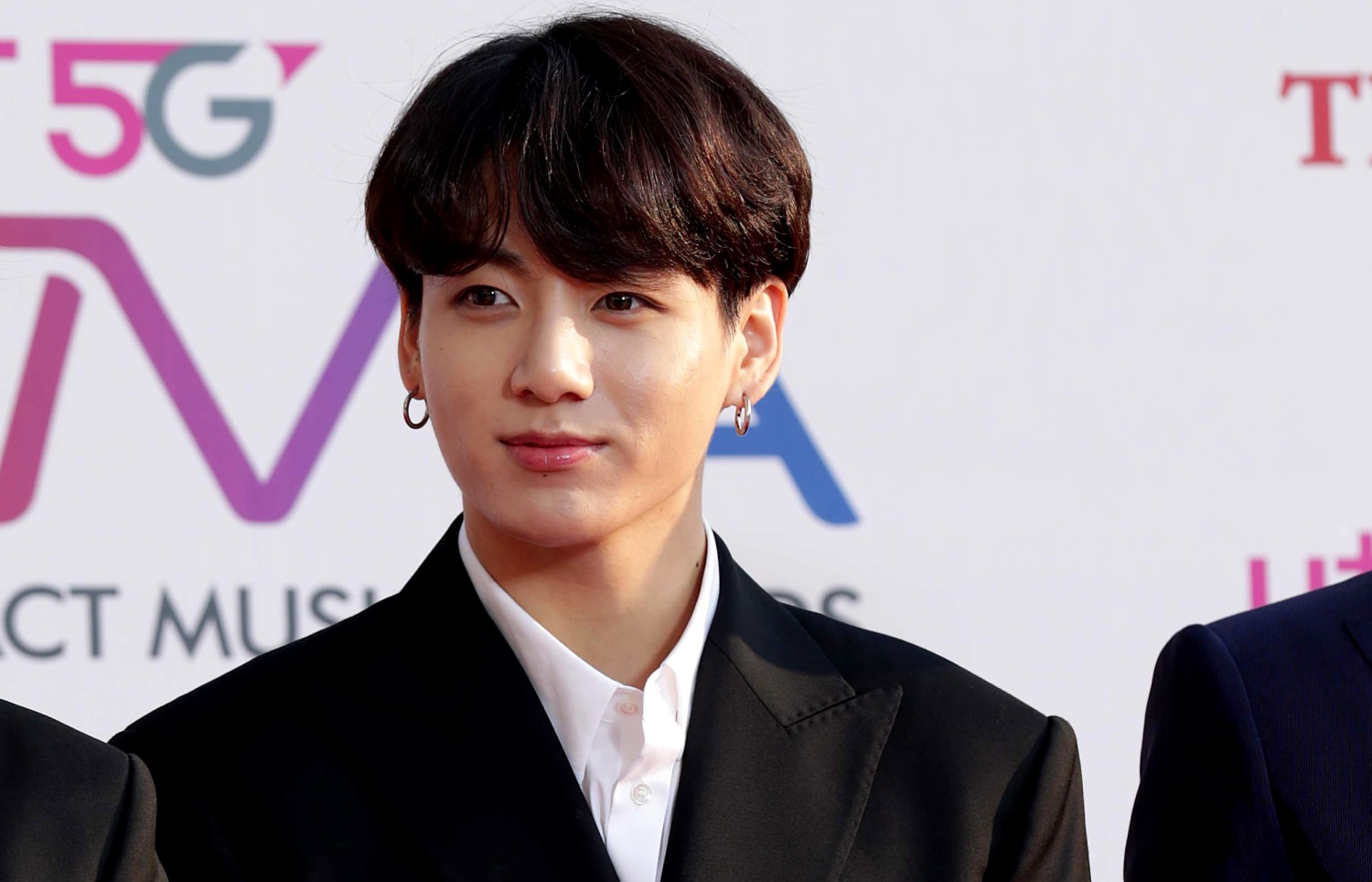
In an industry built on noise, spectacle, and constant reinvention, Jungkook did something quietly radical. He stopped chasing. No forced narratives. No desperate reinventions. No loud announcements demanding attention. Instead, he let consistency, discipline, and an almost unsettling level of self-belief do the talking. While the world rushed to keep up with trends, Jungkook became the point of reference those trends now circle around.
There is something disarming about how effortless his excellence appears. The truth, of course, is that nothing about it is accidental. Years of unseen practice, restraint in moments when hype would have been easier, and a refusal to dilute his craft for quick applause have shaped him into more than a pop star. He has become a benchmark. Not because he declared it, but because the culture decided it collectively.
What separates Jungkook isn’t just talent, though his range alone could sustain a career most artists only dream of. It’s his relationship with growth. He evolves without announcing evolution. Each era feels like a natural extension rather than a calculated pivot. When he sings, dances, or simply stands still on a stage, there’s a sense that he is fully present, fully accountable to the moment. That presence is rare. Audiences feel it instinctively, even if they can’t name it.
Fame often pushes artists to perform versions of themselves that are louder, sharper, more exaggerated. Jungkook went the opposite direction. He leaned into mastery. Into control. Into becoming so good at what he does that spectacle became optional. That is why his performances don’t just trend; they linger. They get studied, replayed, referenced. They raise the bar in ways that force others to recalibrate their own standards.
There’s also a quiet confidence in how he carries success. No rush to prove relevance. No panic about being seen. He understands something many never learn: when your work speaks clearly enough, you don’t need to shout. This restraint, in an era addicted to overexposure, feels almost rebellious. It signals an artist who knows his value and trusts time to confirm it.
Jungkook’s influence stretches beyond charts and numbers. Younger artists watch him not just to imitate, but to understand what longevity looks like in real time. Fans don’t just admire him; they measure moments against him. Even critics, reluctant as they may be, frame conversations around the standard he sets. That’s how cultural gravity works. It doesn’t ask permission. It simply pulls.
What makes this all more compelling is that Jungkook never positioned himself as the standard. He never announced dominance. He never demanded recognition. He showed up, again and again, with precision, humility, and an almost obsessive respect for his craft. The result is an authority that feels earned rather than imposed.
In a world where everyone is chasing the spotlight, Jungkook understood that the spotlight eventually follows those who don’t chase it at all. By focusing on excellence instead of attention, depth instead of noise, and authenticity instead of performance, he didn’t just succeed. He reset expectations.
And that is the quiet truth many are still catching up to: Jungkook didn’t ask to be the standard. He became it by simply refusing to be anything less.
About the Author