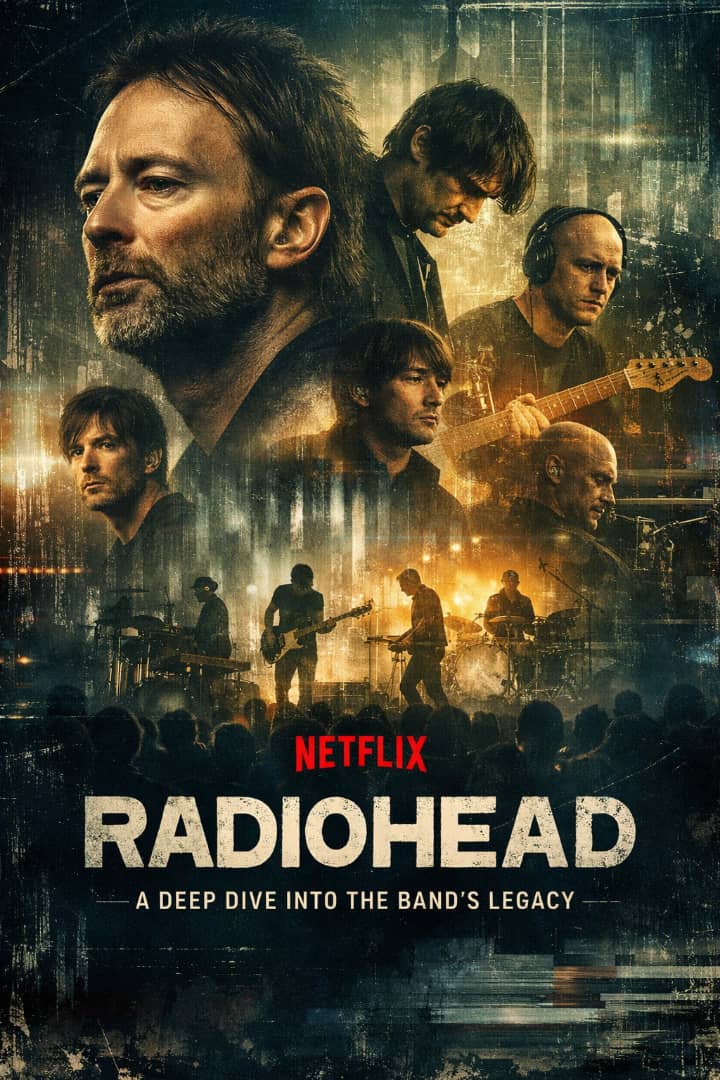
Netflix has quietly released an exclusive Radiohead documentary that feels less like a traditional music film and more like an intimate excavation of one of the most influential bands of the modern era. Rather than rushing through greatest hits or glossy milestones, the documentary takes its time, inviting viewers into the strange, restless world Radiohead has occupied for over three decades. From the opening moments, it’s clear this is designed for both longtime fans and curious newcomers who want to understand why the band still matters so deeply.
The film traces Radiohead’s origins in Oxfordshire with a grounded honesty, revisiting the early days when they were just another group of students experimenting with sound and ambition. Archival footage shows a young Thom Yorke grappling with confidence and creativity, while the rest of the band slowly locks into the chemistry that would define their future. These moments feel raw and unpolished, offering a reminder that Radiohead’s global impact began in cramped rehearsal rooms and uncertain gigs.
As the documentary moves into the band’s breakthrough era, it avoids turning “Creep” into a victory lap. Instead, it examines how sudden success became a creative burden, shaping Radiohead’s complicated relationship with fame. Interviews reveal the tension between audience expectations and the band’s growing desire to push against conventional rock structures, a conflict that would fuel some of their boldest artistic decisions.
The heart of the film lies in its exploration of Radiohead’s constant reinvention. Albums like OK Computer, Kid A, and In Rainbows are unpacked not as products, but as emotional and philosophical responses to the world around them. The documentary connects the band’s sonic shifts to broader themes—technology, alienation, political anxiety—making it clear that Radiohead’s music has always been a reflection of unease rather than escapism.
What makes the documentary especially compelling is its focus on collaboration. Jonny Greenwood’s experimental instincts, Colin Greenwood’s steady presence, Ed O’Brien’s atmospheric textures, and Phil Selway’s understated precision are all given space. Netflix resists the temptation to frame Radiohead as a one-man vision, instead showing how the band’s strength comes from friction, debate, and mutual trust built over years.
The film also captures Radiohead’s famously private nature without feeling invasive. There are quiet moments—long pauses in interviews, backstage silences, half-finished thoughts—that say as much as the spoken words. These scenes underline how discomfort and introspection have always been central to the band’s identity, shaping both their sound and their refusal to play by industry rules.
Another standout element is the documentary’s treatment of Radiohead’s relationship with technology and the music business. From pioneering online releases to challenging traditional album pricing, the band’s decisions are framed as philosophical choices rather than marketing stunts. Netflix presents these moments as extensions of Radiohead’s core belief in artistic autonomy, reinforcing why they’ve remained relevant in a rapidly changing industry.
Visually, the documentary is understated but effective. Grainy tour footage blends with modern high-definition interviews, mirroring the band’s balance between past and present. The soundtrack is used sparingly, allowing familiar songs to emerge naturally rather than overwhelming the narrative. This restraint makes each musical moment feel earned and emotionally resonant.
By the final stretch, the film shifts toward reflection rather than resolution. There’s no definitive statement about Radiohead’s future, only an acknowledgment that uncertainty has always been part of their creative engine. The band members speak less about legacy and more about curiosity, suggesting that their story is still unfolding rather than neatly concluded.
In the end, Netflix’s Radiohead documentary succeeds because it refuses to mythologize without questioning. It portrays the band as thoughtful, flawed, and perpetually searching, which is precisely what has kept their music alive across generations. For anyone who has ever felt unsettled, challenged, or deeply understood by a Radiohead song, this documentary feels like a quiet invitation to look closer—and listen again.
About the Author
