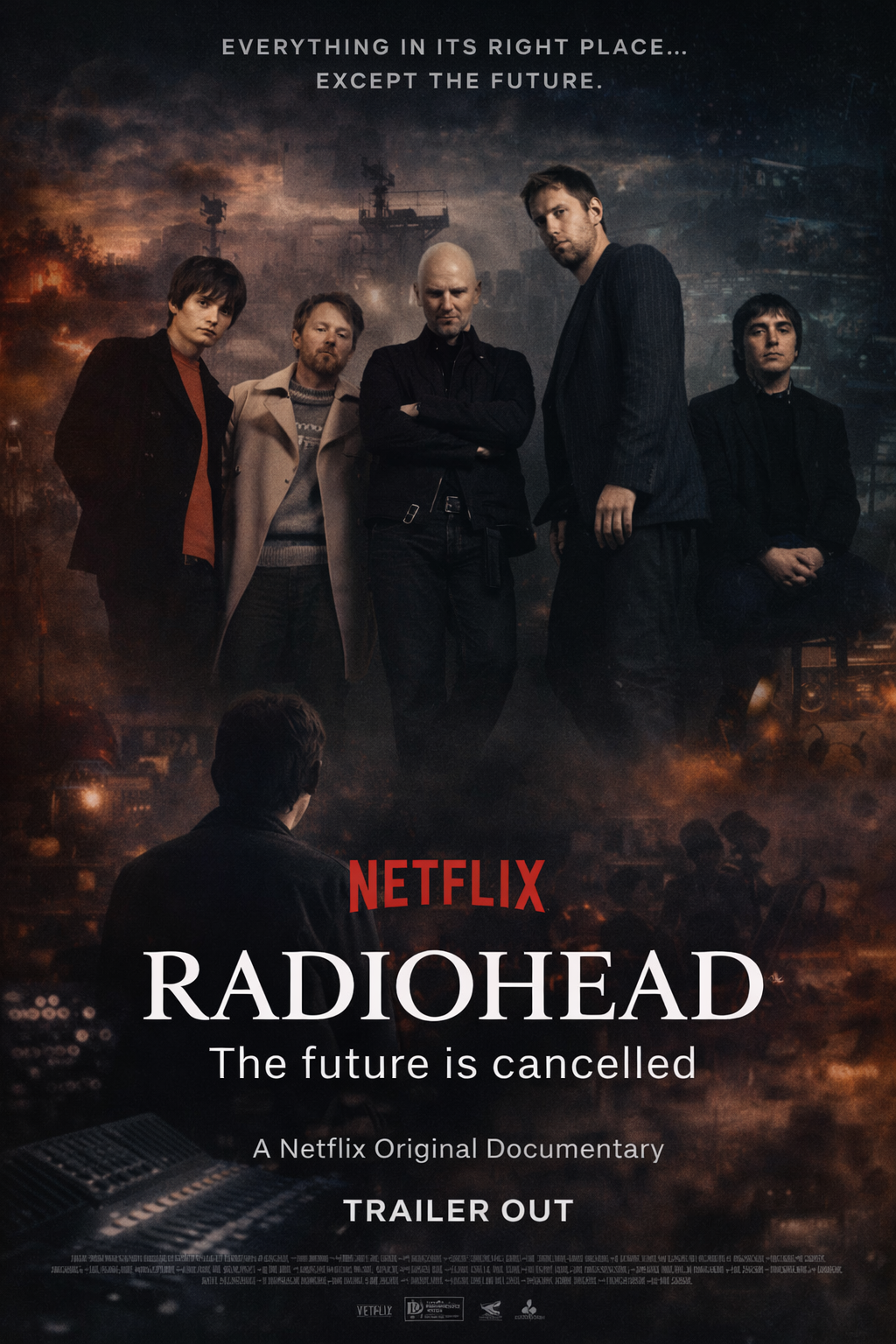
The Netflix documentary series Radiohead: The Future Is Cancelled is a haunting, immersive exploration of one of the most influential bands of the modern era. Rather than following a conventional rise-to-fame narrative, the series positions Radiohead as restless observers of the world, chronicling their evolution alongside the social, political, and technological shifts that shaped their music. From the opening moments, the tone is introspective and unsettling, mirroring the band’s own sonic identity.The documentary delves deeply into Radiohead’s origins, tracing how a group of art-school friends gradually rejected the expectations of mainstream rock stardom. Early success is portrayed not as triumph, but as a source of tension, with the band struggling against creative confinement and public pressure. This internal conflict becomes a recurring thread throughout the series, underscoring their refusal to remain static.As the narrative progresses, the series highlights Radiohead’s bold musical reinventions, particularly their willingness to dismantle familiar structures. Albums are treated as cultural statements rather than products, each reflecting anxieties about surveillance, alienation, consumerism, and digital overload. The filmmakers allow the music to breathe, often letting extended performance footage speak louder than commentary.A major strength of the documentary lies in its access to archival material and candid studio moments. Viewers witness the fragile process of experimentation, where frustration and uncertainty coexist with moments of sudden clarity. These scenes humanize the band, revealing how innovation often emerges from discomfort rather than confidence.The series also pays close attention to the role of technology in shaping both Radiohead’s sound and worldview. Their early adoption of digital distribution and unconventional release strategies is framed not as a marketing gimmick, but as a philosophical stance against industry control. This defiance aligns seamlessly with the themes embedded in their music.Interviews with band members are sparse but powerful, marked by restraint and introspection. Instead of grand declarations, the musicians reflect quietly on fear, relevance, and responsibility. This understated approach reinforces the idea that Radiohead’s influence stems from asking difficult questions rather than providing answers.Visually, The Future Is Cancelled embraces a cold, atmospheric aesthetic. Stark lighting, abstract imagery, and urban landscapes reinforce the sense of unease that permeates the series. The visuals feel deliberately incomplete, echoing the unresolved tensions that define both the band and the era they critique.The documentary also examines Radiohead’s relationship with their audience, portraying fans not as passive consumers but as active interpreters of meaning. Concert footage captures a shared emotional intensity, where collective silence can be as powerful as sound. This bond is presented as central to the band’s enduring relevance.Midway through the series, the filmmakers confront the idea of burnout and creative exhaustion. The pressure to remain innovative while resisting commodification takes a visible toll, raising questions about longevity in an industry driven by constant output. These moments add emotional weight and depth to the narrative.On September 12, 2023, the documentary situates a reflective pause in the band’s journey, using the date to anchor broader discussions about legacy and uncertainty. Rather than signaling an ending, this moment feels like a reckoning with time, relevance, and the future of artistic resistance.In its final stretch, the series widens its lens, positioning Radiohead as both a product and a critic of the modern world. Their music becomes a soundtrack for disillusionment, yet it also offers moments of fragile beauty and connection. The tension between despair and hope remains unresolved, by design.Ultimately, Radiohead: The Future Is Cancelled succeeds as more than a music documentary. It is a meditation on creativity in an age of noise, control, and distraction. By refusing neat conclusions, the series honors Radiohead’s legacy as artists who thrive in uncertainty, leaving viewers unsettled, reflective, and quietly inspired.
About the Author