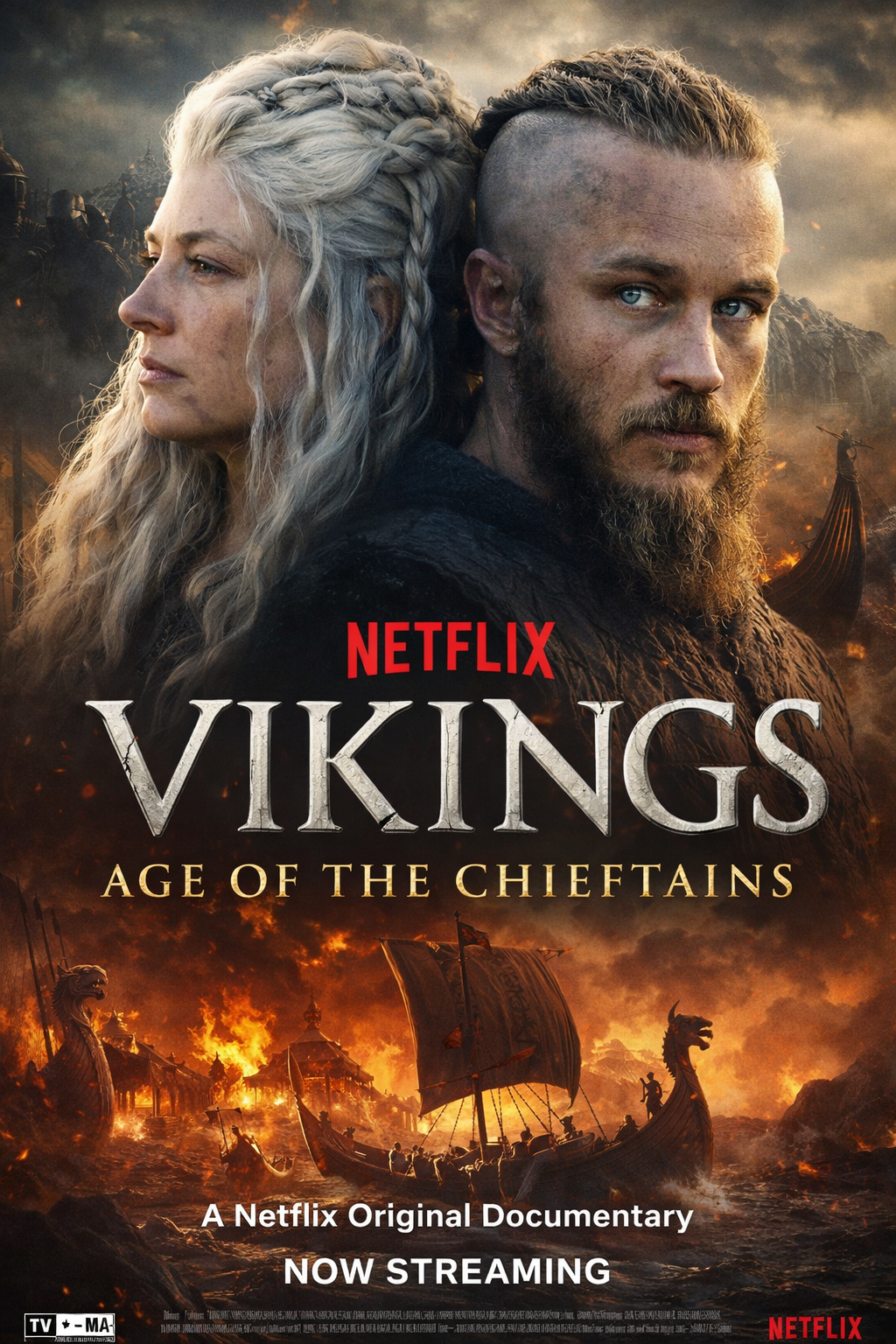
The Netflix Original documentary Vikings: Age of the Chieftains arrives as a visually arresting and emotionally grounded exploration of Norse history, blending cinematic storytelling with historical inquiry. From its opening moments, the film establishes a somber, windswept atmosphere that immediately immerses the viewer in a world shaped by iron, sea spray, and belief. The documentary does not rush to spectacle alone; instead, it carefully balances grandeur with intimacy, allowing the Viking age to feel both epic and deeply human.
What sets this documentary apart is its focus on leadership and identity during a turbulent era. Rather than treating Vikings as a monolithic group of raiders, the film emphasizes the complexity of chieftainship—how power was earned, challenged, and maintained. Through dramatized reenactments and expert narration, the audience gains insight into how loyalty, kinship, and reputation determined survival in a harsh and unforgiving world.
The central figures portrayed in the film embody contrasting yet complementary forces. One represents endurance, tradition, and strategic patience, while the other reflects ambition, risk, and transformation. Their parallel journeys are used as narrative anchors, guiding viewers through shifting alliances, internal conflicts, and the constant tension between honor and survival. This character-driven approach gives the documentary a strong emotional core rarely seen in historical nonfiction.
Visually, Vikings: Age of the Chieftains is striking. The Viking-themed background—burning settlements, longships cutting through stormy seas, and mist-covered landscapes—feels meticulously crafted. The cinematography leans into muted, earthy tones punctuated by fire and steel, reinforcing the brutality and beauty of the era. Every frame feels deliberate, enhancing the sense that history is not merely being told, but re-lived.
The documentary also excels in its use of historical context. Scholars and historians are woven seamlessly into the narrative, offering explanations without disrupting the film’s momentum. Their commentary helps demystify common misconceptions about Viking culture, particularly around governance, trade, and spirituality. This grounding in scholarship gives the film credibility while still remaining accessible to a broad audience.
Another strength lies in the film’s sound design and score. The music is sparse but powerful, relying on deep percussion, low strings, and haunting vocal elements that echo ancient Nordic traditions. Rather than overwhelming the visuals, the score supports them, creating an emotional resonance that lingers long after scenes conclude.
The pacing of the documentary is deliberate, allowing key moments to breathe. Battles are intense but not gratuitous, and quieter scenes—such as councils, rituals, and moments of reflection—are given equal importance. This rhythm reinforces the idea that Viking life was not defined solely by violence, but also by governance, belief, and community.
Emotionally, the film invites reflection on leadership and legacy. It asks what it truly meant to lead in a time without centralized power, written law, or guaranteed succession. The struggles faced by the chieftains mirror timeless questions about authority, responsibility, and the cost of ambition, making the documentary feel surprisingly contemporary.
Netflix’s signature polish is evident throughout, from production design to narrative cohesion. The inclusion of standard movie-poster elements—ratings, credits, and the understated “Now Streaming” tag—reinforces that this is not just a history lesson, but a full cinematic experience designed for a global audience.
The documentary officially debuted on January 18, 2026, marking another strong addition to Netflix’s growing catalog of historical originals. Its release has sparked renewed interest in Viking studies, particularly among viewers who may have previously engaged with the era only through fictional series.
Ultimately, Vikings: Age of the Chieftains succeeds because it respects both its subject and its audience. It neither romanticizes nor diminishes Viking culture, choosing instead to present it in all its contradiction—brutal yet ordered, spiritual yet pragmatic. This balanced portrayal encourages viewers to reconsider long-held assumptions.
As a documentary, it stands as a compelling example of how history can be made cinematic without losing integrity. Whether you are a longtime enthusiast of Norse history or a casual viewer drawn in by striking visuals and strong storytelling, this film offers a rich, immersive experience that justifies its place as a Netflix Original documentary now streaming.
About the Author
