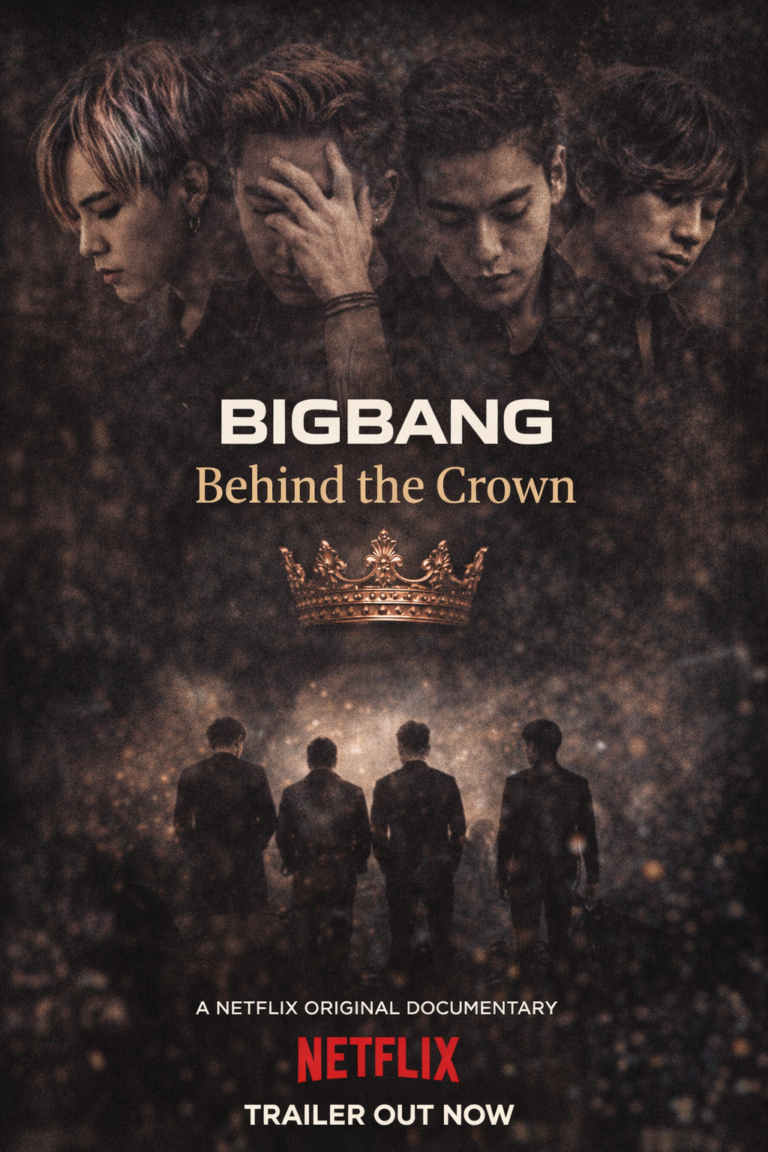
BIGBANG has always existed in extremes, and BIGBANG: Behind the Crown opens by confronting that reality head-on. The documentary pulls away from spectacle and instead focuses on the quiet weight carried by artists who reshaped an industry while being consumed by it. From the first moments, the crown is shown not as a prize, but as a burden.The film traces BIGBANG’s rise as an act of disruption. At a time when uniformity defined idols, they stood out through individuality, self-expression, and unpredictability. The documentary frames their early success as revolutionary, but also destabilizing in an industry built on control.Fame arrives fast and without protection. Cameras linger on moments of isolation behind sold-out arenas and chart dominance. The documentary suggests that BIGBANG’s visibility made them powerful, but also exposed them to relentless scrutiny that left little room for error or growth.Mental pressure becomes a recurring theme. The members speak about anxiety, exhaustion, and emotional detachment, revealing how the demand to constantly perform perfection slowly eroded their sense of self. Silence, the film implies, became a survival strategy.Controversy and scandal are addressed with gravity rather than sensationalism. The documentary explores how public judgment collapses nuance, turning personal failures into permanent narratives. These moments are portrayed as fractures that reshaped trust, identity, and brotherhood.The emotional distance between members is captured with restraint. Long gaps, fragmented communication, and unresolved tension reveal how fame can isolate even those standing side by side. The documentary refuses easy reconciliation, choosing honesty over closure.Music remains the group’s most reliable language. Studio sessions and archival performances show how BIGBANG translated chaos into sound, using creativity as both confession and escape. Songs become emotional timestamps rather than commercial products.The film also examines the cost of individuality in a system that punishes deviation. BIGBANG’s refusal to conform is framed as both their greatest strength and their greatest vulnerability, attracting admiration while inviting backlash.Visually, Behind the Crown adopts a muted, introspective tone. Dim lighting, slowed pacing, and close-up interviews replace the extravagance typically associated with BIGBANG’s image, reinforcing the emotional gravity of the narrative.In January 2026, the documentary pauses to reflect on legacy without nostalgia. The question is no longer about dominance or relevance, but about survival and accountability in the aftermath of fame.By its final act, the film feels less like a group biography and more like a meditation on consequence. BIGBANG is presented not as heroes or villains, but as humans navigating a system that amplified every choice and mistake.As the screen fades, BIGBANG: Behind the Crown leaves a quiet, unresolved truth. Power without protection extracts a price, and even kings are not immune to the weight of their own crowns.
About the Author