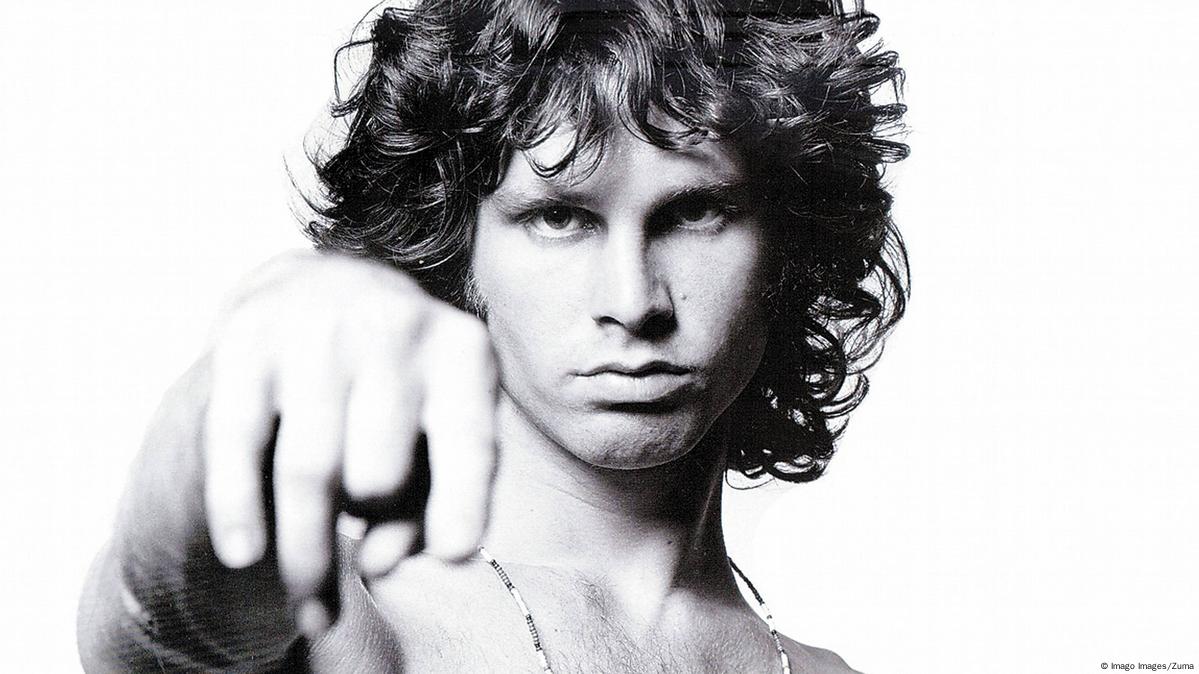
Jim Morrison, the enigmatic frontman of The Doors, is one of the most iconic figures in rock history. With his deep voice, poetic lyrics, and charismatic yet troubled persona, Morrison became a symbol of the counterculture movement of the 1960s. His untimely death at the age of 27 cemented his status as a legendary figure. In this biography, we will explore his early life, rise to fame, his time with The Doors, his struggles, and his enduring legacy.
Early Life of Jim Morrison
Childhood and Family
Jim Morrison was born on December 8, 1943, in Melbourne, Florida, to George Stephen Morrison and Clara Morrison. His father was a U.S. Navy Admiral, which meant the family moved frequently. Morrison’s early years were marked by instability, as his father’s military career led to numerous relocations. This nomadic lifestyle would later influence Morrison’s sense of alienation and longing for freedom, themes that became central to his music.
Morrison’s relationship with his father was strained. The strict, authoritarian nature of his father contrasted sharply with Morrison’s rebellious and free-spirited nature. This disconnect may have been one of the driving forces behind Morrison’s desire to escape the confines of traditional life, something he would explore throughout his career.
Early Interests and Education
Morrison attended St. Petersburg Junior College for a short time before transferring to Florida State University. There, he began to cultivate his artistic sensibilities, though he was never a particularly good student. His true passion was for poetry, literature, and philosophy, which would later influence his songwriting and public persona.
After leaving Florida State University, Morrison transferred to the University of California, Los Angeles (UCLA), where he majored in film. It was at UCLA that Morrison met Ray Manzarek, the future keyboardist of The Doors. Manzarek would become one of the key figures in the formation of the band.
See Also: The Legendary Life and Legacy of Jim Morrison: A Biography
The Formation of The Doors
In 1965, Morrison and Manzarek crossed paths again, and the seeds of The Doors were planted. Morrison, inspired by the works of poets like William Blake, Arthur Rimbaud, and Friedrich Nietzsche, had already started to write his own lyrics. Manzarek was captivated by Morrison’s poetry, and the two began to experiment with music that would bring these dark, surreal, and often philosophical lyrics to life.
Along with guitarist Robby Krieger and drummer John Densmore, The Doors were born. The band’s name was inspired by Aldous Huxley’s book The Doors of Perception, which in turn was taken from the phrase “If the doors of perception were cleansed, everything would appear to man as it is, infinite.” This concept of perception and inner exploration would be a constant theme in Morrison’s music and public image.
The Sound of The Doors
From the outset, The Doors were different from most bands of their time. Their fusion of rock, jazz, blues, and psychedelic music was groundbreaking. Morrison’s deep, poetic lyrics paired with Manzarek’s haunting keyboard melodies gave the band a distinctive sound that set them apart from the British Invasion bands that were dominating the music scene in the mid-60s.
In 1967, The Doors released their self-titled debut album, which included the hit single “Light My Fire.” The song became a massive success and helped propel The Doors into the mainstream. “Light My Fire” became a defining anthem of the 1960s, and the album itself was a critical and commercial success.
Jim Morrison’s Poetic Lyrics and Influence
Morrison as a Poet
Morrison’s greatest strength as an artist was his ability to blend music and poetry. He saw songwriting as a form of literary expression, often drawing from his fascination with existentialism, mysticism, and the human experience. Many of his lyrics read like poems, filled with vivid imagery and dark themes. Songs like “The End,” “Riders on the Storm,” and “When the Music’s Over” are steeped in philosophical musings on life, death, and the nature of the human condition.
Morrison’s love of literature and poetry was evident in his personal life as well. He was known to carry around books of poetry, often quoting from Rimbaud and other surrealist poets. He had a particular interest in the works of William Blake, whose visions of spiritual and poetic liberation resonated deeply with him.
A Revolutionary Stage Presence
Morrison’s live performances were legendary. He was known for his wild, unpredictable behavior on stage. His onstage persona was that of a wild, untamed figure who sought to break down the barriers between performer and audience. He often engaged in provocative acts, such as stripping down during performances and speaking to the audience in cryptic, sometimes nonsensical, statements.
This raw energy was a key part of The Doors’ appeal. Morrison’s stage presence was magnetic; audiences were captivated by his charismatic yet unpredictable nature. His performances often veered into chaotic territory, reflecting the turmoil and restlessness he felt both personally and artistically.
See Also: The Legendary Life and Legacy of Jim Morrison: A Biography
Jim Morrison’s Struggles with Fame
The Pressure of Being a Star
As The Doors’ popularity grew, so did the pressure on Morrison. He became known as the “Lizard King,” a nickname that he embraced, but also one that symbolized his growing sense of detachment from reality. Morrison’s fame was intoxicating, but it also came with immense pressure. The intense scrutiny from the public and the media weighed heavily on him.
Morrison’s battles with substance abuse began during this period. He was frequently seen under the influence of alcohol, marijuana, and other drugs, which exacerbated his erratic behavior. His increasing reliance on alcohol and drugs began to take a toll on his health and his relationships with the band members. However, Morrison continued to create despite his personal demons, and his lyrics and performances often reflected his inner turmoil.
The Controversial Miami Concert
One of the most infamous incidents in Morrison’s life occurred in 1969 during a concert in Miami. Morrison was arrested for allegedly exposing himself during the show, though the charges were never conclusively proven. The incident became a symbol of the rock ‘n’ roll lifestyle’s reckless abandon and Morrison’s defiant attitude toward authority. The controversy surrounding the Miami concert only added to his bad-boy image, but it also signaled the beginning of his unraveling.
The End of The Doors: Jim Morrison’s Final Days
Decline and Departure from the Band
By 1971, Morrison’s personal struggles had reached a tipping point. His relationships with the other members of The Doors became strained due to his increasingly erratic behavior, fueled by alcohol and drugs. He began to pull away from the band, spending more time isolated and less engaged with the group’s creative process.
Morrison’s health had deteriorated significantly by this point, and he was reportedly struggling with depression. In the summer of 1971, he decided to leave Los Angeles and moved to Paris with his girlfriend, Pamela Courson, in an attempt to escape the pressures of fame and the American music scene.
Jim Morrison’s Death
On July 3, 1971, Jim Morrison was found dead in the bathtub of his Paris apartment. The official cause of death was listed as heart failure, though there was no autopsy conducted due to the absence of foul play. Rumors about the cause of his death have circulated for years, with some speculating that drug overdose played a role, but the mystery remains unsolved.
Morrison’s death at the age of 27 cemented his place in the infamous “27 Club,” a group of musicians who died at the age of 27, including legends like Jimi Hendrix, Janis Joplin, and Kurt Cobain.
See Also: The Legendary Life and Legacy of Jim Morrison: A Biography
The Legacy of Jim Morrison
Cultural Impact
Jim Morrison’s death only added to his mystique. His music with The Doors remains timeless, with hits like “Light My Fire,” “People Are Strange,” and “Break on Through” continuing to resonate with new generations of listeners. His unique blend of poetry and rock music influenced countless artists and musicians, and his legacy is still felt in the music industry today.
Morrison’s work also continues to inspire artists in other mediums, including literature, film, and visual arts. His blend of dark mysticism, existential musings, and raw emotion has made him a symbol of rebellion, freedom, and the quest for self-expression.
Jim Morrison’s Philosophical Influence
Beyond his music, Morrison’s philosophical beliefs continue to captivate those who study his life. His deep interest in mysticism, spirituality, and the nature of human consciousness has made him a figure of intellectual intrigue. His lyrics and interviews are still dissected for their meaning, and many fans believe that his works contain hidden messages about the human experience and the search for enlightenment.
Conclusion: Jim Morrison – An Eternal Icon
Jim Morrison may have died young, but his influence on music, culture, and art is immeasurable. Through his revolutionary work with The Doors, his poetry, and his powerful presence, Morrison captured the essence of a generation. He lived fast, burned bright, and left behind a legacy that endures to this day.
Morrison’s life was one of contradictions: a brilliant artist who struggled with fame, a visionary poet who embraced chaos, and a rock star who became an eternal symbol of youthful rebellion. Whether you’re a long-time fan or just discovering his music, Jim Morrison’s legacy continues to shape the world of music and art, proving that his influence will never fade.
About the Author
