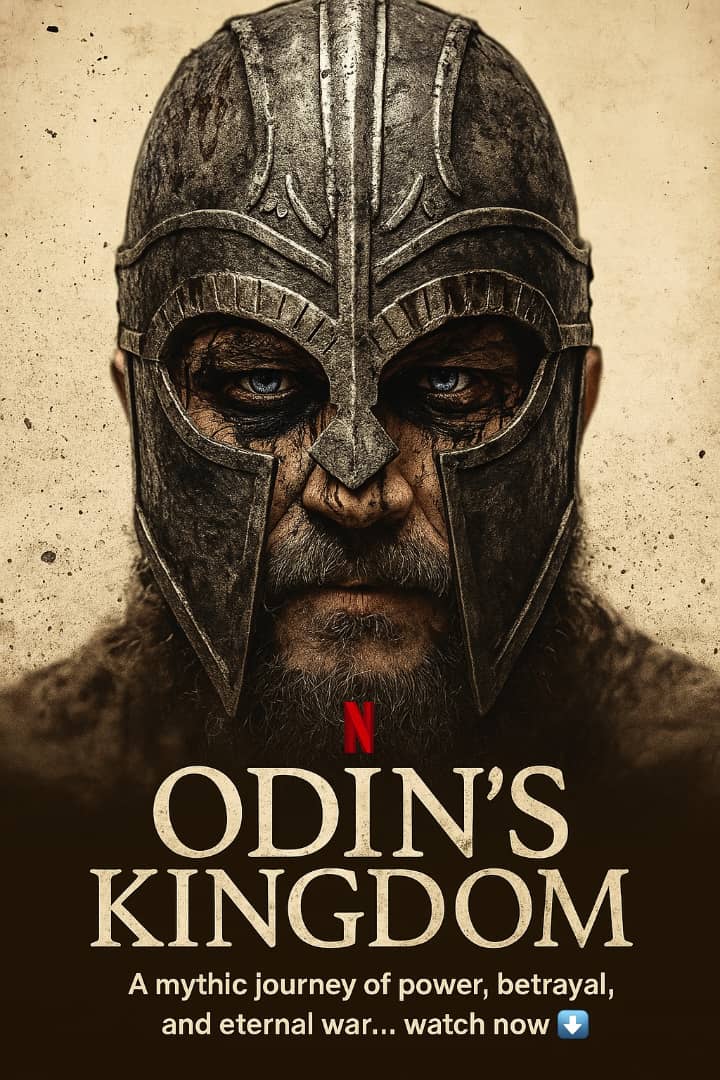
The world of Odin’s Kingdom opens with fire and prophecy, pulling viewers straight into a brutal Viking age where gods are whispered about as often as war is declared. From the first moments teased in the trailer, the series feels grounded in mud, blood, and belief, making its mythic elements feel lived-in rather than distant legends.
At the heart of the story is a kingdom built on conquest and faith, where power is never inherited peacefully. Every crown is stained with sacrifice, and every alliance feels temporary. The characters don’t speak like heroes carved from stone; they sound like people who have lost brothers, burned villages, and prayed to gods who may or may not be listening.
Betrayal runs quietly through the narrative, not always in dramatic acts, but in small decisions made for survival. A promise broken in secret, a blade held back in battle, a truth kept too long. These moments make the conflict feel personal, as if the greatest enemy isn’t the rival kingdom, but the person sitting closest to the throne.
The presence of Odin looms over everything, whether as a god, a symbol, or a terrifying idea. His influence shapes how warriors fight, how rulers rule, and how people accept death. The show blurs the line between divine will and human ambition, leaving viewers to question whether destiny is real or simply a story powerful men tell to justify war.
Visually, Odin’s Kingdom leans into raw realism. Armor looks heavy, wounds look painful, and landscapes feel unforgiving. The cold forests, stormy seas, and torch-lit halls create a sense that survival itself is a daily victory, and peace is an illusion that never lasts long.
What makes the story compelling is how it treats war not as glory, but as consequence. Every battle leaves something broken behind—families, trust, or faith. Victories feel hollow, and losses echo long after the fighting ends, reinforcing the idea that eternal war is not heroic, but tragic.
The characters are driven by conflicting loyalties: to blood, to gods, to love, and to power. These loyalties clash constantly, forcing impossible choices. No one is purely good or evil, and that moral uncertainty keeps the tension alive, making every decision feel dangerous.
There is also an undercurrent of fear throughout the story—the fear of being forgotten by the gods, of losing honor, of dying without meaning. This fear pushes characters toward extremes, turning ordinary people into legends or monsters, sometimes both at once.
As the trailer suggests, Odin’s Kingdom isn’t just about Vikings fighting for land. It’s about belief systems colliding, about how myths are born from suffering, and how stories are used to keep people fighting long after hope should have died.
By the end of the preview, it’s clear that this is a series aiming to feel heavy, intense, and uncomfortably real. Odin’s Kingdom promises a journey where power always demands a price, betrayal feels inevitable, and war never truly ends—only changes its shape.
About the Author
