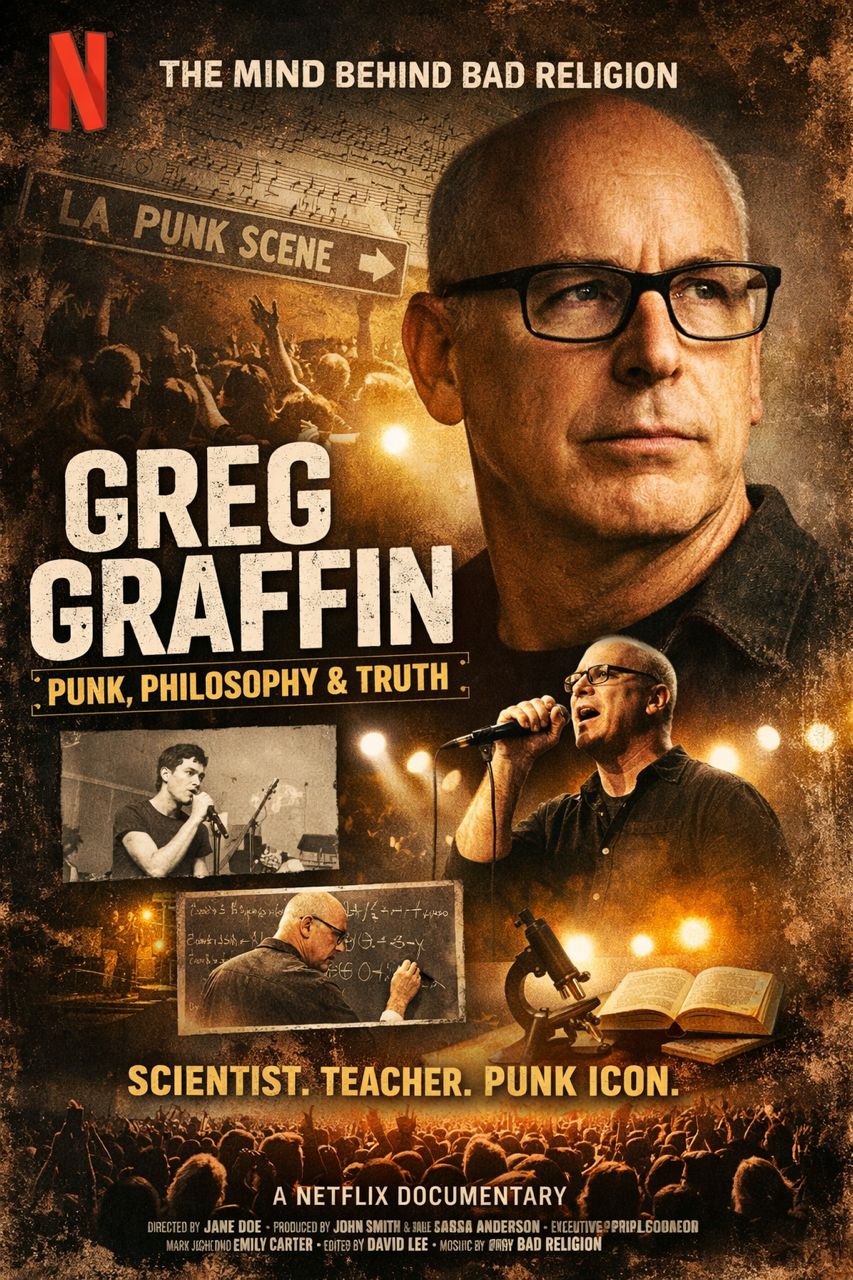
Netflix’s intimate new documentary on Greg Graffin arrives as a thoughtful, unfiltered portrait of one of punk rock’s most cerebral and enduring voices. Far beyond the distortion and speed that defined Bad Religion’s sound, the film explores the ideas, convictions, and questions that have driven Graffin for decades. It presents him not just as a frontman, but as a thinker, a teacher, and a relentless seeker of truth in a world often hostile to nuance.The documentary traces Graffin’s journey from the early Los Angeles punk underground to global stages, capturing the tension between rebellion and responsibility that shaped his career. Archival footage, rare photographs, and candid interviews reveal how Bad Religion’s sharp lyrics emerged from a deep engagement with philosophy, science, and social critique. Rather than glorifying chaos, the film shows how Graffin used punk as a platform for reasoned dissent and intellectual challenge.One of the film’s greatest strengths lies in its quiet, reflective moments. Viewers are invited into classrooms, rehearsal spaces, and private conversations where Graffin discusses faith, skepticism, evolution, and the moral obligations of artists. These scenes humanize a figure often mythologized, revealing vulnerability, doubt, and a lifelong commitment to learning that runs parallel to his musical legacy.The documentary also examines the cultural impact of Bad Religion and Graffin’s influence on generations of musicians and fans. Fellow artists speak on how his lyrics encouraged critical thinking rather than blind allegiance, shaping punk into something more enduring than a fleeting movement. The film underscores how Graffin’s refusal to simplify complex ideas helped elevate punk rock into a space for dialogue and introspection.In the end, Netflix’s portrait of Greg Graffin is less about nostalgia and more about relevance. It asks what it means to age without abandoning one’s principles, and how music can remain a tool for inquiry rather than escape. Intimate, intelligent, and quietly powerful, the documentary stands as a testament to a life spent challenging assumptions—and inviting others to do the same.
About the Author