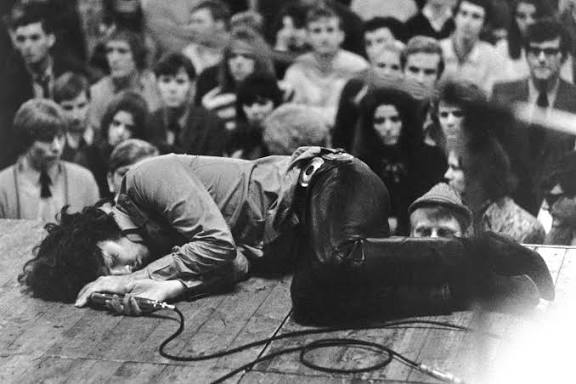
The Netflix documentary series on Jim Morrison arrives like a slow-burning storm, peeling back the layers of one of rock music’s most enigmatic and controversial figures. From the very first episode, the series refuses to settle for the familiar mythology of the “Lizard King.” Instead, it invites viewers into the restless mind of a poet trapped inside the body of a rock star, a young man who seemed both terrified of and addicted to the spotlight. Through rare archival footage, intimate interviews, and haunting reenactments, the documentary reconstructs Morrison not as a symbol, but as a human being wrestling with genius, fame, and self-destruction.Born in 1943 in Melbourne, Florida, Morrison’s early life is explored with surprising tenderness. The series traces his complicated relationship with his father, a strict naval officer, and examines how instability and constant relocation shaped his rebellious spirit. Professors and former classmates from UCLA paint a portrait of a quiet yet intensely curious student who devoured philosophy and poetry. Before he ever screamed into a microphone, Morrison was scribbling verses inspired by Nietzsche, Rimbaud, and William Blake, searching for transcendence in language long before he found it in music.When The Doors formed in Los Angeles in 1965, lightning struck. The chemistry between Morrison, Ray Manzarek, Robby Krieger, and John Densmore felt almost mystical. The documentary carefully dissects their creative process, revealing how songs like “Light My Fire” and “The End” were born out of improvisation and philosophical debate. Studio engineers recount marathon recording sessions filled with incense smoke and volatile energy. The band didn’t just want to make music; they wanted to rupture consciousness.As The Doors rose to international fame, Morrison’s stage persona began to eclipse the man himself. The series examines how he cultivated the image of a Dionysian frontman—shirtless, unpredictable, and dangerously magnetic. Concert footage shows the electric tension between Morrison and his audience, moments where he seemed to both command and challenge them. Psychologists and cultural critics in the documentary suggest that Morrison’s performances were not merely concerts but rituals, blurring the line between art and chaos.The darker chapters are handled with unflinching honesty. Morrison’s battles with alcohol and the growing legal troubles are explored without sensationalism. The infamous Miami concert in 1969 becomes a focal point, dissected through multiple perspectives that question what truly happened that night. Friends describe a man unraveling under the weight of expectation, while critics argue that Morrison may have intentionally sabotaged his own success in pursuit of artistic purity.Beyond the scandal, the documentary emphasizes Morrison’s identity as a poet. Readings from his journals, voiced by contemporary actors, echo through dimly lit scenes of Parisian streets and desert highways. The series highlights how he viewed music as merely one avenue for expression. His fascination with mortality, Native American spirituality, and the subconscious reveals a thinker obsessed with the boundaries between life and death.The relationship between Morrison and Pamela Courson receives poignant attention. Interviews with close friends reveal a love story that was as volatile as it was devoted. Their bond, marked by passion and destruction, becomes symbolic of Morrison’s own contradictions. The documentary refuses to simplify their connection, instead portraying two young people swept up in a whirlwind of fame and excess.On July 3, 1971, Jim Morrison was found dead in a bathtub in Paris at just 27 years old, officially from heart failure. The series revisits that date with haunting restraint, acknowledging the rumors and conspiracy theories that have lingered for decades while grounding the narrative in documented facts. The mystery surrounding his death only deepened his legend, freezing him in time as a permanent member of the so-called “27 Club.”What makes this Netflix series stand out is its refusal to glorify tragedy. It neither condemns nor romanticizes Morrison’s descent. Instead, it asks difficult questions about the cost of artistic brilliance in a culture that consumes its icons. Musicians from later generations speak candidly about Morrison’s influence, noting how his fearless vulnerability opened doors for future artists to merge poetry and performance.By the final episode, the viewer is left with an image not of a reckless rock god, but of a complicated young man chasing transcendence in a world that rewarded spectacle. The documentary lingers on his words rather than his scandals, reminding us that beneath the leather pants and headlines was a writer searching for meaning. In doing so, the series becomes more than a biography; it becomes a meditation on creativity, rebellion, and the fragile line between myth and memory.
About the Author