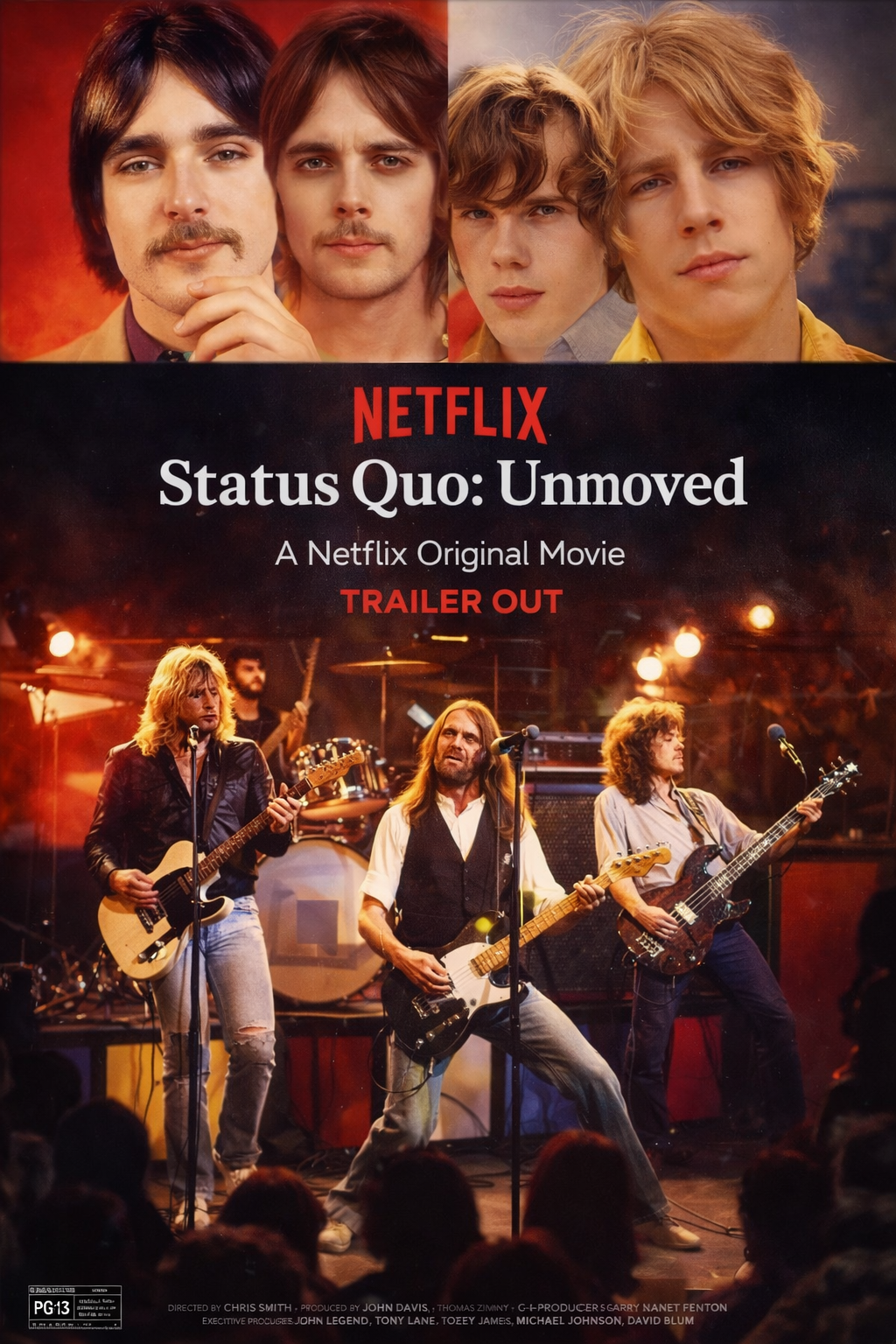
Status Quo: Unmoved arrives on Netflix as a powerful, nostalgia-charged tribute to one of rock’s most enduring bands. Framed as both an intimate character study and a sweeping musical chronicle, the film captures the grit, brotherhood, and relentless drive that defined the journey of Status Quo. From smoky club stages to arena-filling performances, the movie explores how a band rooted in raw boogie rock managed to hold its ground in an industry constantly chasing the next new sound.
At its core, the documentary is about resilience. Through archival footage and dramatized recreations, viewers witness the early ambitions of Francis Rossi, Rick Parfitt, John Coghlan, and Alan Lancaster—young musicians bound by a shared hunger for success. Their chemistry wasn’t manufactured; it was forged in long rehearsals, cramped vans, and the electrifying rush of live performance. The film leans into those formative years, portraying not just the music but the friendships and tensions that shaped their unmistakable identity.
One of the movie’s greatest strengths lies in its visual storytelling. Close-up portraits contrast sharply with explosive stage sequences, reinforcing the duality of public image and private reality. Under the bright stage lights, the band radiates confidence and command. Behind the scenes, however, the narrative reveals the pressures of fame, creative disagreements, and the toll of life on the road. This layered perspective keeps the story grounded and human.
The soundtrack, naturally, is a driving force. Signature riffs and crowd-roaring anthems pulse through the film, immersing audiences in the energy that made Status Quo a staple of classic rock. Rather than simply presenting performances, the movie contextualizes the songs within the moments that inspired them—turning familiar melodies into emotional landmarks. Each track feels less like background music and more like a chapter in a living memoir.
What makes Status Quo: Unmoved particularly compelling is its refusal to glamorize everything. It doesn’t shy away from setbacks, lineup changes, or the shifting tides of public taste. Instead, it frames these challenges as part of the band’s DNA. The title itself suggests steadfastness—a refusal to bend to trends or surrender to doubt. In an era of rapid reinvention, staying true became their quiet rebellion.
The cinematography amplifies this theme of endurance. Warm, amber stage lighting symbolizes the heat of performance, while subdued backstage tones evoke reflection and vulnerability. The editing balances nostalgia with immediacy, making decades-old moments feel urgent and alive. The result is a viewing experience that feels both retrospective and strikingly present.
Beyond the music, the film also touches on legacy. Interviews and commentary highlight how the band influenced generations of rock musicians and maintained a loyal fanbase across continents. Their story becomes a broader meditation on artistic identity—what it means to define your sound, protect it, and carry it forward through changing times.
Ultimately, Status Quo: Unmoved is more than a documentary; it’s a celebration of persistence. It reminds audiences that longevity in music isn’t just about chart positions or accolades, but about conviction and connection. By the time the credits roll, viewers are left not only with ringing guitar riffs but with a deeper appreciation for the power of staying exactly who you are—even when the world expects you to change.
About the Author
