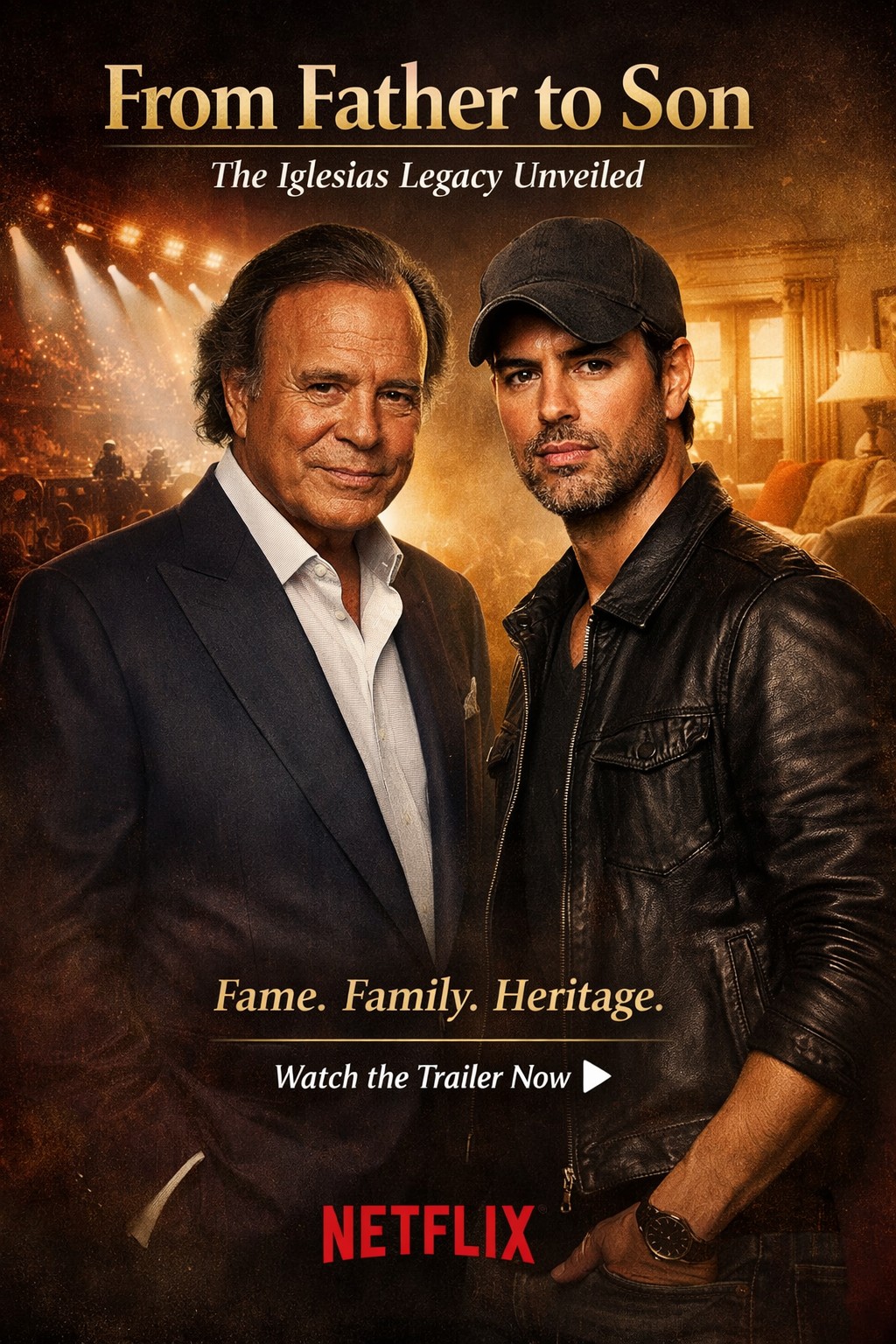
Julio Iglesias and Enrique Iglesias come together in a powerful new documentary that traces one of music’s most fascinating family legacies. Spanning decades of fame, fortune, and emotional distance, the film paints an intimate portrait of a father and son whose careers reshaped Latin and global pop music in different eras. It is not just a story of success, but of identity, inheritance, and the complicated bond between two icons sharing the same name.
The documentary opens with rare archival footage of Julio’s early rise, capturing the moment he transformed from a former football prospect into a global romantic balladeer. His voice became synonymous with passion and elegance, dominating charts across Europe and Latin America. Through interviews and unseen home videos, the film shows how his relentless touring lifestyle created both opportunity and absence, shaping the world his children grew up in from a distance.
Enrique’s journey unfolds in contrast, marked by a desire to step out of his father’s long shadow. The documentary revisits his secret debut under a different surname, revealing how he built his own fanbase before the world learned who he truly was. His evolution into a pop superstar is framed not as rebellion, but as a personal mission to define success on his own terms, with music that reflected a younger generation’s sound and attitude.
At the emotional core of the film is the story of separation and reconnection. Interviews with family members describe years of silence, misunderstandings, and unspoken expectations between father and son. The documentary does not shy away from these tensions, instead presenting them as part of the cost of fame and ambition. Moments of reconciliation are shown quietly and without exaggeration, giving the film a raw and human quality.
Beyond the family dynamic, the documentary explores how both men carried Spanish and Latin musical traditions into different global moments. Julio’s era introduced romance and Latin charm to mainstream audiences, while Enrique brought dance-pop and crossover appeal to the turn of the millennium. Their parallel careers reflect two versions of stardom shaped by changing technology, audiences, and cultural influence.
Visually, the film blends concert footage, backstage scenes, and personal reflections, creating a rhythm that mirrors the music itself. Scenes of packed stadiums dissolve into private conversations, reminding viewers that behind the lights and applause were real struggles with pride, distance, and expectation. The pacing allows the story to breathe, letting silence and memory speak as loudly as the songs.
By the end, the documentary becomes less about fame and more about legacy. It suggests that heritage is not only passed through blood, but through choices, risks, and the courage to confront the past. For fans of both artists and for anyone drawn to stories of family and ambition, the film offers a rare glimpse into how two lives connected by music learned, over time, how to listen to each other.
About the Author