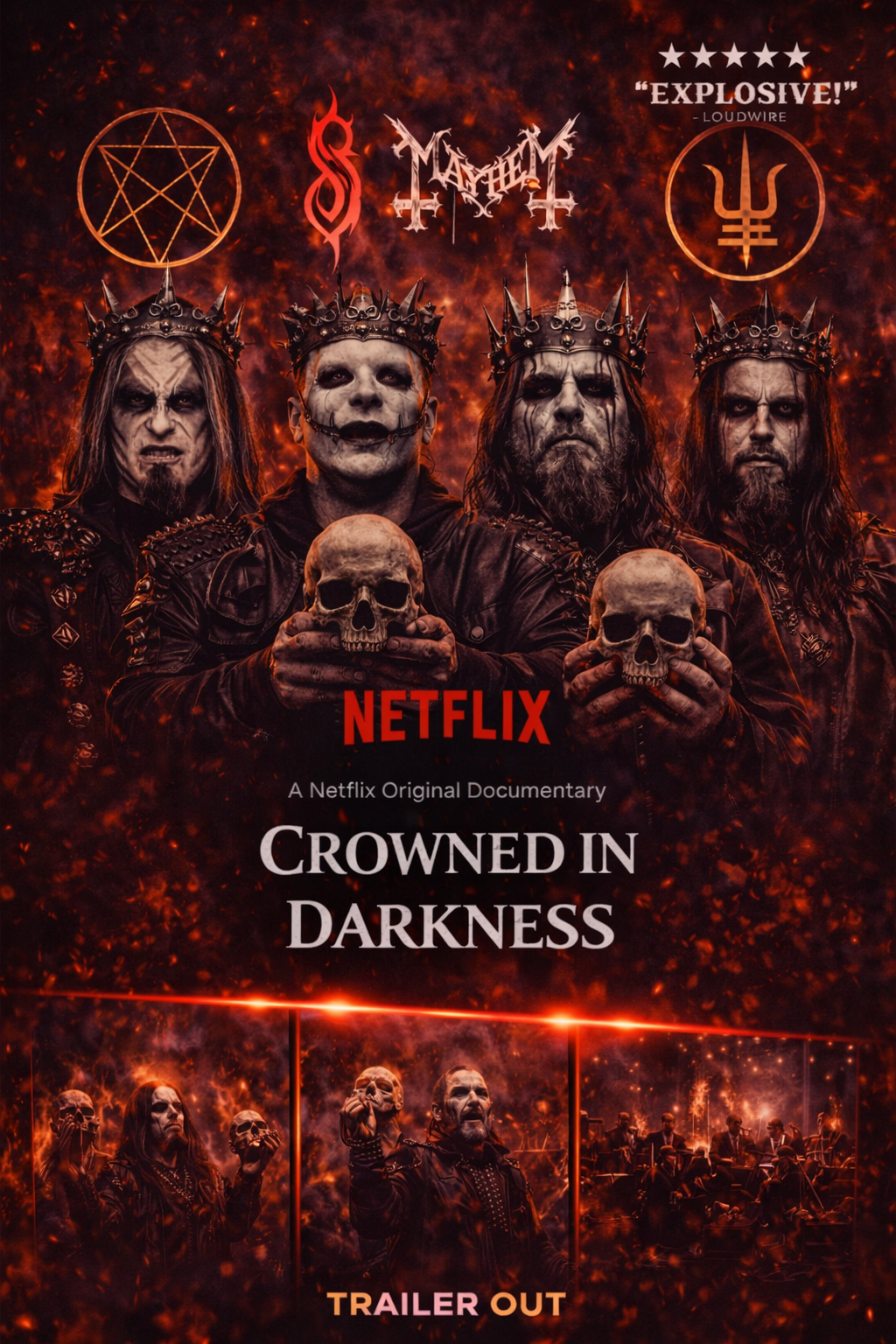
The Netflix documentary Crowned in Darkness opens with a chilling atmosphere, inviting viewers into a world where music becomes ritual, rebellion, and identity. The film explores how extreme metal evolved beyond sound into a cultural movement shaped by theatrical imagery, uncompromising creativity, and fearless experimentation. From underground beginnings to massive global stages, the documentary captures the intensity that defines the genre’s most influential pioneers.
At the heart of the story stands Dimmu Borgir, whose symphonic approach transformed black metal into something cinematic and grand. Their orchestral arrangements merged brutality with elegance, proving that darkness could be both violent and beautiful. The documentary highlights how their vision expanded the genre’s boundaries and inspired countless artists to embrace complexity without sacrificing aggression.
Slipknot enters the narrative as a force of chaos and unity, redefining modern metal through masks, anonymity, and raw emotional energy. Their rise represents a shift from underground extremity to mainstream dominance, showing how authenticity and rage resonated with millions worldwide. Interviews and archival footage reveal how the band’s collective identity reshaped performance art within heavy music.
Behemoth’s contribution adds philosophical depth to the film, presenting metal as intellectual rebellion. Their blend of blackened death metal and provocative symbolism challenged cultural norms and pushed artistic expression into controversial territory. The documentary examines how their evolution reflects a broader transformation within extreme music, where ideology and artistry intertwine.
Mayhem’s legacy anchors the darker historical core of Crowned in Darkness. Their early years symbolize the raw origins of black metal, filled with myth, tragedy, and uncompromising dedication to atmosphere. The film carefully balances myth and reality, exploring how their influence echoes through generations of musicians seeking authenticity over commercial acceptance.
As the narrative unfolds, the documentary emphasizes how these bands share a common thread despite stylistic differences: transformation through darkness. Concert footage blends with intimate backstage moments, revealing artists who channel personal struggles into soundscapes that empower audiences. The film portrays metal not as destruction, but as catharsis.
The documentary also explores the visual identity of the genre—corpse paint, elaborate stage designs, fire, orchestras, and ritualistic symbolism. These elements are presented as extensions of storytelling rather than shock value, illustrating how extreme metal evolved into immersive performance art. Fans across continents describe concerts as spiritual experiences rather than mere entertainment.
On April 18, 2026, Crowned in Darkness premiered globally on Netflix, instantly igniting conversations among fans and critics alike. The release marked a rare moment where underground culture met mainstream streaming audiences without losing its authenticity or intensity.
Beyond music, the film becomes a study of resilience. Each band faced controversy, lineup changes, and cultural resistance, yet continued to reinvent themselves. Their journeys reflect the universal struggle between individuality and expectation, showing how artistic courage often thrives in opposition to acceptance.
By its final moments, Crowned in Darkness leaves viewers with a powerful realization: darkness in music is not about despair, but transformation. Through the combined legacies of Dimmu Borgir, Behemoth, Slipknot, and Mayhem, the documentary celebrates artists who turned shadows into symphonies and rebellion into lasting cultural impact.
About the Author
