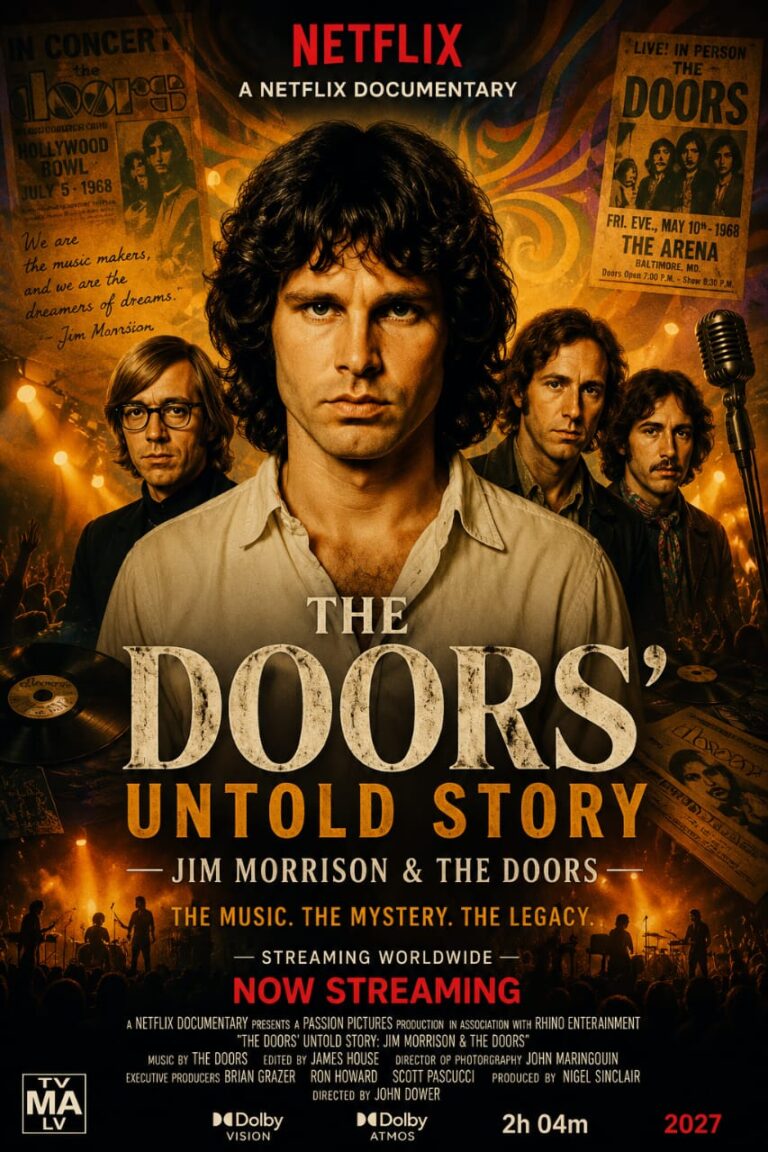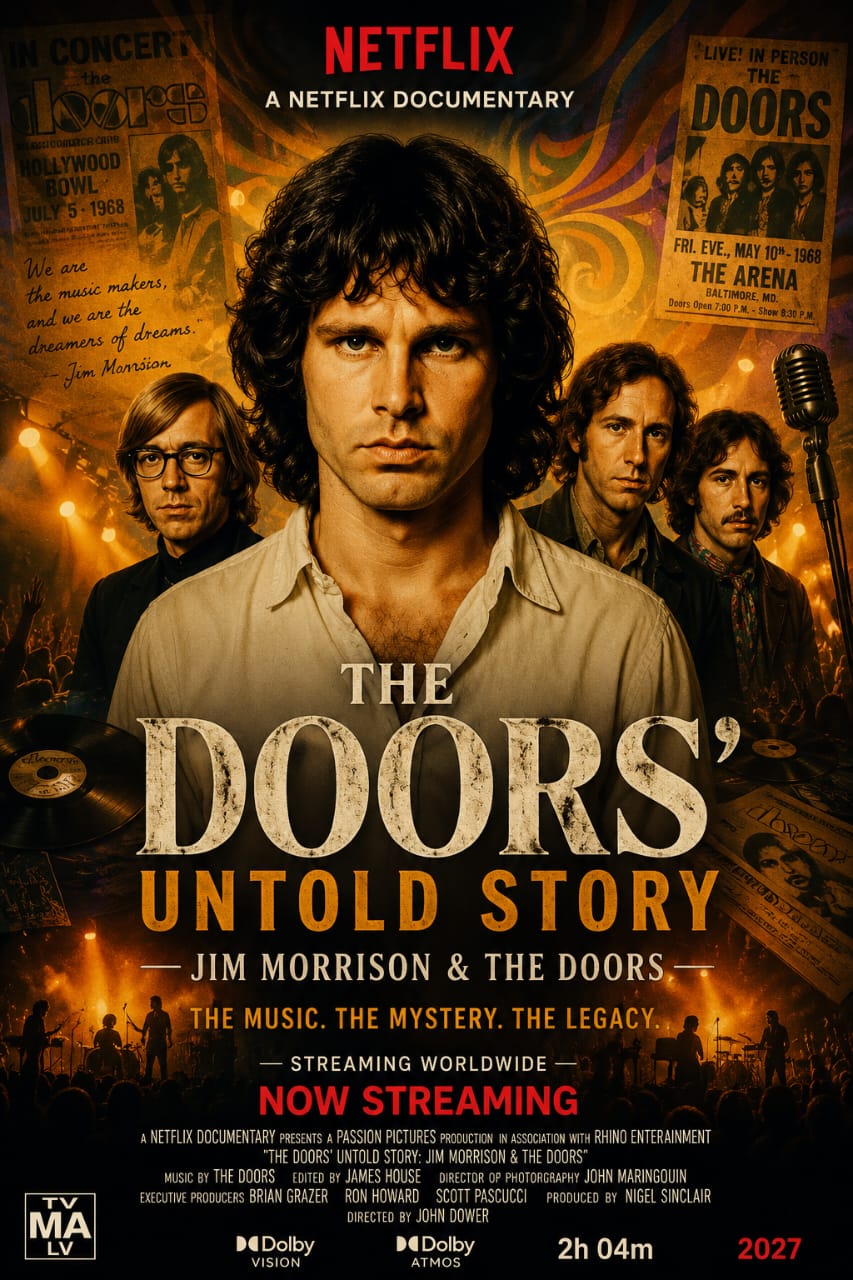
Jim Morrison remains one of rock music’s most enduring and mysterious figures, decades after his death. As the legendary frontman of The Doors, Morrison helped define the sound and attitude of an era, leaving behind songs, performances and unanswered questions that continue to fascinate generations of fans.
A new wave of interest in Morrison’s life has once again placed the singer in the spotlight, with audiences revisiting his extraordinary rise, his artistic ambitions and the circumstances surrounding his final years. Netflix already carries several Doors-related titles, including The Doors: When You’re Strange, a 2009 documentary built entirely from archival footage from 1966 to 1971.
The streaming platform also lists The Doors: Soundstage Performances, featuring television performances and interview footage from the height of the band’s career. These existing documentaries offer a remarkable window into Morrison and The Doors, from their explosive rise in the 1960s to the performances that cemented their place in rock history.
Morrison’s story is especially compelling because his career was extraordinarily short but culturally enormous. With The Doors, he became known for his distinctive voice, poetic lyrics and unpredictable stage presence, while songs such as “Light My Fire,” “The End” and “Riders on the Storm” helped make the group an enduring part of rock culture.
The fascination goes beyond the music. Morrison’s life has been surrounded by speculation, conflicting interpretations and unanswered questions, particularly concerning his final months in Paris and his death in July 1971. Any serious documentary exploring his story therefore has to navigate both the documented historical record and the mythology that grew around him after his death.
For longtime Doors fans, archival footage remains one of the most powerful ways to experience Morrison without relying entirely on later recollections. When You’re Strange, for example, uses footage from the band’s active years to tell its story, giving viewers a direct visual connection to the period when Morrison and The Doors were transforming the rock landscape.
The renewed attention also demonstrates just how powerful Morrison’s cultural legacy remains. More than half a century after his death, his photographs, poetry, performances and music continue to generate documentaries, discussions and new generations of listeners. Netflix’s current catalog shows that Morrison and The Doors remain part of the platform’s documentary and music-film offering, although availability varies by country.
About the Author