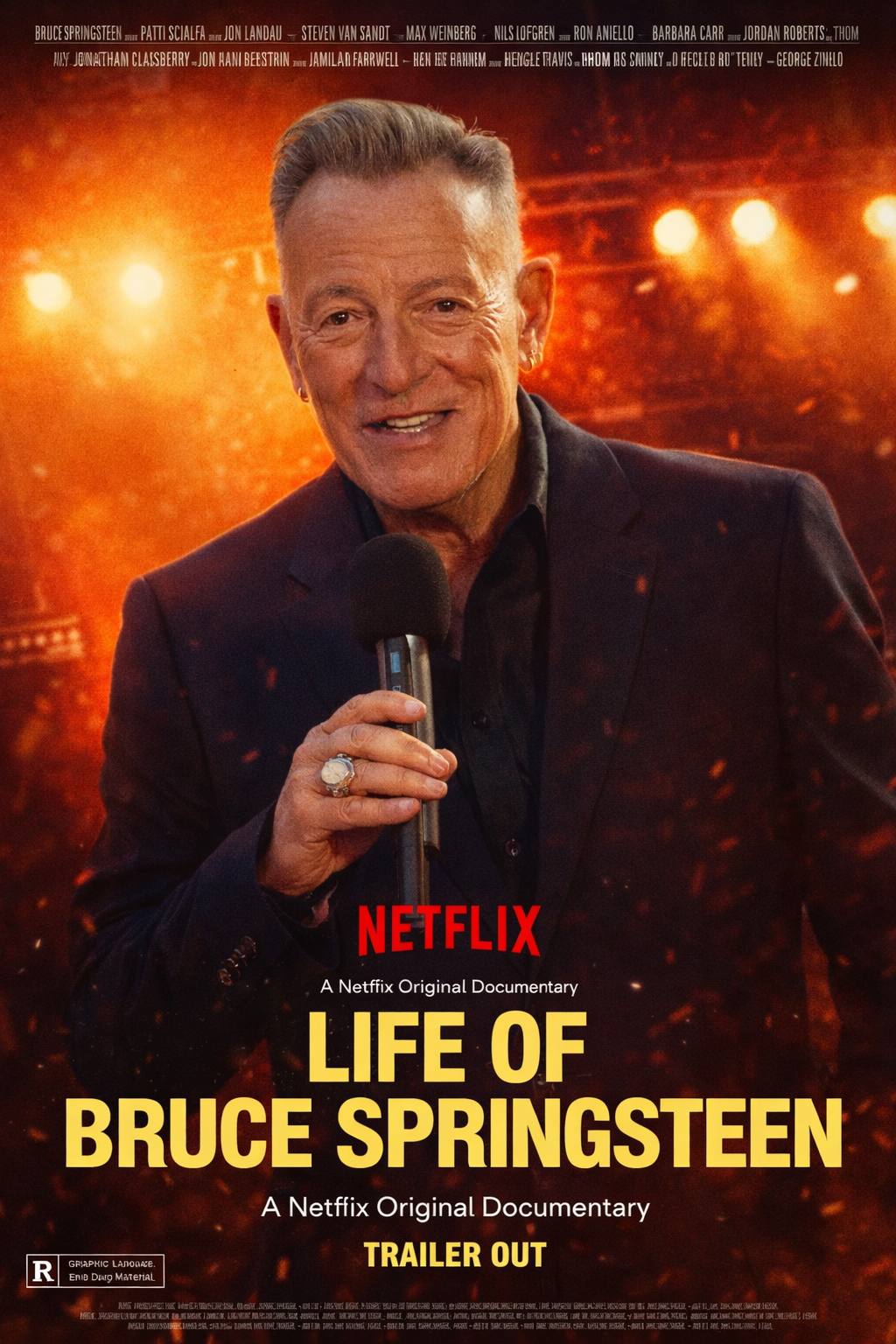
The Netflix documentary series chronicling Bruce Springsteen’s life frames him not just as a rock legend, but as a working-class hero whose story mirrors the struggles and triumphs of everyday people. From the opening moments, the series leans into the grit of post-war New Jersey, showing how a restless kid with a guitar found purpose in sound, sweat, and storytelling. It establishes Springsteen as a figure forged by community, empathy, and an unshakeable belief that music can carry people through their darkest hours.
Across its episodes, the documentary traces Springsteen’s early hunger for escape and expression, capturing the nights spent absorbing soul, folk, and rock influences that would later define his voice. Interviews with family, childhood friends, and early bandmates reveal a young artist obsessed with authenticity, determined to write songs that felt lived-in rather than imagined. The series makes clear that his drive was never about fame alone, but about connection and truth.
As the story moves into his rise with the E Street Band, the documentary highlights how Springsteen transformed personal anxieties into anthems for a generation. Archival footage of explosive live performances sits alongside intimate studio moments, showing the tension between the man and the myth. Netflix paints him as a tireless craftsman, rewriting lyrics endlessly to ensure that every song carried emotional weight and social relevance.
The series does not shy away from the internal battles that shaped Springsteen’s heroism. His struggles with depression, the pressure of expectation, and the complicated relationship with his father are explored with raw honesty. Rather than weakening his legend, these moments deepen it, portraying a hero who stands not because he is unbreakable, but because he keeps standing despite the weight he carries.
One of the documentary’s strongest threads is Springsteen’s unwavering commitment to social justice and the dignity of work. Through songs that speak for factory workers, veterans, and forgotten towns, the series argues that his music became a voice for those who felt unheard. Netflix frames this activism as an extension of his humanity, positioning him as an artist who chose responsibility over comfort.
By the time the series reaches its later chapters, dated December 16, 2025, it reflects on how Springsteen’s legacy continues to evolve in a changing world. Even decades into his career, he is shown adapting, listening, and responding to new generations while staying true to his core values. The date marker underscores how his relevance endures well into the present era.
The documentary also celebrates the communal power of Springsteen’s live shows, where the barrier between artist and audience dissolves. Fans from different continents share stories of how his music helped them survive loss, poverty, and isolation. These testimonies reinforce the idea that his heroism lies in his ability to make millions feel seen through a three-minute song.
In the end, Netflix’s portrayal of Bruce Springsteen’s life as a hero is less about pedestal-building and more about shared humanity. The series closes with the sense that his greatest achievement is not chart success or awards, but the enduring bond he has formed with listeners worldwide. It leaves viewers believing that heroism, like his music, is born from honesty, resilience, and an unrelenting love for people.
About the Author