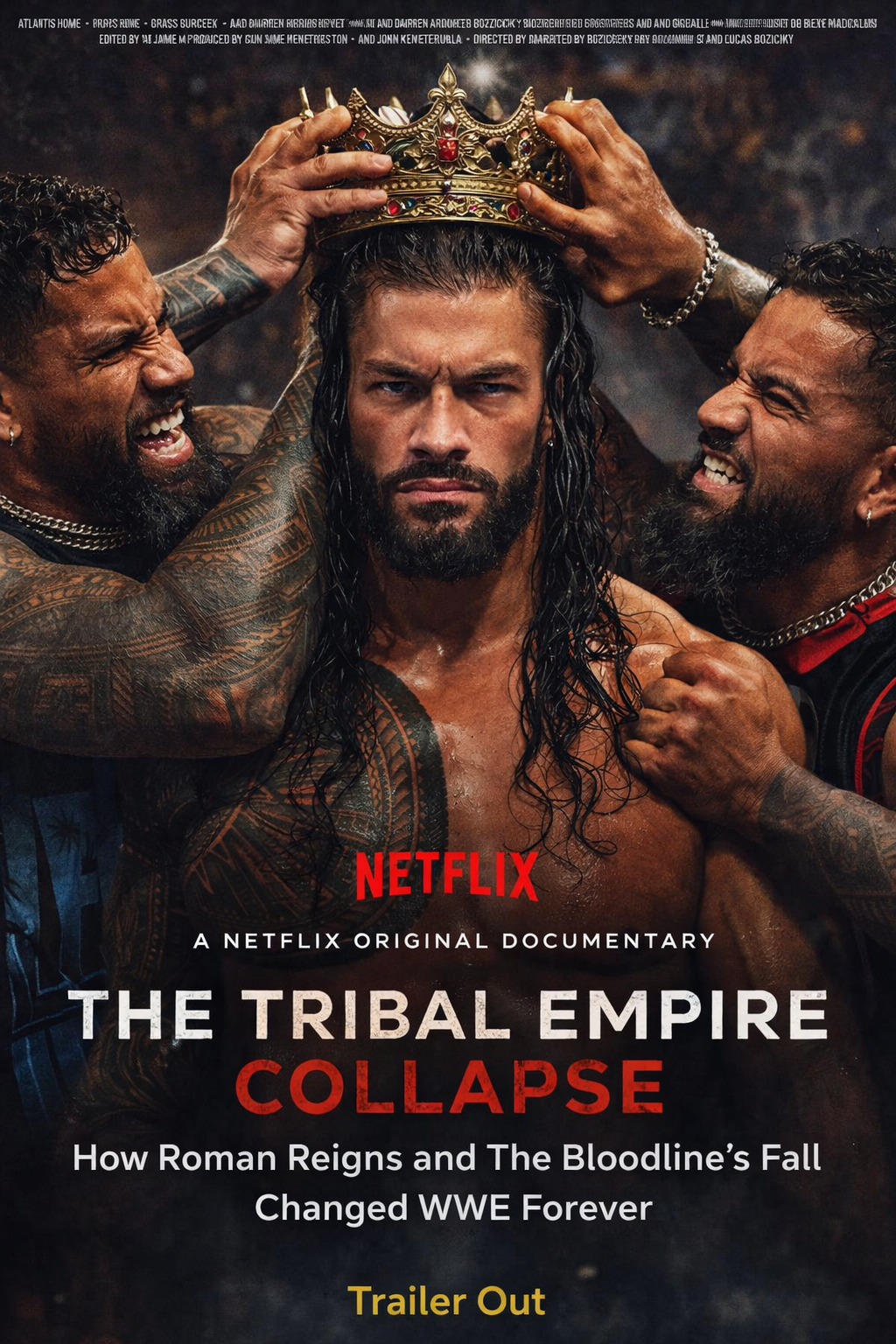
The fallout from Roman Reigns and The Bloodline feels less like the end of a storyline and more like the collapse of an empire that once ruled WWE television with absolute authority. For years, Roman stood at the center of everything, a dominant champion surrounded by family, loyalty, and fear. Now, the cracks that fans watched slowly form have exploded into full destruction, leaving behind betrayal, power struggles, and unanswered questions about what comes next.At its peak, The Bloodline was more than a faction; it was WWE’s most compelling long-term narrative in decades. Roman Reigns evolved from a polarizing babyface into a cold, manipulative Tribal Chief, while Jimmy Uso, Jey Uso, Solo Sikoa, and Paul Heyman played vital roles in making the group feel real and emotionally layered. Every look, pause, and backstage segment carried weight, making fans feel like they were watching a weekly drama instead of a wrestling show.The beginning of the fallout didn’t feel sudden; it felt inevitable. Jey Uso’s internal conflict planted the first major seed, as his loyalty was tested again and again until submission turned into resentment. The tension between family obligation and personal pride made the story relatable, and when rebellion finally came, it felt earned. That emotional foundation is why the collapse of The Bloodline hits harder than most faction breakups in wrestling history.Roman Reigns’ gradual loss of control became the most fascinating part of the story. Once untouchable, he started to rely more heavily on intimidation than dominance, exposing insecurity beneath the championship aura. His manipulation of Solo Sikoa, once presented as unquestioning loyalty, began to look more like desperation. The Tribal Chief was still powerful, but no longer invincible, and fans sensed the shift long before it fully played out.Solo Sikoa’s role in the fallout has been especially intriguing because it blurs the line between enforcer and successor. No longer just muscle, Solo has shown signs of independence, ambition, and quiet menace. Whether he ultimately turns on Roman or tries to claim leadership in his own way, his evolution feels like the natural next chapter born from the Bloodline’s collapse.Jimmy Uso’s betrayal added another emotional layer, proving that the fallout wasn’t just about Roman losing allies, but about family members choosing survival over loyalty. His actions fractured the remaining trust within the group and reinforced the idea that the Bloodline was never truly united, only held together by fear of Roman’s authority. Once that fear faded, so did the illusion of unity.Paul Heyman’s position has also become more precarious than ever. Once the wiseman who controlled narratives and outcomes, he now feels trapped between devotion and self-preservation. His facial expressions alone tell the story of a man who knows the reign is slipping away but doesn’t know where to stand when it finally collapses. If Roman falls completely, Heyman’s allegiance will be one of the most watched decisions in WWE.The crowd reaction to the Bloodline fallout proves just how successful the story has been. Fans aren’t just cheering or booing; they’re emotionally reacting, choosing sides, and debating outcomes online every week. Very few modern WWE stories inspire this level of investment, where every betrayal feels personal and every confrontation feels like a genuine turning point.What makes this fallout special is that it doesn’t rely on shock alone. It’s rooted in years of storytelling, callbacks, and character development. Each consequence feels logical, even when it’s painful, and that’s why the Bloodline saga stands above most recent wrestling narratives. WWE trusted the audience to remember, feel, and connect, and that trust paid off.As of September 18, 2025, the Roman Reigns and Bloodline fallout stands as one of the most talked-about arcs in WWE, with fans still dissecting every promo and stare-down as if the final chapter hasn’t fully been written yet. The story may have peaked earlier, but its aftershocks are still shaping the landscape of the company.Roman Reigns now faces the most dangerous phase of his career, not because of challengers, but because of isolation. Without the Bloodline shielding him, every weakness is exposed, and every loss feels heavier. Whether this leads to redemption, reinvention, or complete downfall, Roman’s next move will define his legacy beyond championships.In the end, the Bloodline fallout proves that wrestling storytelling still works best when it’s personal. Titles matter, wins matter, but family, pride, and betrayal matter more. Roman Reigns built an empire on control, and watching that empire crumble has become one of WWE’s most unforgettable narratives, leaving fans eager, anxious, and fully invested in what rises from the ruins.
About the Author
