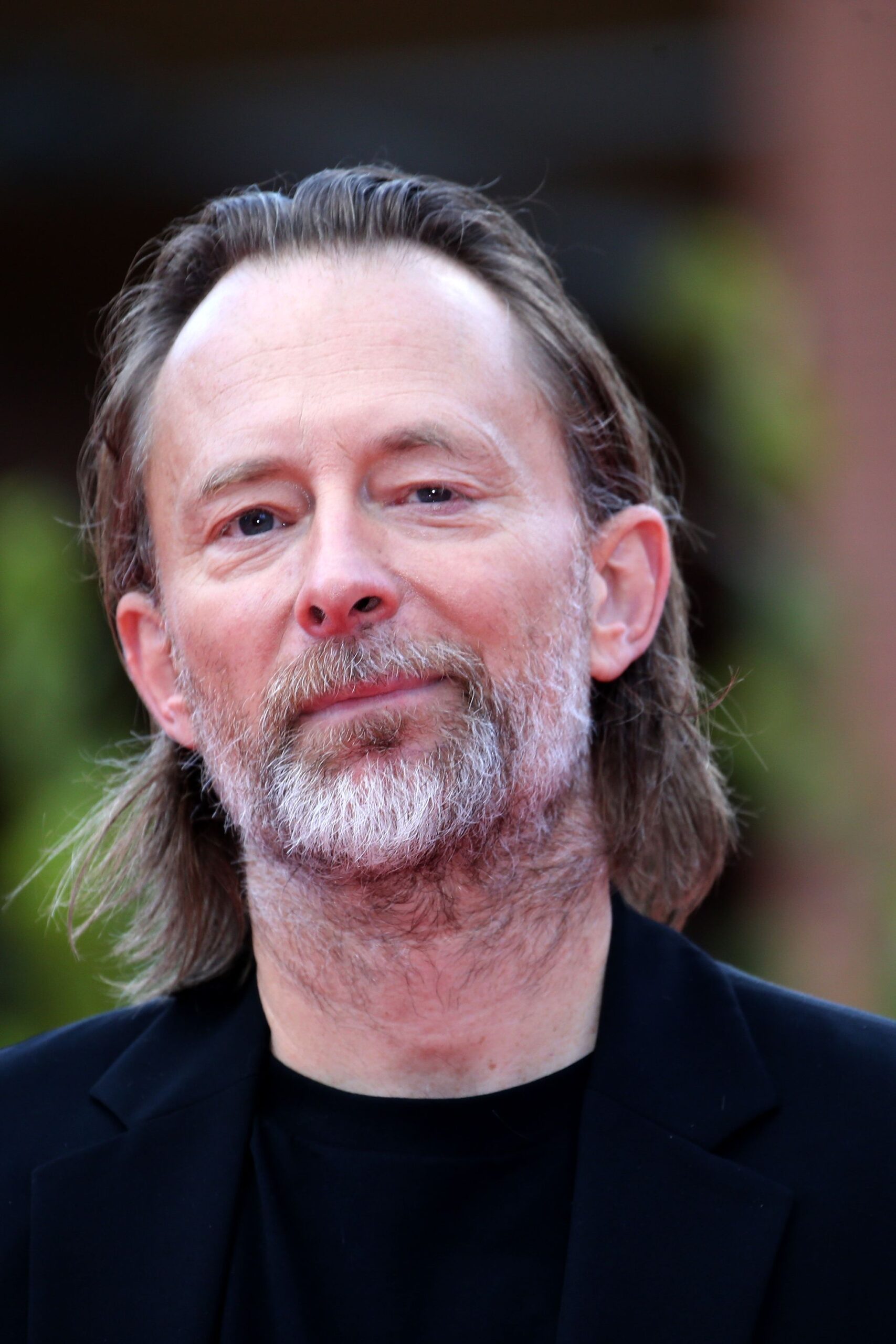
Thom Yorke has never been an easy figure to decode. To some, he is one of the most visionary musicians of his generation—a restless innovator who reshaped alternative rock and pushed it into the digital age. To others, he is a haunted soul, forever wrestling with anxiety, alienation, and the emotional fallout of modern life. Somewhere between these extremes lies the truth: a deeply complex artist whose inner turmoil and brilliance are inseparable, and whose darkness has become the lifeblood of Radiohead’s most powerful work.From the moment Radiohead broke through in the early 1990s, Yorke’s voice stood apart. It wasn’t just the fragile falsetto or the mournful tone—it was the sense that every lyric came from a place of raw unease. While Creep made the band famous, Yorke famously recoiled from its success, uneasy with being defined by a single, self-loathing anthem. That discomfort would become a recurring theme in his career: success followed by withdrawal, acclaim shadowed by self-doubt.As Radiohead evolved, so did Yorke’s songwriting. Albums like OK Computer revealed an artist obsessed with disconnection in a rapidly technologizing world. Songs such as Paranoid Android and No Surprises weren’t just critiques of modern life; they felt like internal monologues, whispered confessions of a man overwhelmed by systems he could neither control nor escape. Yorke’s lyrics blurred the line between personal anxiety and societal critique, making it impossible to tell where the artist ended and the world began.The darkness deepened with Kid A and Amnesiac, records that abandoned traditional rock structures in favor of icy electronics and fragmented melodies. At the time, fans and critics were divided. But in hindsight, these albums feel like Yorke retreating inward, dismantling familiar forms as if to mirror his own psychological dislocation. The music sounded like a mind breaking itself apart and rebuilding in real time—cold, abstract, and unsettling, yet strangely human.Yorke has never hidden his struggles with mental health. He has spoken openly about anxiety, creative paralysis, and the pressure of expectation. Rather than masking these issues, he channels them directly into his art. Tracks like How to Disappear Completely and Videotape feel less like songs and more like emotional exorcisms—attempts to survive by turning pain into sound. This vulnerability is what gives Radiohead’s darkest music its enduring power: it feels honest because it is.Outside Radiohead, Yorke’s solo work and projects like Atoms for Peace reveal the same restless spirit. Free from the weight of the band’s legacy, he leans even further into electronic experimentation, political frustration, and personal introspection. Whether performing solo or fronting Radiohead, Yorke appears perpetually uncomfortable in the spotlight, yet unable to stop creating. It’s a paradox that defines him: a man who distrusts fame but uses it as a platform to confront uncomfortable truths.So is Thom Yorke an enigmatic genius or a tortured soul? The answer is both—and neither. His genius is inseparable from his torment, and his darkness is the engine of his creativity. Rather than offering solutions, Yorke gives voice to the fear, confusion, and melancholy that many feel but cannot articulate. In doing so, he has made Radiohead’s music a refuge for outsiders, a soundtrack for late-night introspection, and a mirror held up to the anxieties of the modern age.In the end, Thom Yorke doesn’t want to be understood so much as felt. His music doesn’t explain the darkness—it inhabits it. And that is precisely why, decades on, Radiohead’s most shadowy songs still resonate so deeply: they come from a place that is painfully real, uncomfortably honest, and unmistakably human.
About the Author
