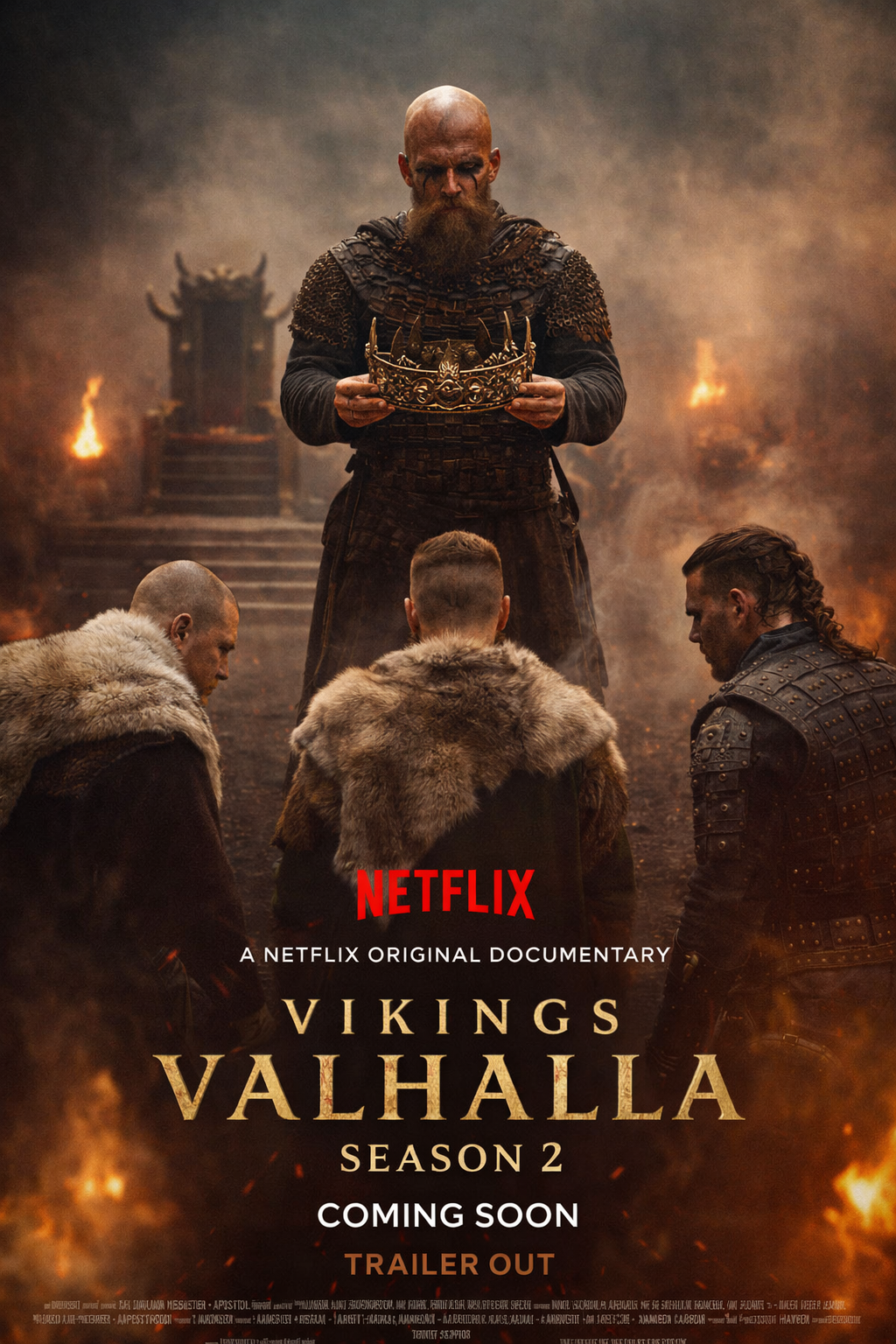
The legacy of Ragnar Lothbrok did not die with him; it fractured, multiplied, and thundered across the world through his sons. Each of them carried a piece of his spirit—his ambition, his brutality, his vision—and yet none of them were exact replicas of the legendary Viking king. The question that haunted Kattegat and echoed across every battlefield was simple but unforgiving: who would truly take the crown of Ragnar?Bjorn Ironside stood first in the shadow of his father, the most visible heir and the one many believed was destined to rule. He carried Ragnar’s name, his courage, and his hunger for exploration, sailing farther than any Viking before him. Yet Bjorn’s strength was also his weakness, as his obsession with glory often placed ambition above stability, leaving his claim to Ragnar’s crown powerful but fragile.Ivar the Boneless, feared and despised in equal measure, believed the crown was his by right of intellect and ruthlessness. Where Ragnar learned through failure, Ivar mastered cruelty as a weapon, turning fear into authority. His brilliance in warfare and manipulation made him the most terrifying of Ragnar’s sons, but his hunger for dominance often alienated allies and sowed chaos wherever he ruled.Ubbe, the most balanced of the brothers, carried Ragnar’s curiosity rather than his brutality. He sought peace where others sought blood, believing that leadership was not only about conquest but about survival and legacy. Ubbe’s resemblance to Ragnar in spirit rather than savagery made him a quiet contender for the crown, one defined by wisdom rather than fear.Hvitserk existed between loyalty and madness, torn apart by guilt, faith, and inner demons. He fought bravely and loved fiercely, yet his inability to master himself kept him from mastering others. Though born of Ragnar’s blood, Hvitserk’s path suggested that not every son was meant to wear a crown, no matter how strong their lineage.Sigurd Snake-in-the-Eye, often overlooked, possessed the sharp tongue and perceptive mind of his father. His presence hinted at a future where cunning could rival force, but his life was cut short before he could fully challenge for Ragnar’s legacy. His death symbolized how fragile the line of succession truly was.The struggle for Ragnar’s crown was not only about rule over Kattegat but about defining what Ragnar stood for. Was he a conqueror, a king, a farmer, a dreamer, or a man forever torn between gods and destiny? Each son answered that question differently, shaping their claim to his legacy.As the brothers turned against one another, Ragnar’s dream splintered into rival visions of power. Blood spilled not just for land or glory, but for identity itself, proving that inheriting a crown forged by legend demanded more than birthright—it demanded understanding.In the end, the crown of Ragnar was never a single throne or title. It was a burden, a symbol of transformation, and a test of whether any son could evolve beyond Ragnar rather than imitate him. Each brother ruled in his own way, yet none fully replaced the man who changed the world.On December 29, 2025, the question of Ragnar’s true heir remains as compelling as ever, because Vikings was never about a crown that could be passed down easily, but about the cost of ambition and the price of destiny.Perhaps Ragnar never intended for one son to rule above all others. His legacy lived in their conflicts, their failures, and their triumphs, spreading across lands he once only dreamed of reaching. The crown, in this sense, was divided the moment Ragnar died.Ultimately, the answer to who takes Ragnar’s crown lies with the viewer. Bjorn carried his fire, Ivar his fury, Ubbe his vision, and the others his contradictions. Ragnar Lothbrok was too vast to be replaced, and his true heir was not a single son, but the legend they collectively became.
About the Author
