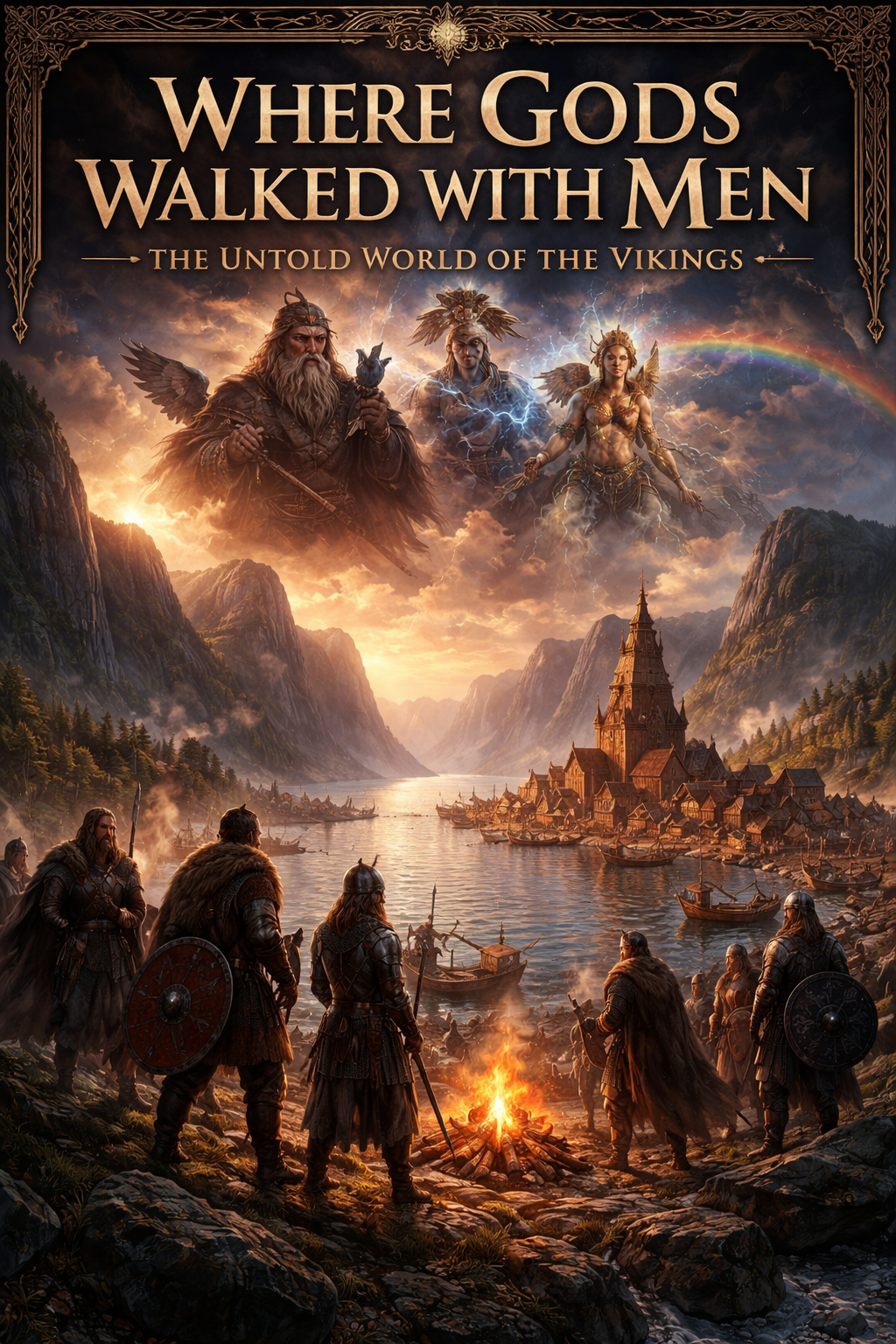
Where Gods Walked With Men: The Untold World of the Vikings
In the frozen mists of the North, where towering fjords met restless seas, the Viking world was born. This was a land of extremes—harsh winters, brief summers, and endless horizons—that shaped a people known for resilience, exploration, and an unyielding spirit. Long before their ships appeared on foreign shores, the Vikings had already forged a complex society deeply connected to nature and myth.
At the heart of Viking life was a powerful belief system where gods did not dwell far away in unreachable heavens but walked closely with men. Odin, Thor, Frey, and Loki were not distant figures; they were present in daily struggles, battles, harvests, and journeys. The Vikings believed the divine actively influenced their fate, courage, and honor.
Odin, the All-Father, embodied wisdom, war, and sacrifice. He was revered as a god who gave much to gain knowledge, sacrificing his eye and enduring suffering to understand the secrets of the universe. Warriors prayed to him before battle, hoping to die bravely and be welcomed into Valhalla, where heroes feasted and trained for the end of days.
Thor, the thunder god, was the defender of both gods and humans. With his mighty hammer Mjölnir, he stood against giants and chaos, protecting Midgard—the world of men. Common people felt a strong connection to Thor, wearing hammer amulets as symbols of strength, protection, and trust in his power.
Viking society was far more organized than legend often suggests. Laws governed daily life, and community assemblies known as Things served as courts and decision-making centers. These gatherings emphasized debate, justice, and collective agreement, proving that Viking culture valued order as much as bravery.
Despite their fearsome reputation, Vikings were not defined solely by warfare. Most were farmers who depended on the land for survival, raising livestock and growing crops in difficult conditions. Their deep respect for nature was reflected in both their daily routines and their spiritual beliefs.
The Vikings were also exceptional craftsmen. They forged strong weapons, built sturdy homes, and created intricate jewelry that revealed a keen eye for beauty and detail. Their art often featured animals, gods, and symbols tied to mythology, blending creativity with spiritual meaning.
Perhaps their greatest achievement was their mastery of the sea. Viking longships were technological marvels—light, fast, and capable of navigating both open oceans and shallow rivers. These vessels carried them to distant lands, from the shores of England to the rivers of Russia and even to North America.
Through trade and exploration, Vikings connected cultures across continents. They exchanged furs, silver, spices, and ideas, becoming part of a vast network that linked Europe, Asia, and the Middle East. This role as traders challenges the narrow image of Vikings as simple raiders.
Women in Viking society held more influence than many of their contemporaries elsewhere in Europe. They could own property, initiate divorce, and manage households while men were away. Some women even played roles as seers or shieldmaidens, occupying respected positions in both spiritual and social life.
Death held a powerful meaning in the Viking worldview. It was not feared but embraced as a continuation of one’s journey. Burial rites were elaborate, often involving ships, weapons, and treasures, ensuring the dead were well-prepared for the next realm.
Myth and destiny shaped how Vikings understood the world. Ragnarök—the foretold end of gods and men—reminded them that even the divine was not eternal. This belief encouraged bravery, resilience, and living with honor, even in the face of inevitable destruction.
Where gods walked with men, life was filled with meaning, challenge, and wonder. The Viking world was one where myth blended with reality, where courage met belief, and where humanity stood side by side with the divine. Their untold story is not just one of conquest, but of faith, community, and a deep connection to the forces that shaped their world.
About the Author