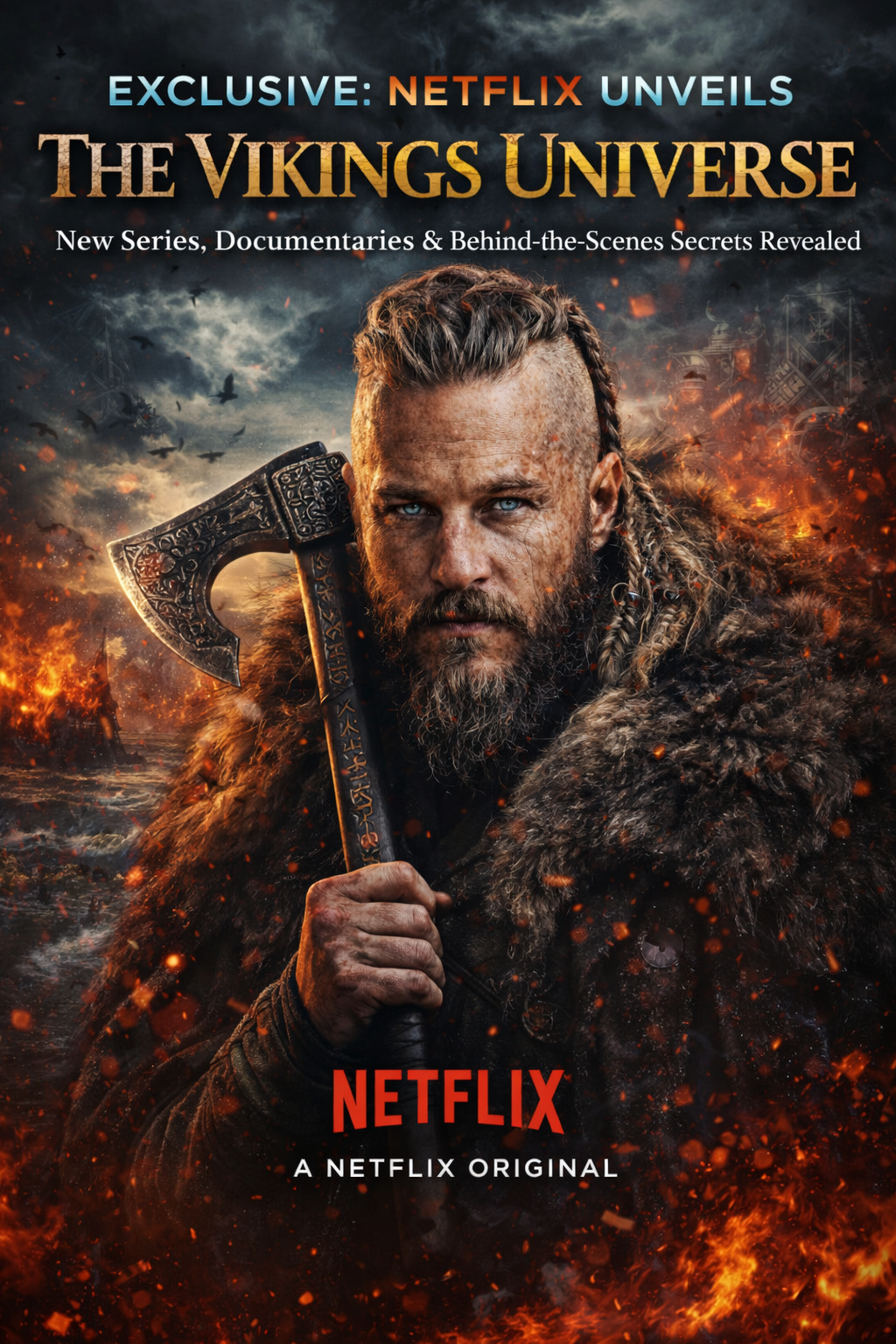
Netflix has officially opened the gates to Valhalla once more. In a move that signals one of its most ambitious historical expansions yet, the streaming giant has unveiled The Vikings Universe—a sweeping, interconnected slate of new series, documentaries, and behind-the-scenes projects designed to redefine how Norse history and mythology are experienced on screen.
This is not a simple revival or spin-off. Netflix is positioning The Vikings Universe as a fully realized world, where scripted drama, historical truth, and cinematic storytelling collide. At its core are new narrative series that push beyond familiar raids and rivalries, diving deeper into the psychological cost of conquest, the spiritual weight of Norse belief systems, and the brutal choices that shaped an age of legends. These upcoming series promise darker tones, more grounded storytelling, and a renewed emphasis on character-driven arcs rather than spectacle alone.
Alongside the scripted content, Netflix is rolling out a powerful lineup of documentary projects that peel back the myths surrounding Viking culture. These documentaries aim to separate legend from fact—exploring real archaeological discoveries, lost runes, burial rituals, weapon craftsmanship, and the daily lives of Norse men and women often overlooked in traditional portrayals. Historians, archaeologists, linguists, and cultural experts are brought directly into the narrative, giving viewers an authoritative yet cinematic lens into the Viking world.
What truly sets this universe apart is the unprecedented access Netflix is granting audiences behind the scenes. Cameras follow creators, historians, costume designers, weapon masters, and language consultants as they reconstruct the Viking age with obsessive detail. From forging historically accurate swords to rebuilding longships plank by plank, these behind-the-scenes projects reveal the sheer scale of research and craftsmanship driving the universe. Even the Old Norse dialogue is treated with precision, grounding performances in linguistic authenticity rarely attempted in mainstream productions.
Netflix insiders describe the initiative as a long-term creative commitment rather than a single release cycle. The goal is continuity—stories that overlap, timelines that intersect, and characters whose legacies ripple across multiple projects. Viewers won’t just watch Vikings fight; they’ll witness belief systems collide, alliances fracture, and myths evolve into memory. Themes of fate, honor, betrayal, and prophecy—central to Norse cosmology—are woven throughout, hinting at larger mythic forces shaping human destiny.
Visually, the Vikings Universe is being crafted with a cinematic standard that rivals theatrical releases. Natural landscapes, practical effects, raw combat choreography, and restrained CGI work together to preserve realism while still delivering epic scale. Netflix is clearly betting that audiences are ready for historical storytelling that feels lived-in, visceral, and emotionally demanding rather than romanticized.
The unveiling of this universe also reflects Netflix’s broader strategy: building franchises rooted in culture, history, and global mythology. Vikings are no longer portrayed merely as warriors from the past, but as complex figures navigating faith, survival, and identity in a rapidly changing world. By merging entertainment with education, Netflix is reshaping the genre into something richer and more immersive.
As production continues and release windows draw closer, one thing is clear—the age of Vikings is not fading into legend just yet. With this ambitious universe, Netflix isn’t just revisiting history; it’s rewriting how that history is told, inviting viewers to step into a world where myth and reality are inseparable, and where every saga has consequences that echo through time.
About the Author