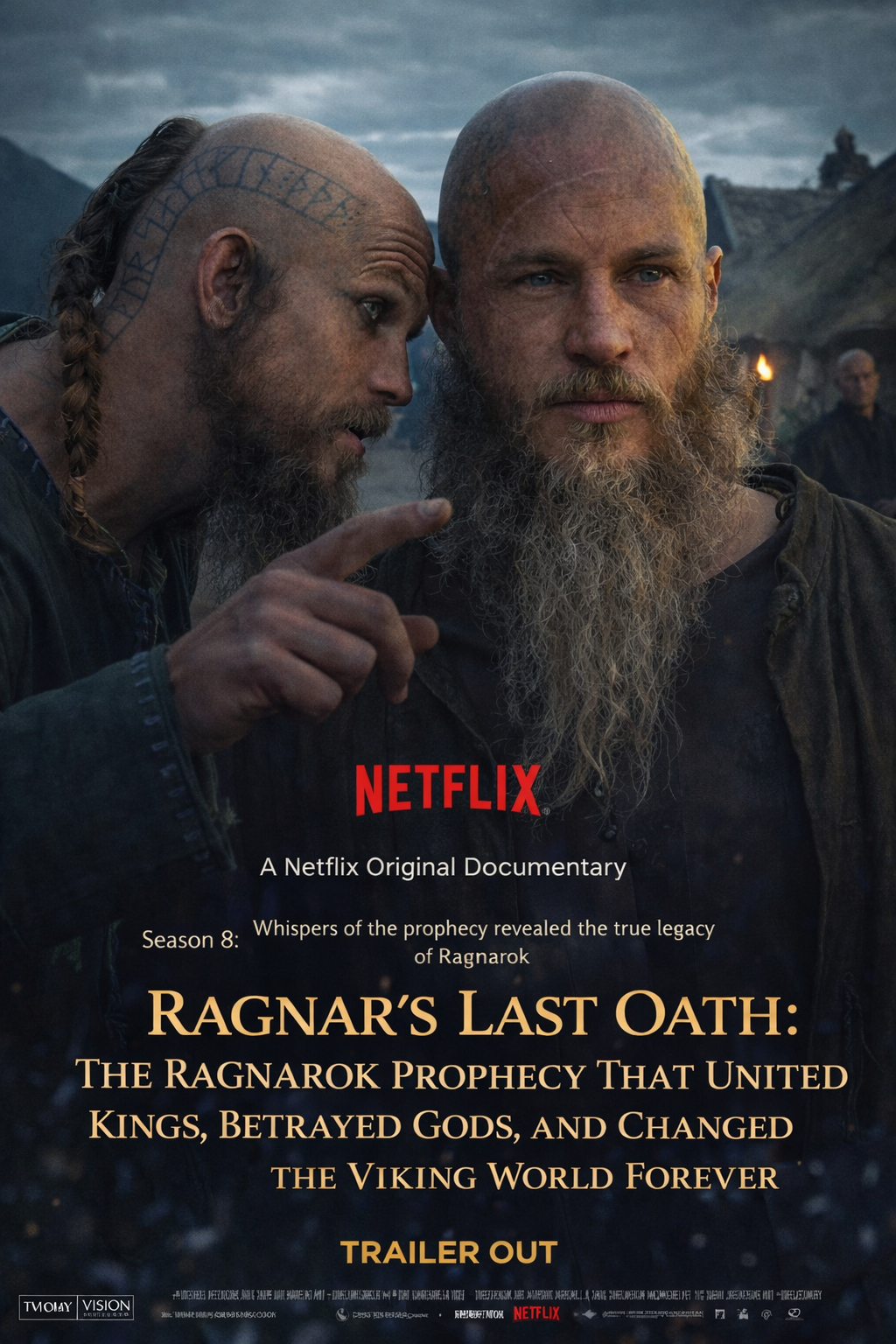
Ragnar first encounters the prophecy not on a battlefield, but in silence, deep within a forgotten shrine half-buried by ice and time. The runes carved into the stone speak of fire, betrayal, and a final winter that will swallow the seas. Though weathered, the markings pulse with meaning, as if waiting centuries for his gaze. Ragnar, a man shaped by raids and ambition, feels an unfamiliar chill—not from fear, but from destiny calling his name.The prophecy tells of a wolf that devours the sun, of gods falling like men, and of a world reborn only after everything familiar is reduced to ash. Ragnar recognizes fragments of stories once told by skalds around roaring fires, but this account is different. It names a king who walks between glory and ruin, a leader whose choices decide whether the end comes too soon. Ragnar cannot escape the truth that the runes are not merely history or myth—they are warning him.As word of the discovery spreads, alliances begin to shift. Jarls who once pledged loyalty now question Ragnar’s favor with the gods, while others see opportunity in chaos. Some believe Ragnarok cannot be stopped and that survival lies in choosing the right side early. Ragnar must weigh trust carefully, knowing that even blood ties can fracture under the promise of power at the world’s edge.Battles soon follow, not just against rival clans but against belief itself. Warriors fight harder, convinced that dying in Ragnar’s cause might grant them honor before the final dawn. Others hesitate, fearing that every sword drawn brings the prophecy closer to fulfillment. Ragnar leads from the front, yet each victory feels hollow, as though fate tallies every fallen man.The gods remain silent, and that silence troubles Ragnar more than thunder would. He sacrifices, prays, and listens, but receives only dreams—visions of burning halls, shattered shields, and a tree splitting the sky. In these dreams, Ragnar sees his sons standing where he once stood, inheriting a world scarred by his decisions. Legacy becomes heavier than any crown.Treacherous alliances form in the shadows, sealed with oaths meant to be broken. A rival king offers peace in exchange for shared rule, but Ragnar senses deceit woven into every promise. To refuse may spark war; to accept may hasten betrayal. Each choice tightens the threads of the prophecy around him.Ragnar begins to understand that preventing Ragnarok may not mean avoiding destruction entirely, but delaying it long enough to change what comes after. He seeks knowledge beyond war—old seers, wandering mystics, and tales from distant shores. From them, he learns that fate is stubborn, but not unyielding. Even the gods, the stories say, are bound by choices.As enemies close in, Ragnar’s leadership is tested like never before. Hunger, fear, and doubt gnaw at his people, and murmurs of abandoning the old ways grow louder. Ragnar speaks not as a conqueror, but as a man who has seen the end written in stone. He reminds them that the future is shaped not only by prophecy, but by courage in the face of it.The greatest battle comes not with clashing steel, but with betrayal from within. A trusted ally defects, believing that siding with the prophecy ensures survival. The resulting conflict leaves villages burned and families divided, reinforcing the prophecy’s grim imagery. Ragnar survives, but at a terrible cost.On March 14, 2025, as winter begins to loosen its grip, Ragnar records the prophecy in his own words, carving it into new stone so it cannot be twisted or forgotten. He dates it not as a mark of time, but as proof that the world still moves forward. By doing so, he claims ownership of the story rather than allowing fate alone to define it.In the aftermath, Ragnar accepts that he may not live to see whether Ragnarok is truly prevented. What matters is that his people are stronger, wiser, and less blind to the dangers of blind belief. He trains his sons not just to fight, but to question, to lead with foresight rather than hunger for glory.The prophecy of Ragnarok remains, unbroken but altered by human will. Ragnar’s legacy is not that he defeated the end of the world, but that he stood against inevitability and forced it to reckon with choice. Whether the final winter comes or not, the Viking world will remember him as the king who challenged fate—and in doing so, reshaped the meaning of destiny itself.
About the Author