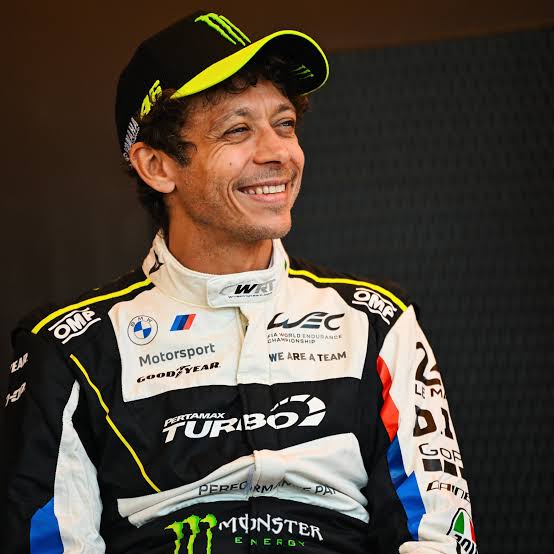
Valentino Rossi was never just a motorcycle racer. He was a movement, a spectacle, a force that bent MotoGP around his personality. Sundays became theater when he rode, and victory celebrations turned into cultural moments. But beneath the fluorescent helmets, the playful grins, and the chants of “Doctor, Doctor” lived a far more complicated figure. Rossi’s career, while legendary, was also marked by tension, controversy, and episodes the sport rarely likes to revisit.Rossi’s rivalries were rarely clean or quiet. He didn’t simply beat opponents on track; he dismantled them mentally. His feud with Sete Gibernau in the early 2000s marked the first time many insiders noticed how ruthless Rossi could be. Accusations of grid manipulation, psychological pressure, and public needling pushed the rivalry beyond racing. Gibernau’s form collapsed soon after, and while Rossi collected titles, whispers spread that the damage done off the track was as decisive as anything done on it.As new challengers emerged, the pattern repeated. Casey Stoner’s arrival disrupted Rossi’s dominance, and the tension between the two riders was unmistakable. The infamous Laguna Seca pass in 2008 became legend, but it also exposed a philosophical divide. Stoner later suggested Rossi’s tactics crossed ethical lines, claiming mind games were as much a weapon as throttle control. Rossi dismissed such claims as excuses, yet the bitterness lingered long after both riders had left the spotlight.Nothing, however, came close to the chaos of 2015. Rossi’s public accusation that Marc Márquez interfered with the championship battle shattered MotoGP’s image of sporting neutrality. The collision in Sepang, the penalties, and the ultimate loss of the title ignited one of the most toxic seasons in the sport’s history. Fans fractured into hostile camps, friendships in the paddock were strained, and MotoGP was left with a scar it has never fully erased. Even years later, the tension between the Rossi and Márquez camps remains unresolved.Away from the circuit, Rossi’s fame ensured his private life was never truly private. Rumors of affairs and celebrity relationships circulated endlessly in Italian tabloids, fueled by his status as a global sports icon. Rossi never confirmed nor publicly entertained such stories, choosing instead to keep his personal world sealed off. That silence only deepened speculation, reinforcing the sense that there was far more to the man than the image he projected.In 2007, Rossi faced a scandal that threatened to eclipse his racing achievements. Italian authorities accused him of large-scale tax evasion, alleging he had hidden income through foreign companies. The case shook his carefully crafted image as a national hero. Though Rossi denied deliberate wrongdoing and eventually settled the case by paying a substantial sum, the episode revealed the vulnerability of even MotoGP’s biggest star. For a moment, the greatest rider in the world looked small and human under the weight of legal scrutiny.Rossi’s professional judgment also came under fire during his disastrous move to Ducati. Marketed as a patriotic dream pairing, the collaboration collapsed into frustration and failure. Results evaporated, tensions rose, and Rossi appeared powerless against a bike he could not tame. Critics questioned whether age had finally caught him, while others argued Ducati’s stubborn engineering doomed the project from the start. Either way, the episode marked the first time Rossi’s authority within MotoGP visibly weakened.Throughout all these moments, MotoGP itself often seemed willing to look the other way. Rossi was the sport’s golden asset, its biggest draw, its most recognizable face. His controversies were softened, his outbursts contextualized, and his influence quietly protected. Whether this was favoritism or simple business reality remains debated, but there is little doubt that Rossi operated with a level of freedom few riders ever enjoyed.Valentino Rossi’s legacy is not diminished by these darker chapters; it is complicated by them. His greatness was forged in pressure, conflict, and an unrelenting will to win. The shadows that followed him are inseparable from the brilliance that made him immortal. To understand Rossi fully is to accept that legends are rarely clean, and that sometimes the most revealing moments happen far from the podium.
About the Author