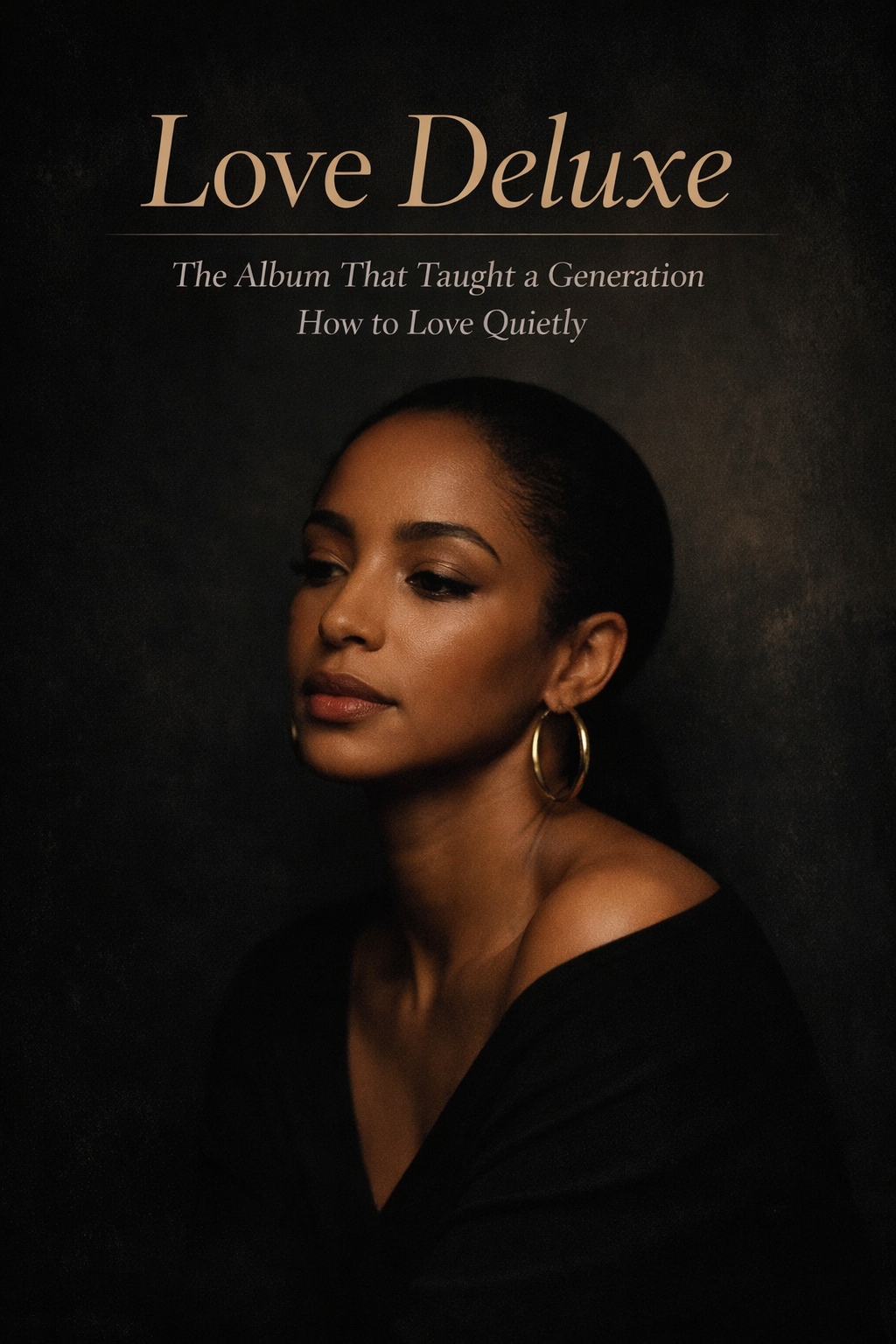
Love Deluxe arrived in 1992 without noise, without spectacle, and without apology. In an era chasing loud hits and dramatic gestures, Sade released an album that whispered instead of shouted. And somehow, that whisper echoed across decades, teaching listeners that love does not always need to announce itself to be real.
From the very first notes, Love Deluxe felt like entering a private room where emotions were allowed to breathe. There was no rush, no demand for attention. The album moved slowly, confidently, as if it trusted the listener to meet it halfway. This was music for people who understood that love could be tender, restrained, and deeply personal.
Sade’s voice carried a rare calm authority throughout the album. She did not beg, plead, or over-explain. Instead, she sang as someone who had lived, lost, reflected, and survived. Her delivery made every lyric feel intentional, like words chosen carefully after long silences. That restraint became one of the album’s most powerful lessons.
Songs like “No Ordinary Love” reframed heartbreak not as chaos, but as devotion that lingers even after pain. It showed that loving deeply does not disappear when things fall apart. The song taught listeners that it was possible to ache quietly, without turning sorrow into spectacle.
What made Love Deluxe so influential was its emotional maturity. It didn’t romanticize drama or glorify suffering. Instead, it explored love as something complex—sometimes warm, sometimes distant, sometimes unresolved. This honesty resonated with a generation growing into adulthood, navigating relationships beyond fairy tales.
The production mirrored the emotional tone perfectly. Smooth basslines, restrained percussion, and atmospheric textures created space rather than clutter. Nothing competed for dominance. Every sound served the feeling, reinforcing the idea that love thrives not in excess, but in balance.
For many listeners, Love Deluxe became a companion during lonely nights and quiet mornings. It was the album people played when words failed them. It didn’t demand tears, but it allowed them. It didn’t force healing, but it gently made room for it.
The album also challenged cultural expectations of love. It rejected the idea that passion must always be loud or chaotic. Instead, it suggested that intimacy could be subtle, steady, and deeply rooted. That message felt radical then, and it still does now.
Sade’s image during this era reinforced the album’s philosophy. Minimal, composed, and unbothered by trends, she embodied the confidence of someone who knows her worth without needing validation. That visual quietness mirrored the emotional intelligence of the music.
As years passed, Love Deluxe aged gracefully. New generations discovered it not as a relic, but as something strangely current. In a world overwhelmed by constant noise, the album’s calm honesty feels almost revolutionary. Its lessons remain intact because human emotions have not changed—only the volume around them has.
Listeners returning to the album later in life often hear it differently. What once sounded romantic now feels reflective. What once felt sad now feels wise. Love Deluxe grows with its audience, revealing new meanings as listeners gain experience with love, loss, and acceptance.
The album also gave permission to feel without explanation. It validated quiet strength, emotional self-control, and dignity in vulnerability. It reminded people that not all love stories need dramatic endings to be meaningful.
In many ways, Love Deluxe taught people how to sit with their emotions rather than escape them. It showed that stillness could be powerful and that love could exist without constant reassurance. That lesson has stayed with fans long after the final track fades.
Today, Love Deluxe stands as one of the most emotionally intelligent albums ever made. It doesn’t chase relevance; it simply exists, confident in its truth. That confidence is why it continues to resonate, untouched by time or trends.
More than an album, Love Deluxe became a philosophy. It taught a generation that loving quietly does not mean loving less. Sometimes, it means loving deeper, with patience, grace, and an unshakable sense of self.
And perhaps that is its greatest legacy. In a loud world, Love Deluxe reminds us that the most powerful emotions often arrive softly, stay quietly, and change us forever.
About the Author