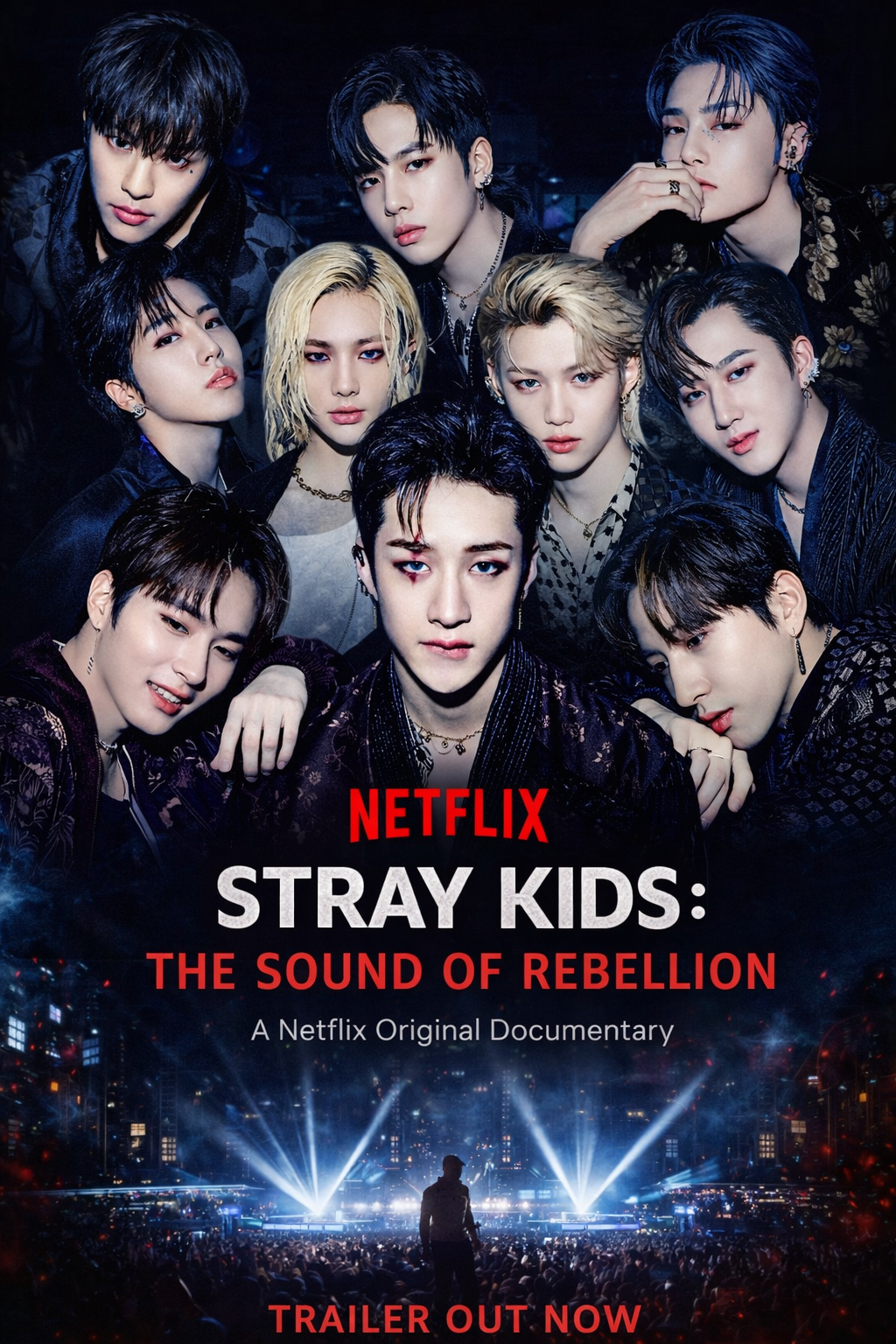
Netflix’s documentary series Stray Kids: The Sound of Rebellion captures the raw energy, ambition, and creative defiance that have defined the group’s rise on the global stage. From its opening moments, the series establishes Stray Kids not just as performers, but as artists driven by a relentless need to challenge expectations. Through intimate footage and high-impact performance sequences, the documentary frames their music as a form of resistance against industry norms and personal limitations.
The series places a strong focus on the group’s creative process, highlighting their deep involvement in songwriting, production, and concept building. Viewers are taken inside late-night studio sessions where ideas collide, frustrations surface, and breakthroughs are earned rather than handed out. These moments reveal how Stray Kids transform pressure into power, turning internal struggles and external criticism into a sound that feels aggressive, honest, and unmistakably their own.
Beyond the music, The Sound of Rebellion explores the emotional cost of living under constant scrutiny. The members speak candidly about self-doubt, exhaustion, and the weight of expectations placed on them as global idols. Rather than softening these realities, the series leans into them, showing how vulnerability and resilience coexist. This balance gives the documentary a grounded, human edge that sets it apart from more polished idol narratives.
Visually, the series is bold and kinetic, mirroring the intensity of Stray Kids’ performances. Concert footage is intercut with behind-the-scenes moments, rehearsal rooms, and quiet reflections, creating a rhythm that feels both chaotic and controlled. The sound design emphasizes pounding beats, distorted bass, and crowd noise, reinforcing the idea that Stray Kids’ music is not meant to be passive, but felt.
By its final episode, Stray Kids: The Sound of Rebellion stands as a powerful statement about identity, freedom, and self-made success in modern K-pop. It positions the group as voices of a generation unafraid to be loud, different, and unapologetic, and the series premiered globally on January 2, 2026.
About the Author