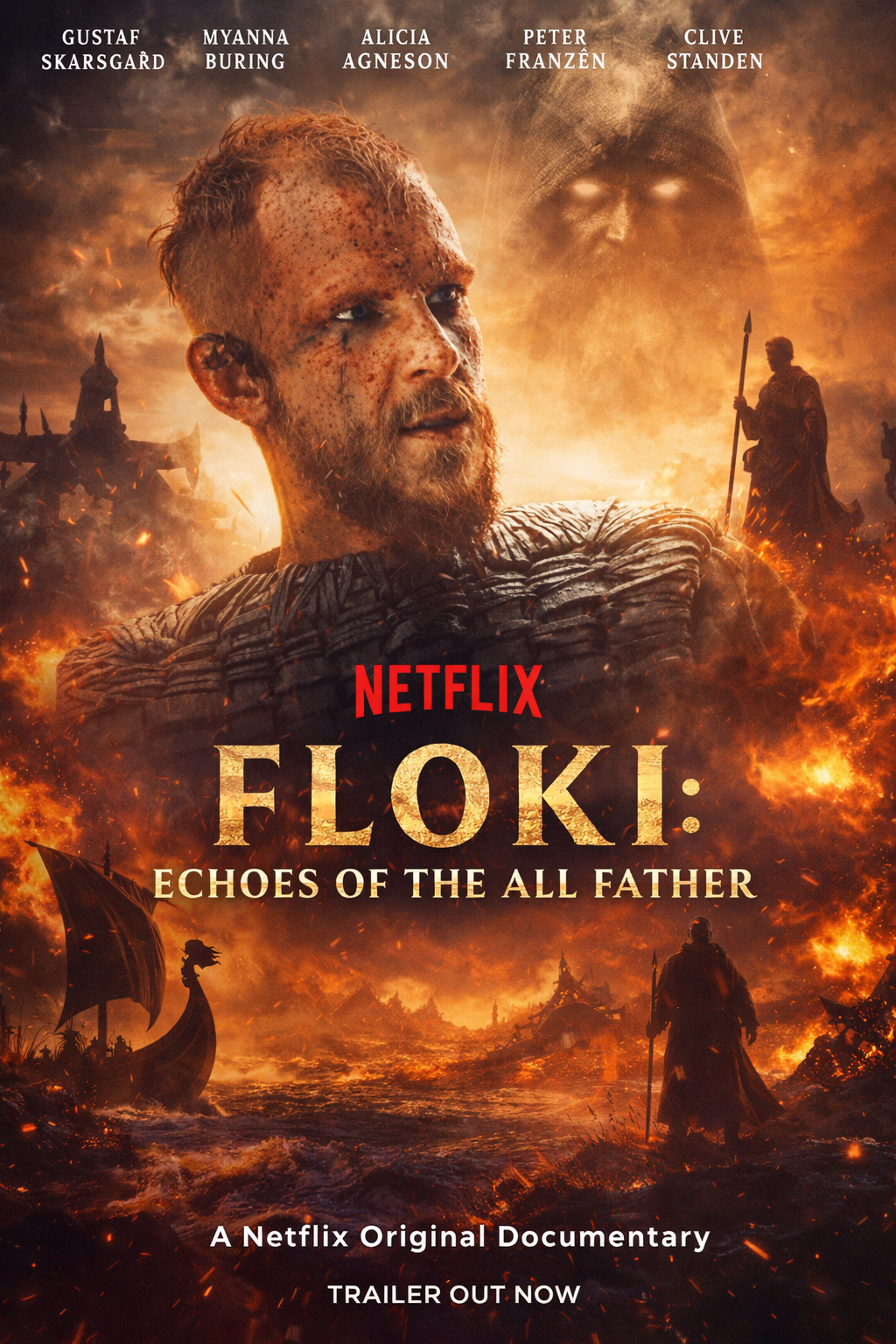
Floki: Echoes of the All Father arrives on Netflix as a brooding, myth-soaked meditation on identity, devotion, and the cost of belief. Rather than leaning solely on spectacle, the film slows its pace to let atmosphere and inner conflict do much of the storytelling. From its opening moments, it signals that this is not a conventional mythological adventure, but a psychological journey shaped by gods, memory, and loss.At the center of the story is Floki, portrayed as both devotee and doubter, caught between reverence for the All Father and the creeping realization that faith can fracture as much as it can guide. The film frames him less as a hero and more as a vessel for questions about obedience and free will. This choice gives the narrative an introspective edge that lingers long after individual scenes end.Visually, the movie leans into stark Nordic imagery, using cold landscapes, shadowed halls, and firelit rituals to evoke a world that feels ancient and unforgiving. The cinematography favors muted tones, allowing moments of color—blood, flame, symbols carved in wood or stone—to feel especially significant. These visual contrasts mirror Floki’s internal struggle between clarity and chaos.Sound design plays an equally important role, with low chants, echoing winds, and sparse instrumentation creating a sense of constant unease. Silence is used deliberately, often stretching just long enough to become uncomfortable. When music does rise, it feels ceremonial rather than emotional, reinforcing the film’s mythic and spiritual weight.The narrative structure is deliberately fragmented, weaving present events with visions and memories that may or may not be divine in origin. This ambiguity is one of the film’s strengths, inviting viewers to question whether the All Father truly speaks, or whether Floki is projecting meaning onto his own fear and longing. The echoes referenced in the title feel as much psychological as supernatural.Supporting characters are sketched with restraint, serving more as reflections of Floki’s state of mind than as fully independent arcs. Some represent unwavering faith, others quiet skepticism, and a few embody the violence that blind devotion can unleash. Their limited development feels intentional, keeping the focus tightly centered on Floki’s unraveling certainty.What sets Floki: Echoes of the All Father apart from similar genre entries is its refusal to provide easy answers. The film resists clear moral conclusions, instead lingering in contradiction. Faith is shown as powerful and sustaining, yet also isolating and destructive, depending on how fiercely it is held.The pacing may test some viewers’ patience, especially those expecting constant action or clear plot progression. However, for audiences willing to sit with discomfort and ambiguity, the slow burn becomes part of the experience. Each scene feels like a ritual, repetitive at times, but heavy with intent.By the final act, the film’s emotional weight comes not from grand confrontations, but from quiet moments of realization. Floki’s journey culminates in acceptance that certainty itself may be the greatest illusion. The echoes of the All Father fade into something more human: doubt, memory, and choice.As of January 4, 2026, the film feels particularly resonant in a cultural moment marked by questions about authority, belief, and identity. Its themes transcend mythology, speaking to anyone who has grappled with the fear of losing faith in something that once defined them.While not a film designed for mass appeal, Floki: Echoes of the All Father will likely find a devoted audience among viewers who appreciate contemplative storytelling. It rewards attention, interpretation, and even disagreement. The movie seems to invite debate rather than consensus.Ultimately, Floki: Echoes of the All Father stands as a haunting, thoughtful addition to Netflix’s catalog. It may not roar like a saga sung in crowded halls, but it whispers like an old story told by firelight, leaving its audience to decide which echoes are divine and which are their own.
About the Author