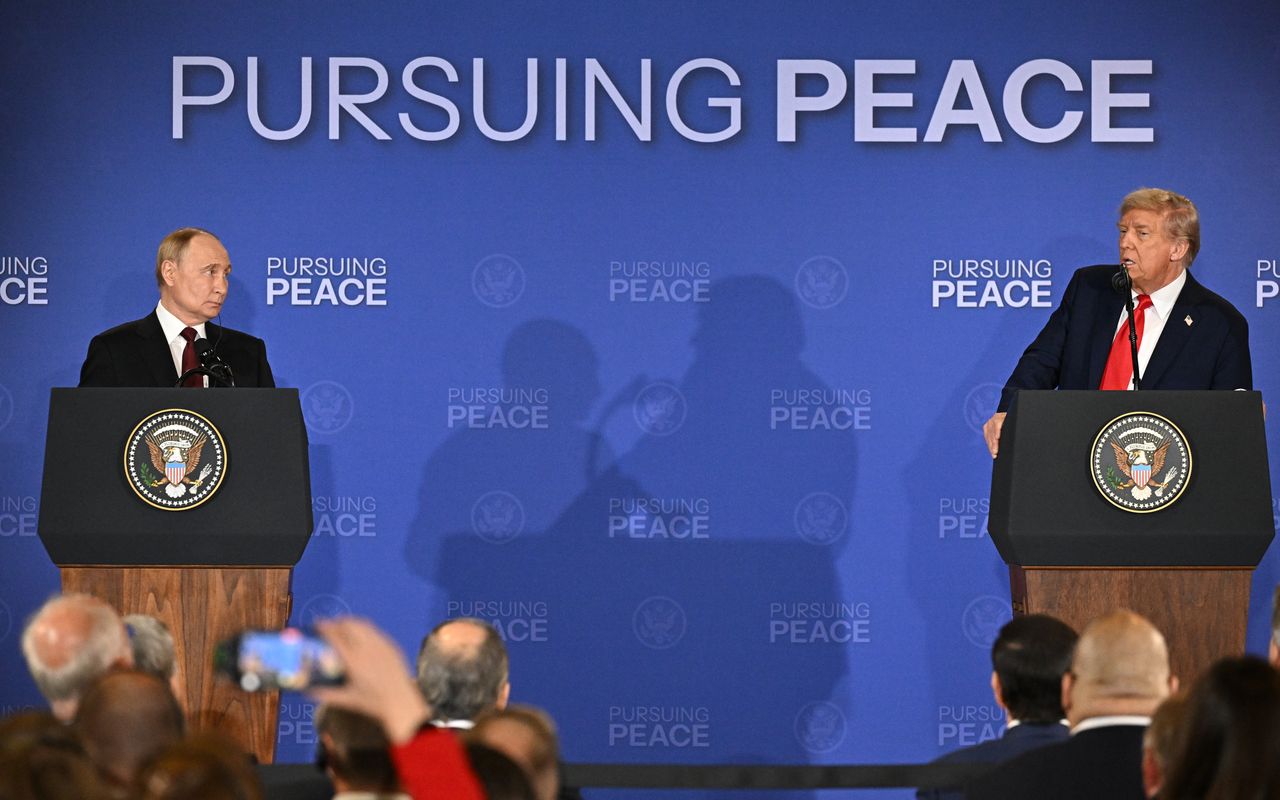
In a statement that has already stirred intense global debate, Russian President Vladimir Putin has declared that former U.S. President Donald Trump “deserved the Nobel Prize.” The remark, delivered during a press conference in Moscow, immediately drew attention across the political spectrum, reigniting discussions about Trump’s controversial yet impactful tenure and the divisive nature of international recognition. Putin’s statement, both direct and deliberate, seemed to suggest admiration for Trump’s assertive approach to diplomacy and his unapologetic nationalist agenda, which often challenged the traditional norms of global politics.
Putin reportedly praised Trump for what he described as “bold efforts to reshape global order and protect the interests of his people.” He referenced several of Trump’s foreign policy moves — including peace negotiations in the Middle East and his attempt to ease tensions with North Korea — as examples of leadership that, in his view, warranted international acknowledgment. “You may agree or disagree with him,” Putin said, “but his actions were decisive, and his influence undeniable.” The comment, though brief, sent shockwaves through diplomatic circles, with analysts immediately weighing in on its implications.
Critics were quick to point out that Putin’s praise was as strategic as it was symbolic. Many experts noted that the Russian leader has often used public comments about Western politicians to advance subtle geopolitical narratives. By endorsing Trump for a Nobel Prize, Putin may have been making a broader statement about leadership — one rooted in power, influence, and disruption rather than diplomacy and consensus. Yet for Trump’s supporters, the praise was validation from one of the world’s most formidable figures.
Trump himself has long suggested that his accomplishments, particularly in foreign policy, merited consideration for the Nobel Peace Prize. During his presidency, he repeatedly highlighted his administration’s role in brokering peace deals between Israel and several Arab nations, as well as his diplomatic overtures toward North Korea. Despite the controversies that surrounded his leadership, even some of his opponents acknowledged that his unconventional tactics often yielded surprising results. Putin’s endorsement, then, feels like a continuation of a narrative Trump has cultivated for years — that he was a global disruptor deserving of recognition.
Political observers in Washington responded with a mix of disbelief and amusement. Some argued that Putin’s words were intentionally provocative, designed to rekindle divisions within the U.S. political landscape. Others viewed it as a calculated attempt to align Russia symbolically with Trump’s brand of populist nationalism, which has found renewed momentum in parts of Europe and the United States. “It’s not just about Trump,” one analyst commented. “It’s about the kind of leadership Putin wants to see in the world — strong, assertive, and unapologetically nationalistic.”
Supporters of the former president quickly seized on Putin’s statement, flooding social media with hashtags and messages celebrating the comment as further proof of Trump’s global influence. Right-wing commentators praised the Russian leader’s words as “honest acknowledgment” of Trump’s achievements, contrasting them with what they described as the Western establishment’s refusal to credit his successes. For them, Putin’s statement was not about Russia or geopolitics — it was about recognition long overdue.
However, many Western officials and diplomats condemned Putin’s remarks as both inappropriate and politically charged. They argued that awarding Trump a Nobel Prize would undermine the award’s legacy, which traditionally honors efforts toward peace, human rights, and humanitarian advancement. Some went further, suggesting that Putin’s statement was less a compliment and more a calculated effort to stir controversy in an already divided international landscape. “It’s classic political theater,” one European diplomat said. “It grabs attention and provokes reaction — exactly what Putin wants.”
In the end, whether one agrees or disagrees with Putin’s claim, his statement serves as a reminder of how deeply Donald Trump’s presidency continues to resonate across global politics. Even years after leaving office, Trump’s influence — admired by some, despised by others — remains undeniable. Putin’s words, deliberately or not, have reignited the debate over what truly defines leadership, influence, and worthiness on the world stage. And in the court of public opinion, that may be the only prize that never stops being contested.
About the Author