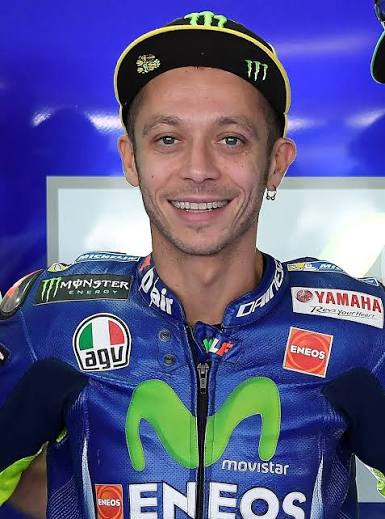
For more than two decades, Valentino Rossi was not simply a MotoGP rider — he was the heartbeat of the sport itself. The bright yellow helmet, the number 46, the celebrations that blurred the line between theater and competition made him instantly recognizable across the world. Fans saw joy, rebellion, and genius. What they didn’t always see was the weight behind the smile, the calculated mind behind the mischief, and the darker edges that shaped one of motorsport’s greatest figures.Rossi was born into racing, a legacy that brought privilege but also relentless expectation. With a father who had already tasted Grand Prix success, there was never a question of whether Valentino would race, only whether he would be great enough to justify the inheritance. Every victory felt inevitable to outsiders; every defeat felt amplified. From an early age, pressure became normal, and learning to survive it became as important as learning to ride fast.The playful image Rossi cultivated was real, but it was also strategic. Beneath the jokes and celebrations lived a fiercely intelligent competitor who understood that MotoGP battles were fought as much in the mind as on the asphalt. He studied his rivals, sensed their doubts, and pushed relentlessly at their psychological limits. Winning was not enough. Dominance mattered. Breaking an opponent’s belief that they could beat him again was often the true objective.That ruthless edge surfaced most clearly in his rivalries. Battles with Max Biaggi were not simply sporting contests but clashes of personality and pride, dividing fans and igniting tensions that spilled beyond the track. Years later, internal war followed when Jorge Lorenzo arrived at Yamaha, turning the garage into hostile territory where trust evaporated and silence spoke louder than words. Yet no rivalry exposed Rossi’s vulnerabilities like the one with Marc Márquez. The controversial 2015 season stripped away the illusion of invincibility, leaving behind anger, bitterness, and a lingering sense that time was no longer on his side. For the first time, Rossi was fighting not just competitors, but irrelevance.Greatness brought isolation. As his fame grew, genuine friendships became harder to distinguish from convenience or allegiance. Teammates were threats. Allies were temporary. Even as he built the VR46 Academy to guide younger riders, Rossi faced the uncomfortable reality of nurturing the very generation that would eventually replace him. Legacy demanded sacrifice, and the sacrifice was often emotional.The darkest corners of Rossi’s career emerged as age crept in. Injuries lingered longer. Reflexes dulled by fractions of a second. The question of when to stop grew louder with each season without a victory. Leaving too early would betray his love for racing; staying too long risked tarnishing the legend. He chose to stay, driven not by ego, but by an inability to let go of the life that had defined him since childhood.Away from the circuit, Rossi was far removed from the showman image. He remained deeply tied to his hometown of Tavullia, loyal to a tight circle of friends, and guarded about his private life. The exaggerated persona had always been armor — protection against pressure, expectation, and vulnerability. Without the helmet, there was a quieter man who valued control, loyalty, and belonging in a world where racing had offered very little of any of them.The truth behind Valentino Rossi is not spotless, and it was never meant to be. He could be confrontational, stubborn, and unapologetically political when the stakes were high. But he was also authentic in a sport that often demands perfection. His story shows that greatness is messy, that brilliance is often forged in conflict, and that legends are shaped as much by their flaws as their triumphs.Behind the helmet was never just a smiling icon. It was a man carrying the weight of an entire sport, navigating rivalries, fear, and the slow march of time — and somehow still finding a way to make millions fall in love with racing along the way.
About the Author